Curated guidance across compliance frameworks (HIPAA, SOC 2, PCI DSS), AWS-native security services (GuardDuty, Security Hub, Inspector, Security Lake), IAM, data protection, multi-account governance, and AI security. Written for CISOs, compliance leads, solutions architects, and platform engineers.
Last updated: April 2026 — refreshed AI security & compliance frameworks coverage · Reviewed by: FactualMinds AWS-certified architects (Solutions Architect – Professional) · AWS Partner: Select Tier Consulting Partner
Why we publish this hub
Most AWS security and compliance content online is written by vendors selling a product or by analyst firms summarizing a framework. Both leave gaps. Vendors tell you what their product does — not whether AWS-native services already cover the same control. Analyst summaries tell you what auditors want — not how to actually implement the control on AWS without breaking your developers' workflow.
We publish these guides from inside the engagement. Every post here reflects work we have shipped — HIPAA telehealth platforms, PCI DSS 4.0.1 fintech migrations, SOC 2 readiness for SaaS startups, ISO 27001:2022 ISMS builds, and Bedrock Guardrails deployments for regulated AI workloads. Where AWS-native is enough, we say so. Where you need a third-party tool, we say that too — and we tell you why.
Curated for CISOs, compliance leads, security architects, and platform engineers who need an honest, applied reference rather than another vendor blog.
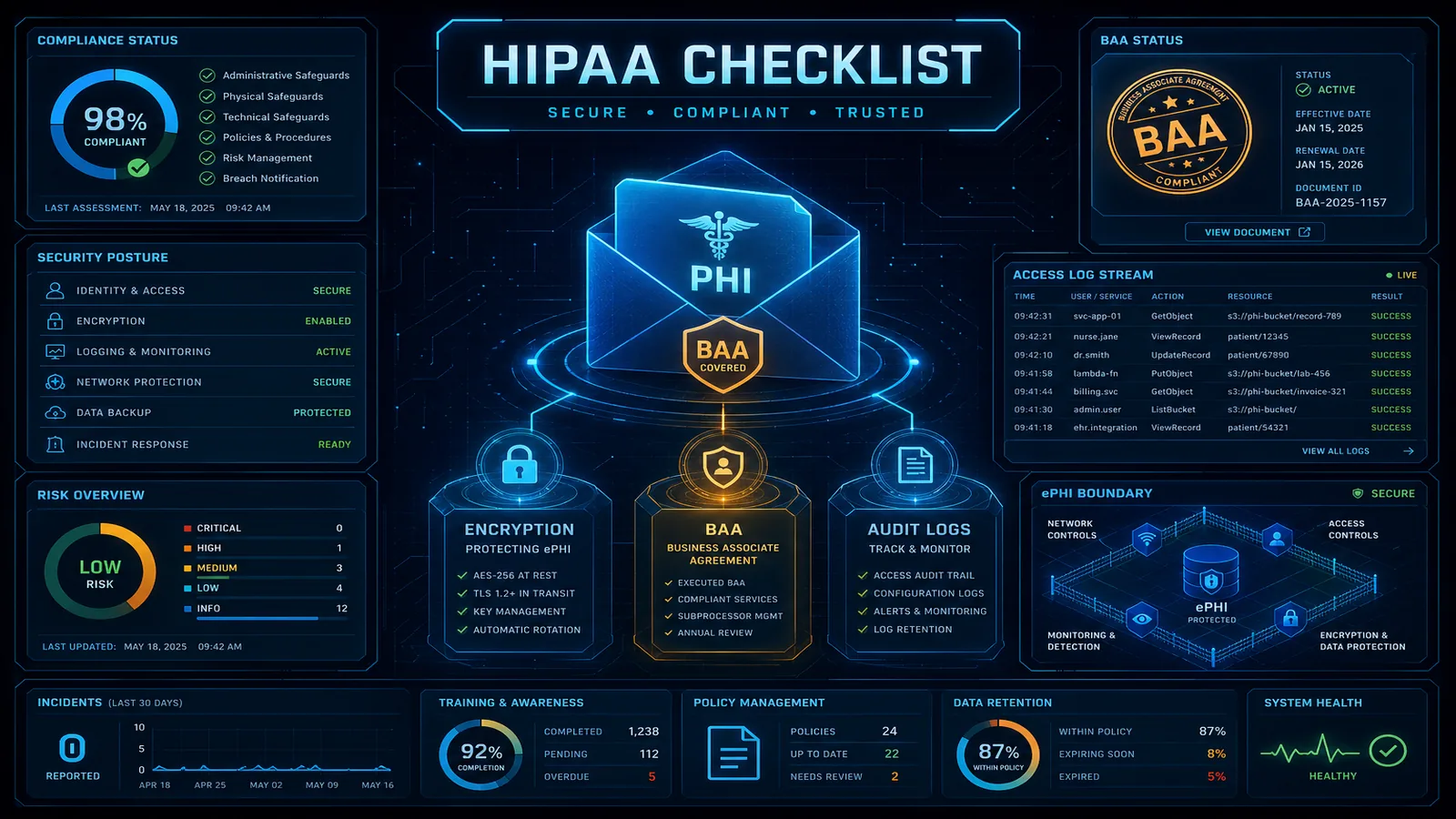
An audit-prep checklist for Compliance Leads, Security Officers, and CISOs — BAA execution, documented Security Risk Assessments, workforce training, audit cadence, and the evidence packages OCR investigators expect when they show up.
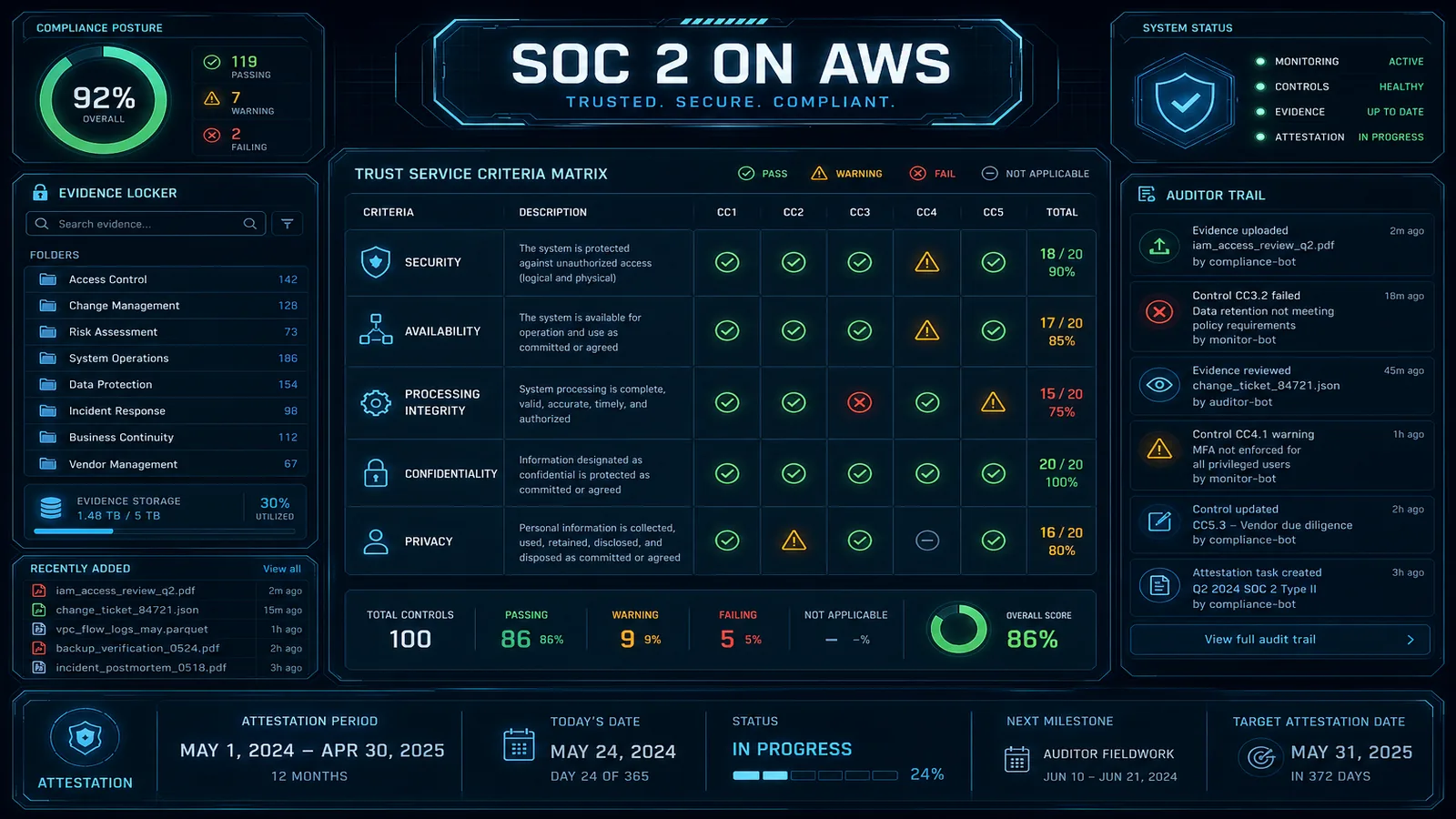
SOC 2 Type II certification proves your controls are effective over 6-12 months. This guide covers the compliance roadmap, AWS security controls, documentation requirements, and audit preparation for 2026 certification.
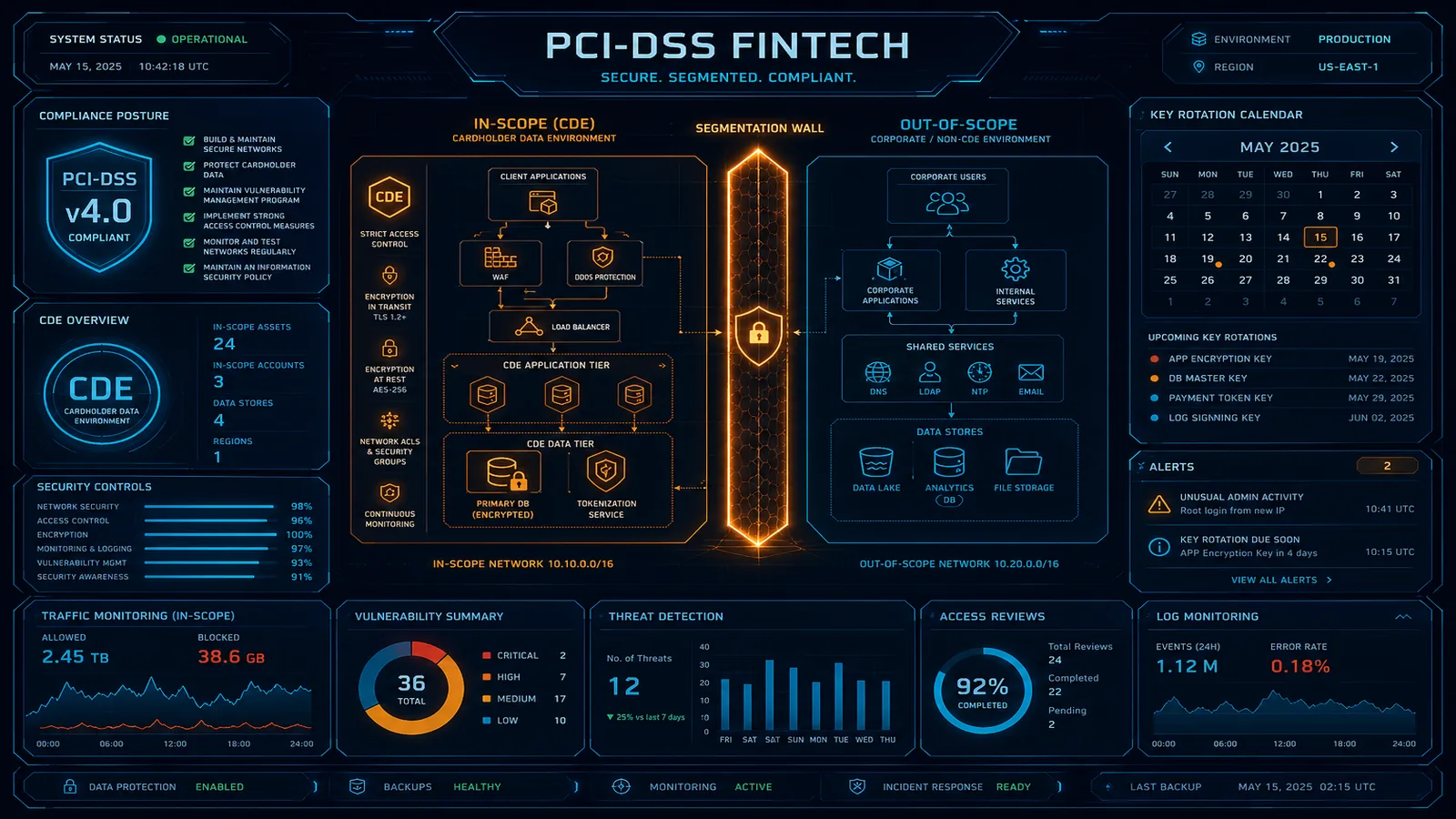
A practical architecture guide for PCI DSS compliance on AWS — CDE scoping, the 12 requirements mapped to AWS services, network design, encryption, logging, and audit readiness for payment-processing applications.
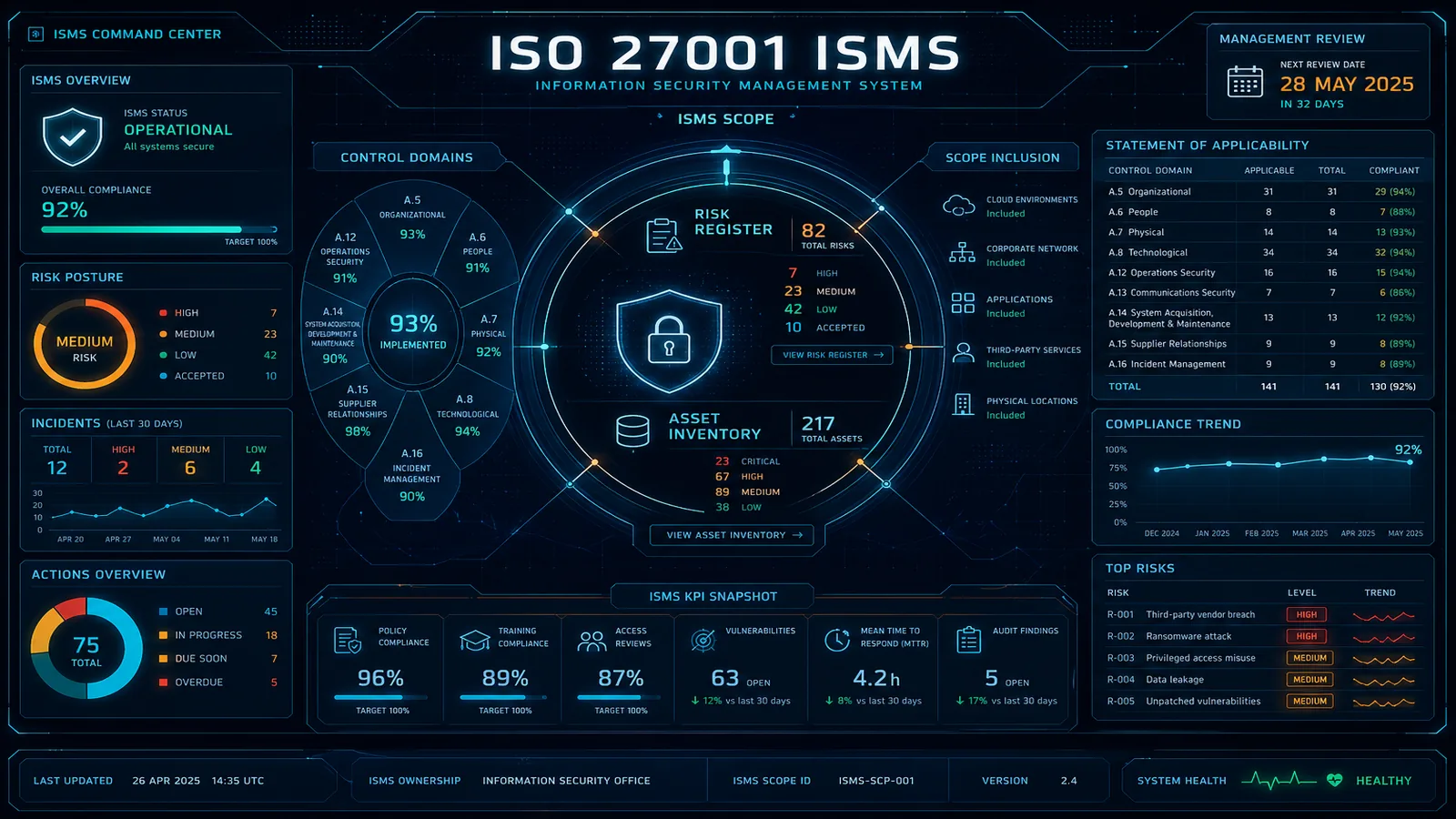
A practical guide to ISO 27001:2022 certification on AWS — building an ISMS that survives Stage 1 and Stage 2 audits, mapping the 93 Annex A controls to AWS services, and producing the evidence packages assessors actually request.
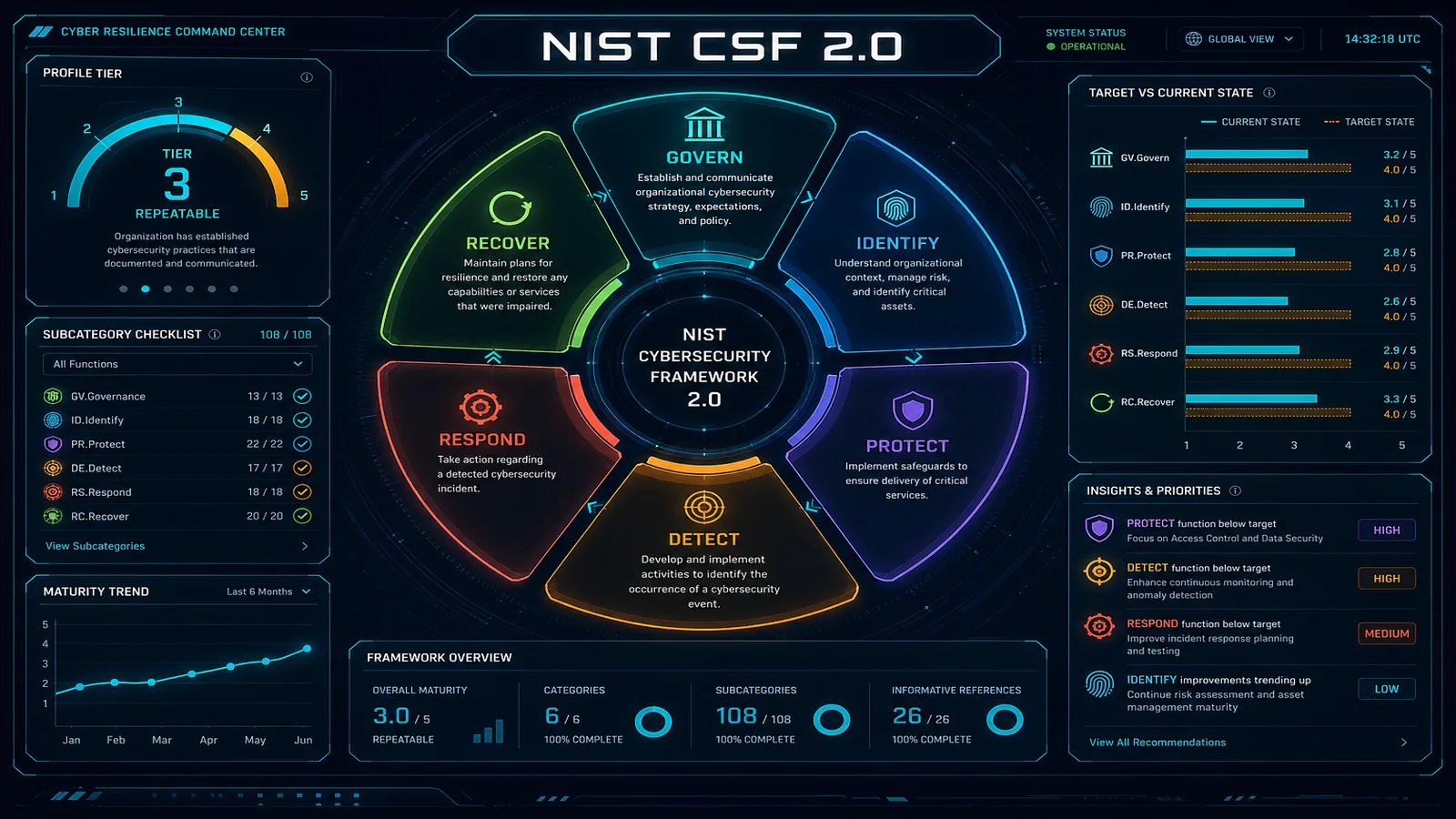
How to operationalize NIST CSF 2.0 on AWS — the new Govern function, the six core functions mapped to AWS services, maturity tier progression, and the relationship to NIST SP 800-53, SP 800-171, and CMMC.
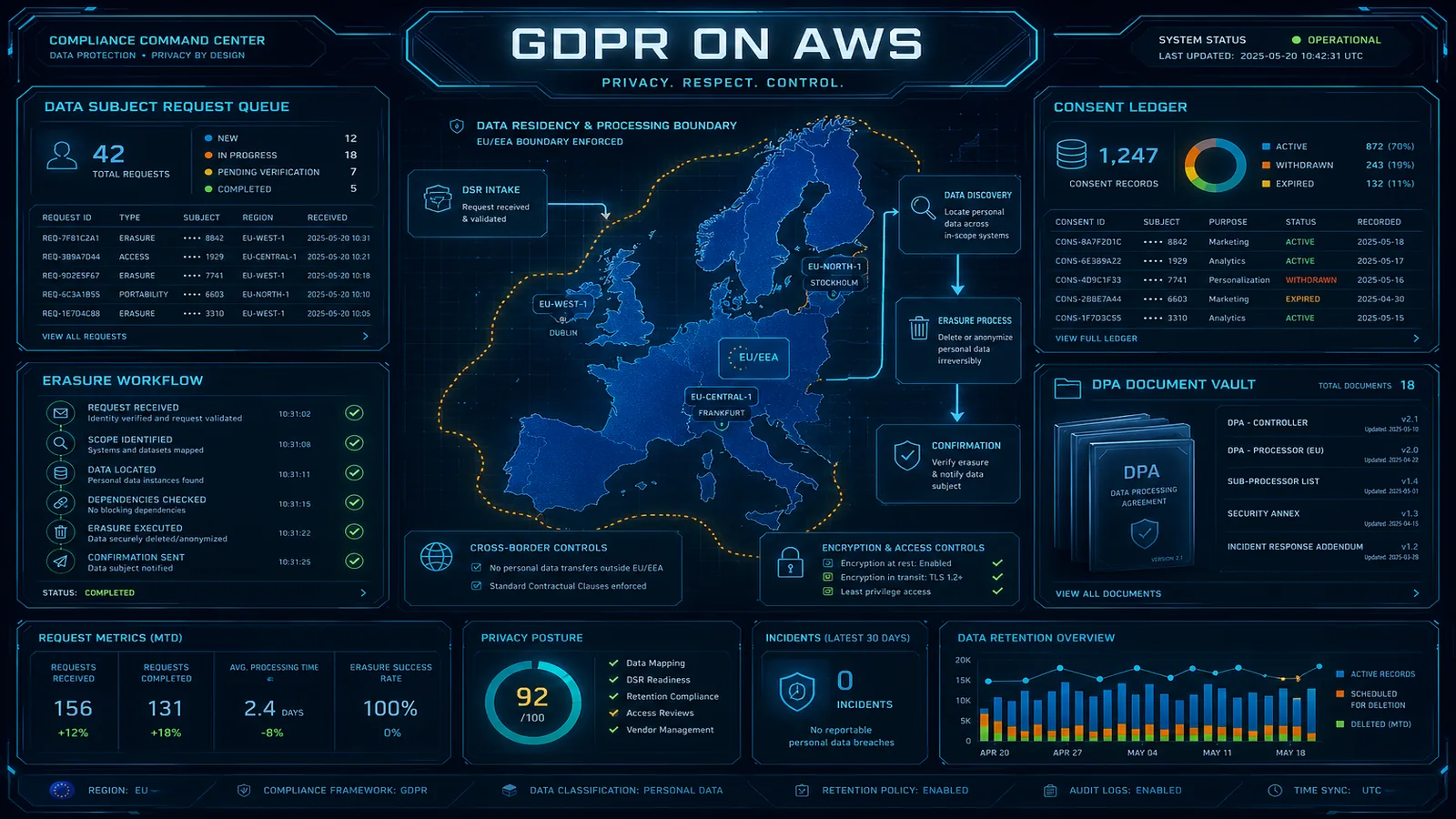
GDPR compliance on AWS for SaaS companies handling EU resident data. Region selection, the AWS DPA, data subject rights automation, RoPA documentation, breach notification, and the technical controls regulators expect.
NIS2 compliance on AWS for EU operators of essential and important services. Scope assessment, the 24-hour and 72-hour incident reporting clock, supply-chain risk controls, and the AWS service mapping for the 10 minimum measures.
IAM & Access Control
Identity, Permissions & Authentication
Least-privilege patterns, federation, fine-grained authorization, and SaaS-grade user pools.
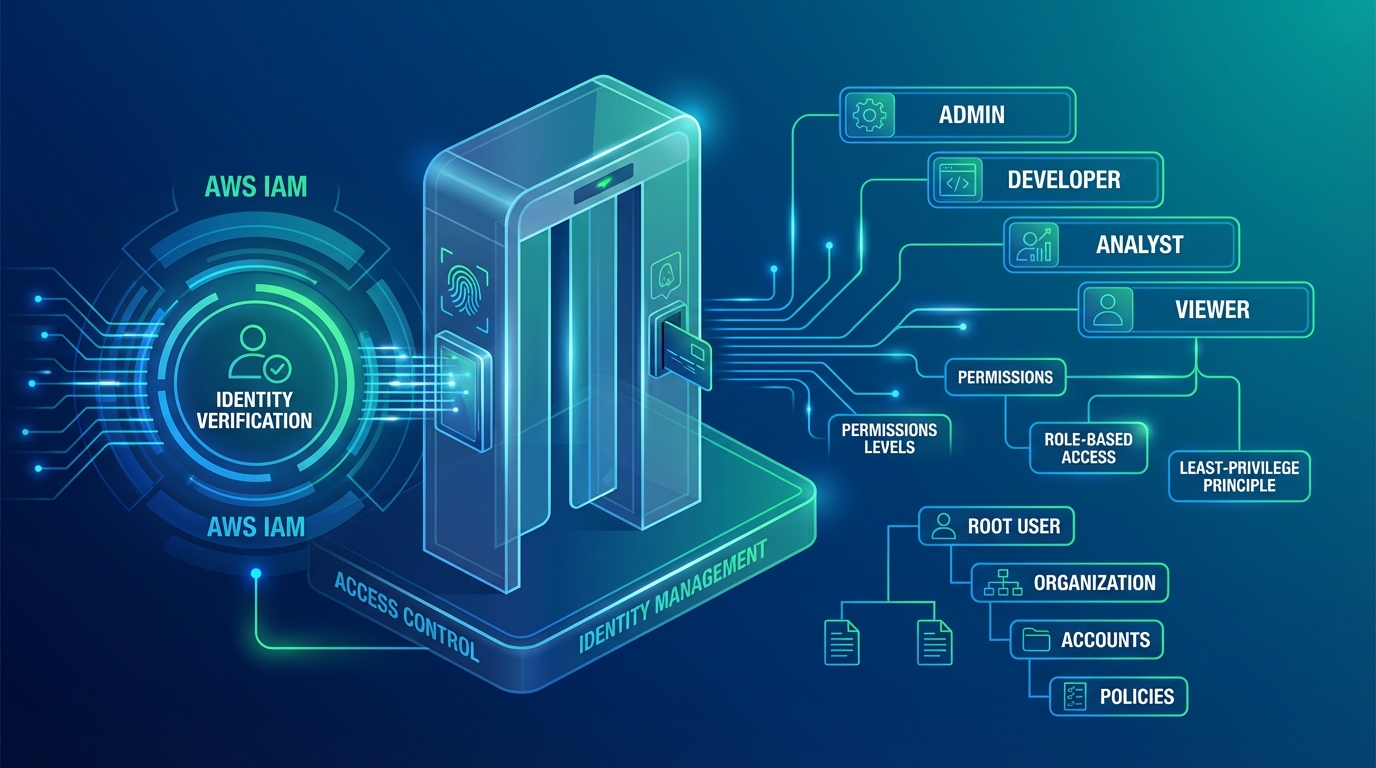
A practical guide to AWS IAM — least privilege policies, IAM roles vs users, permission boundaries, SCPs, identity federation, and the access control patterns that secure production workloads without slowing teams down.
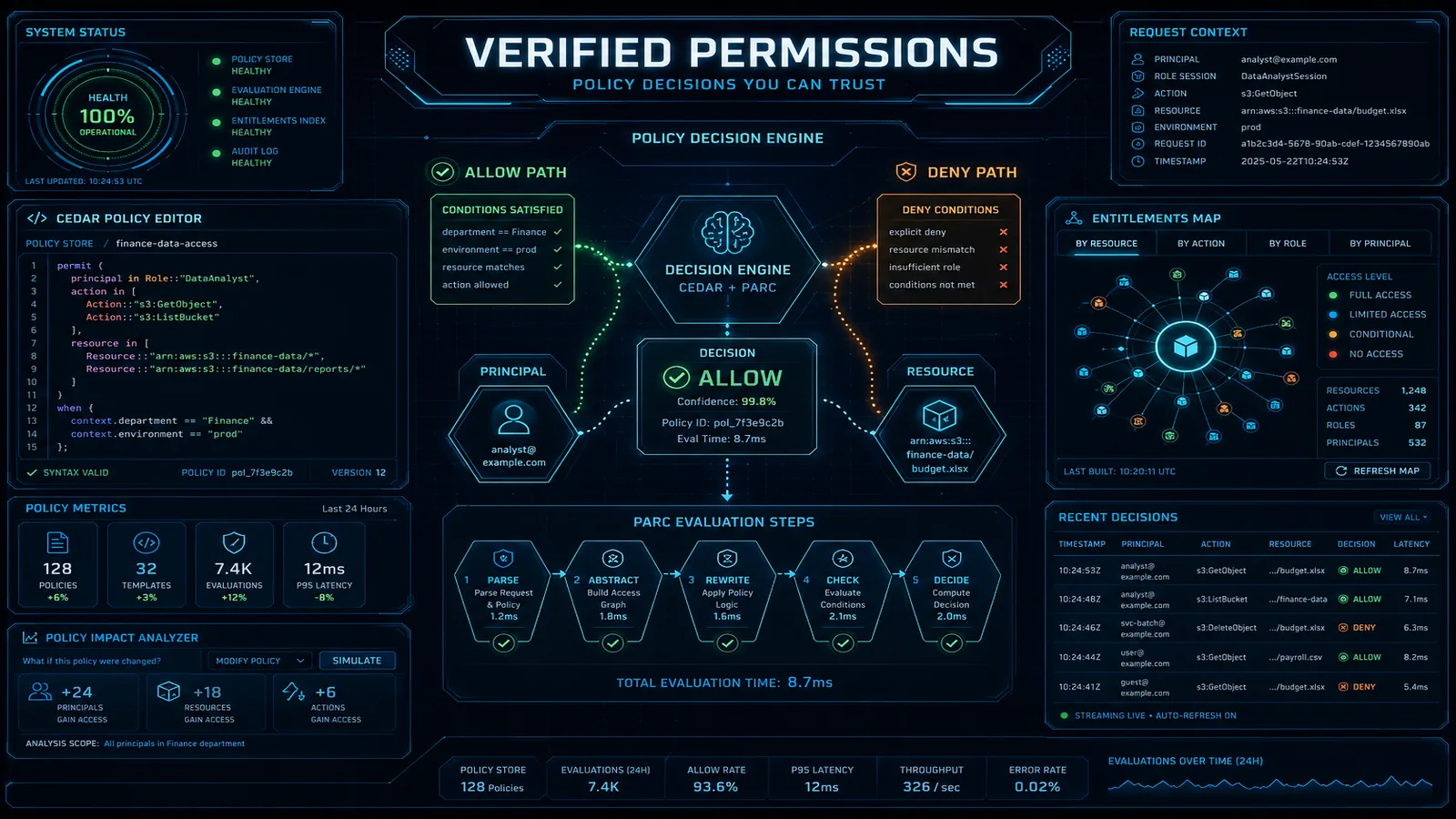
Amazon Verified Permissions externalizes application authorization logic using the Cedar policy language. Here's how to replace home-grown RBAC with a centralized, auditable policy store on AWS.
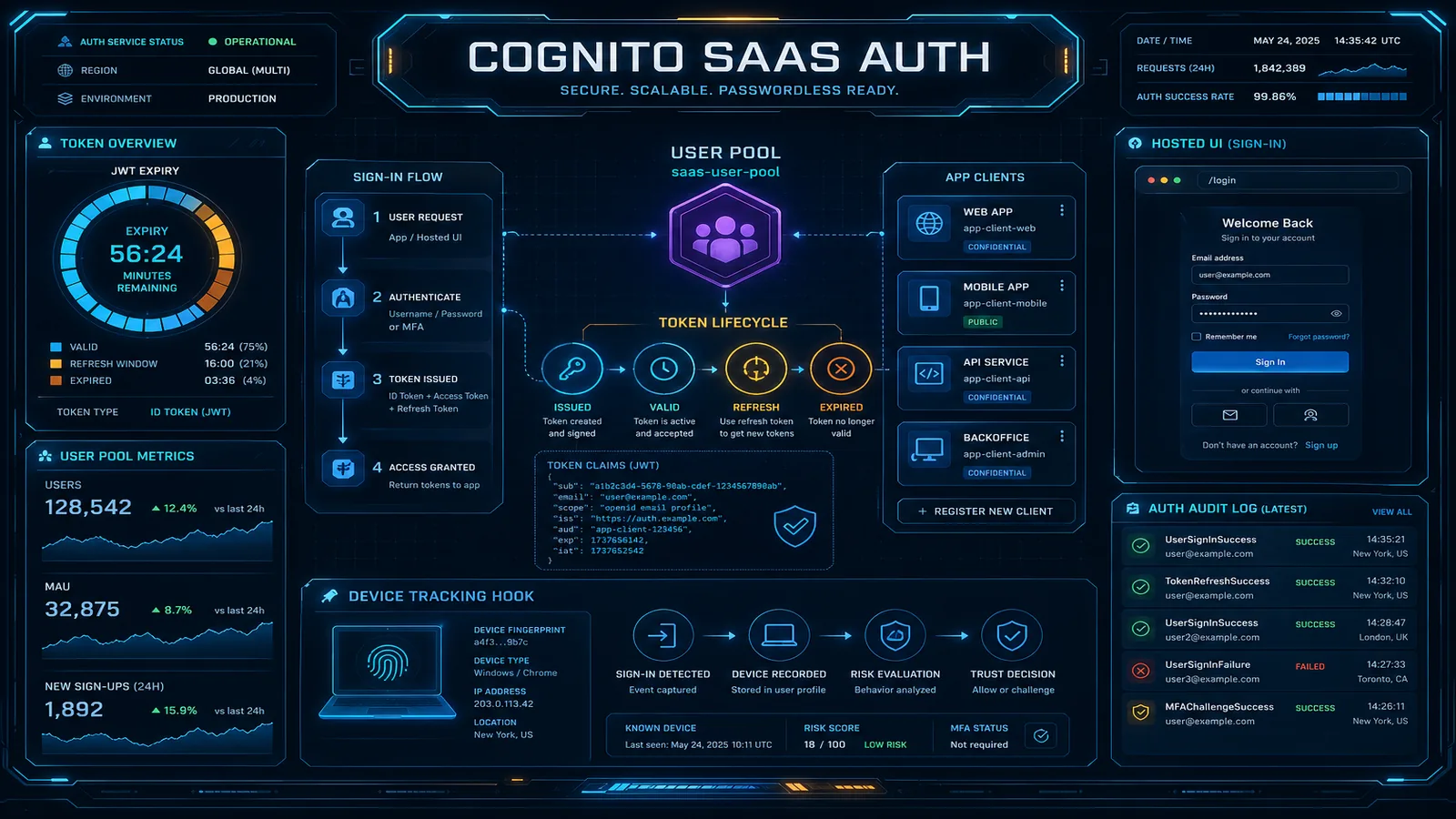
A practical guide to AWS Cognito for SaaS authentication — user pools, hosted UI, social federation, multi-tenant patterns, token customization, and the architecture decisions that determine whether Cognito fits your application.
Threat Detection & Response
GuardDuty, Security Hub, Inspector & Security Lake
Continuous monitoring, vulnerability scanning, OCSF data lakes, and automated remediation pipelines.
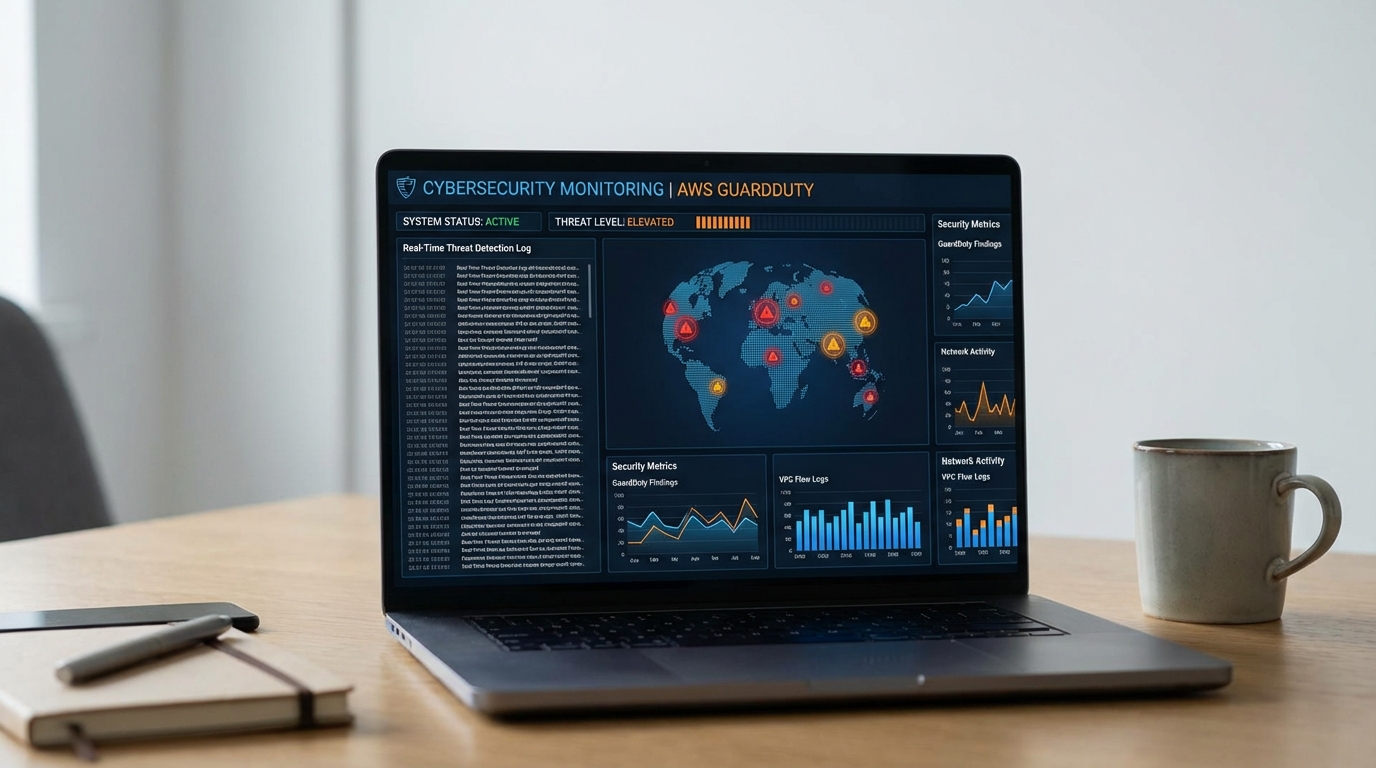
How to deploy, tune, and operationalize Amazon GuardDuty for production threat detection — covering finding types, multi-account setup, automated response, and reducing false positives.
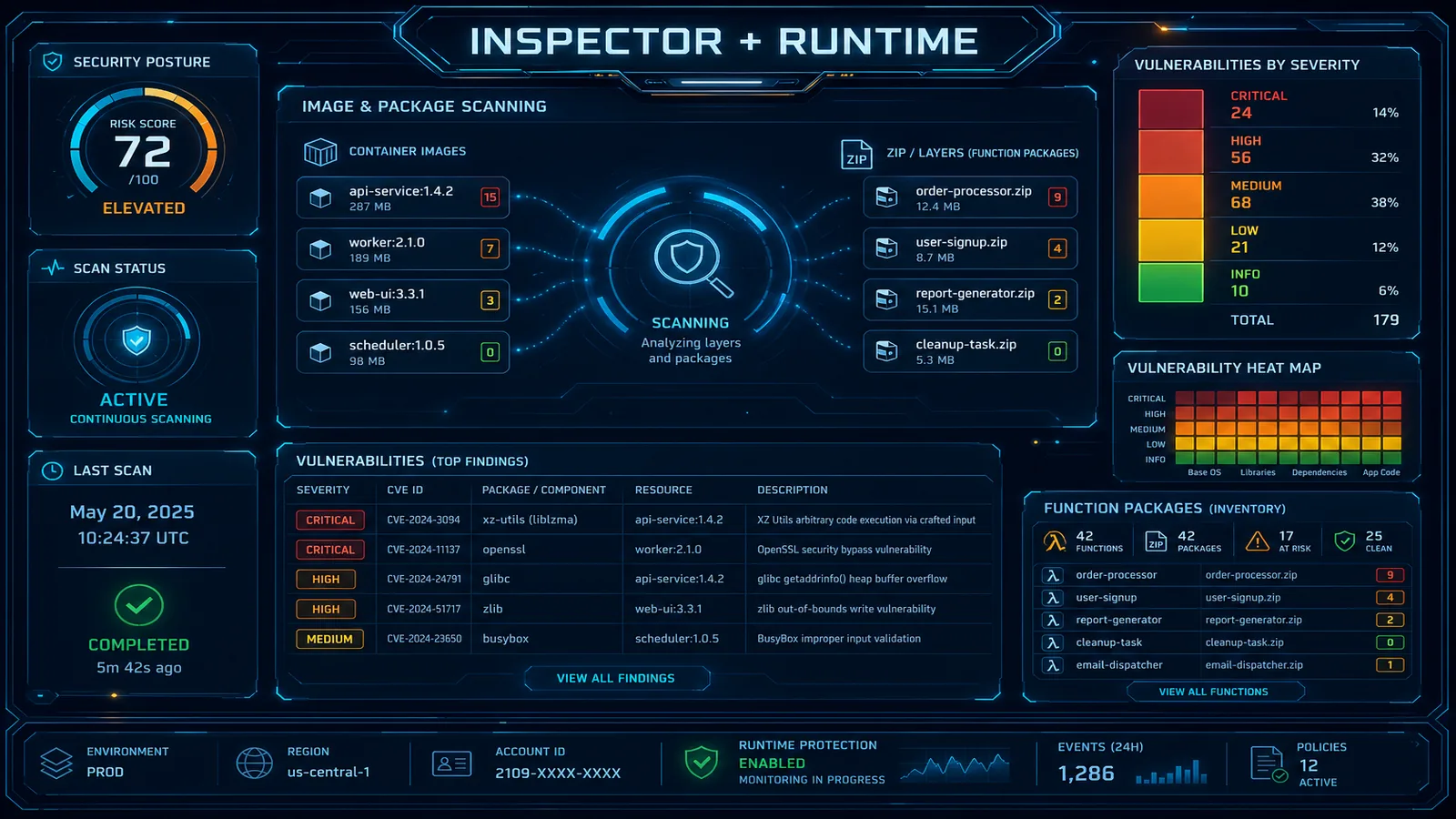
Inspector v2 continuously scans EC2, ECR container images, and Lambda functions without agents. Production guide to CI/CD integration, finding management, risk scoring, and multi-account deployment.
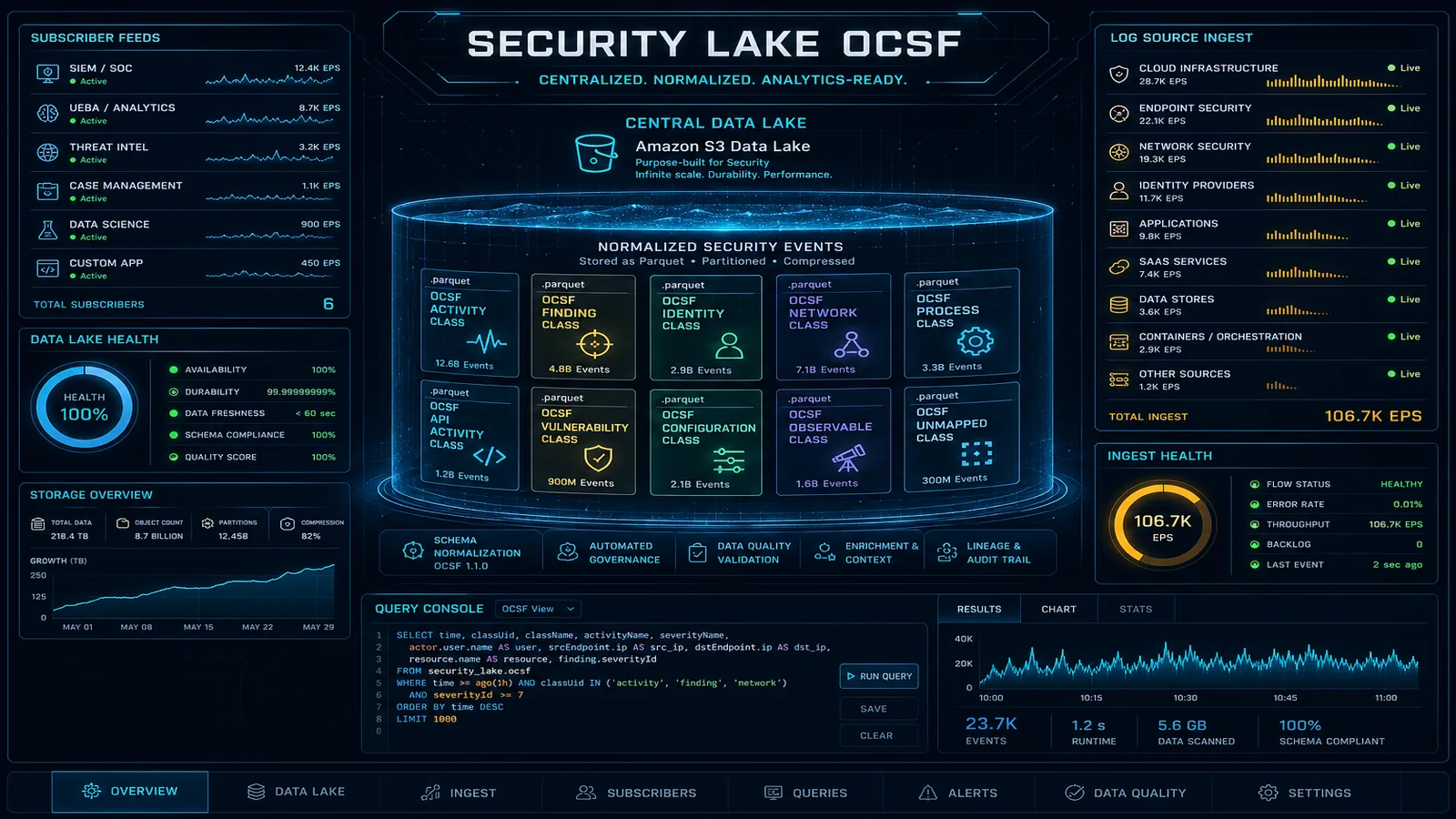
Amazon Security Lake normalizes security logs to OCSF format in a centralized S3 data lake. Here's how to build a cost-effective security data platform without a $500K SIEM contract.
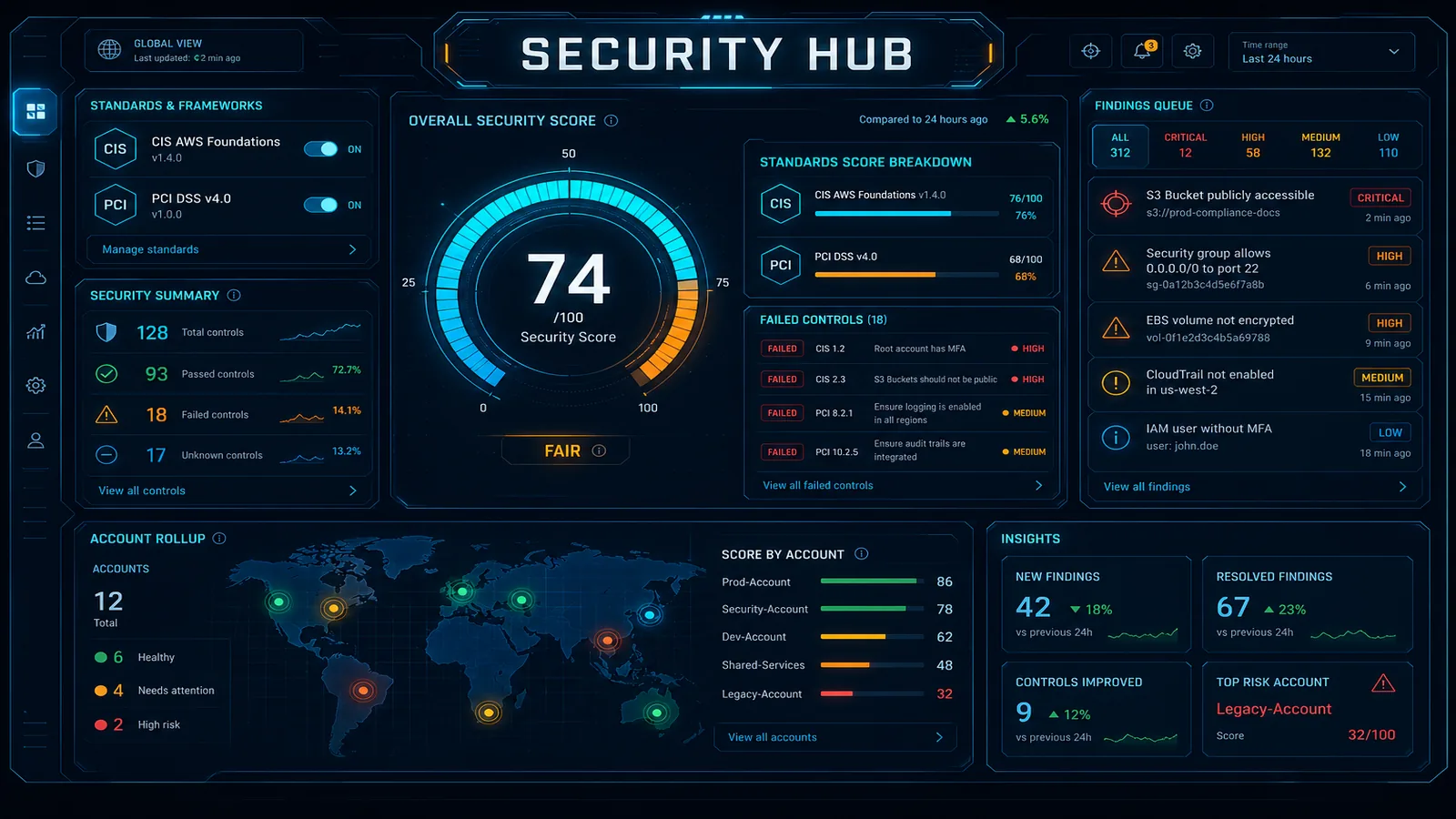
AWS Security Hub aggregates security findings from 200+ sources (GuardDuty, Config, IAM Access Analyzer, Inspector). This guide covers setup, compliance standards (PCI-DSS, CIS, NIST), automated remediation, and building a compliance dashboard without hiring a SOC team.
Manual security triage cannot keep up with cloud-scale threats. Here is how to wire GuardDuty Extended Threat Detection, Security Hub, EventBridge, and Lambda into a self-healing AWS security architecture.
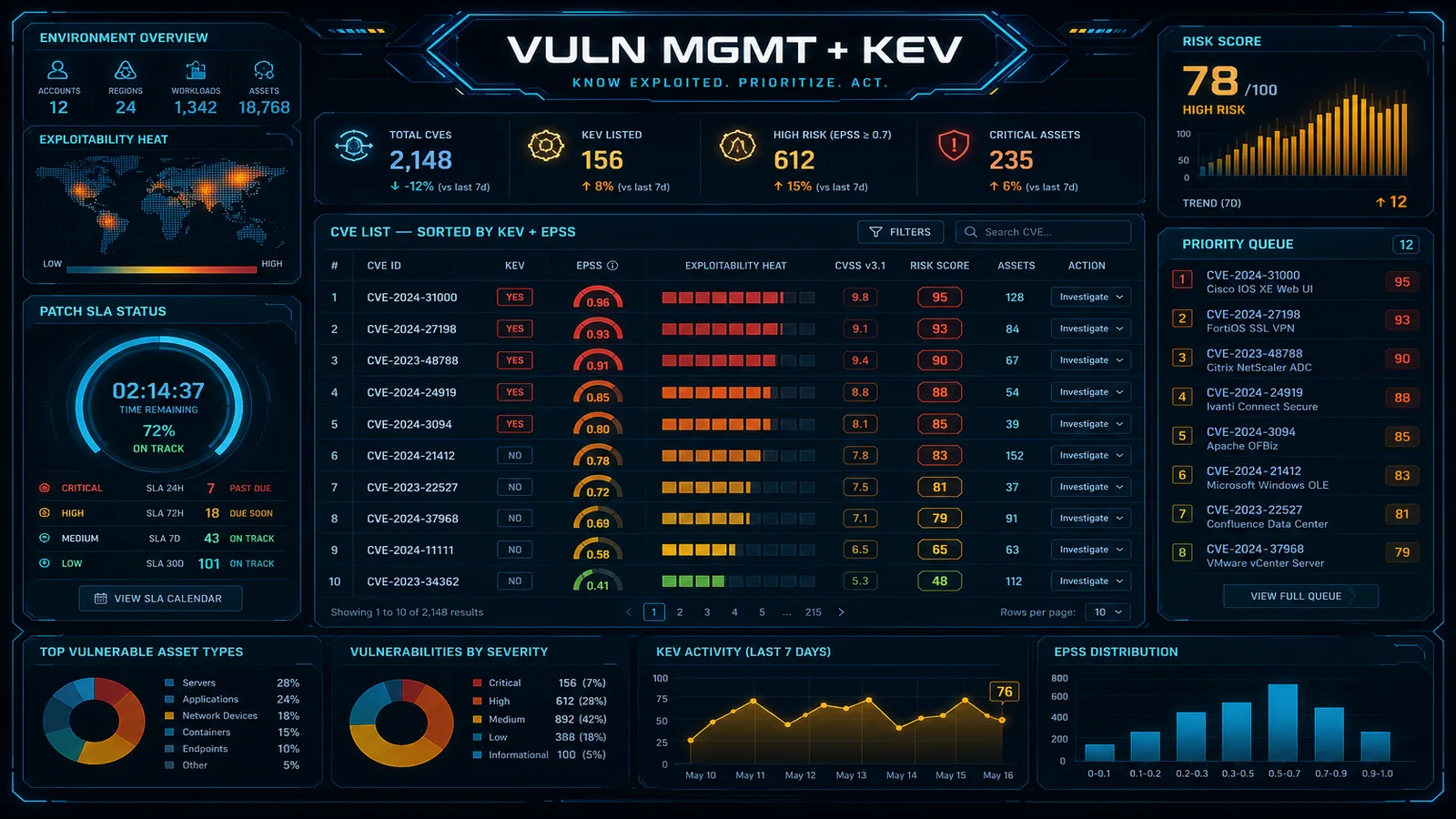
How to build a vulnerability management program that scales beyond CVE-counting. Inspector v2 deployment, CVSS + CISA KEV + reachability for risk-based prioritization, container and IaC scanning in CI/CD, and remediation SLAs that survive audits.
A comprehensive guide to S3 security — bucket policies, encryption, access logging, Block Public Access, and the practices that prevent the data breaches that make headlines.
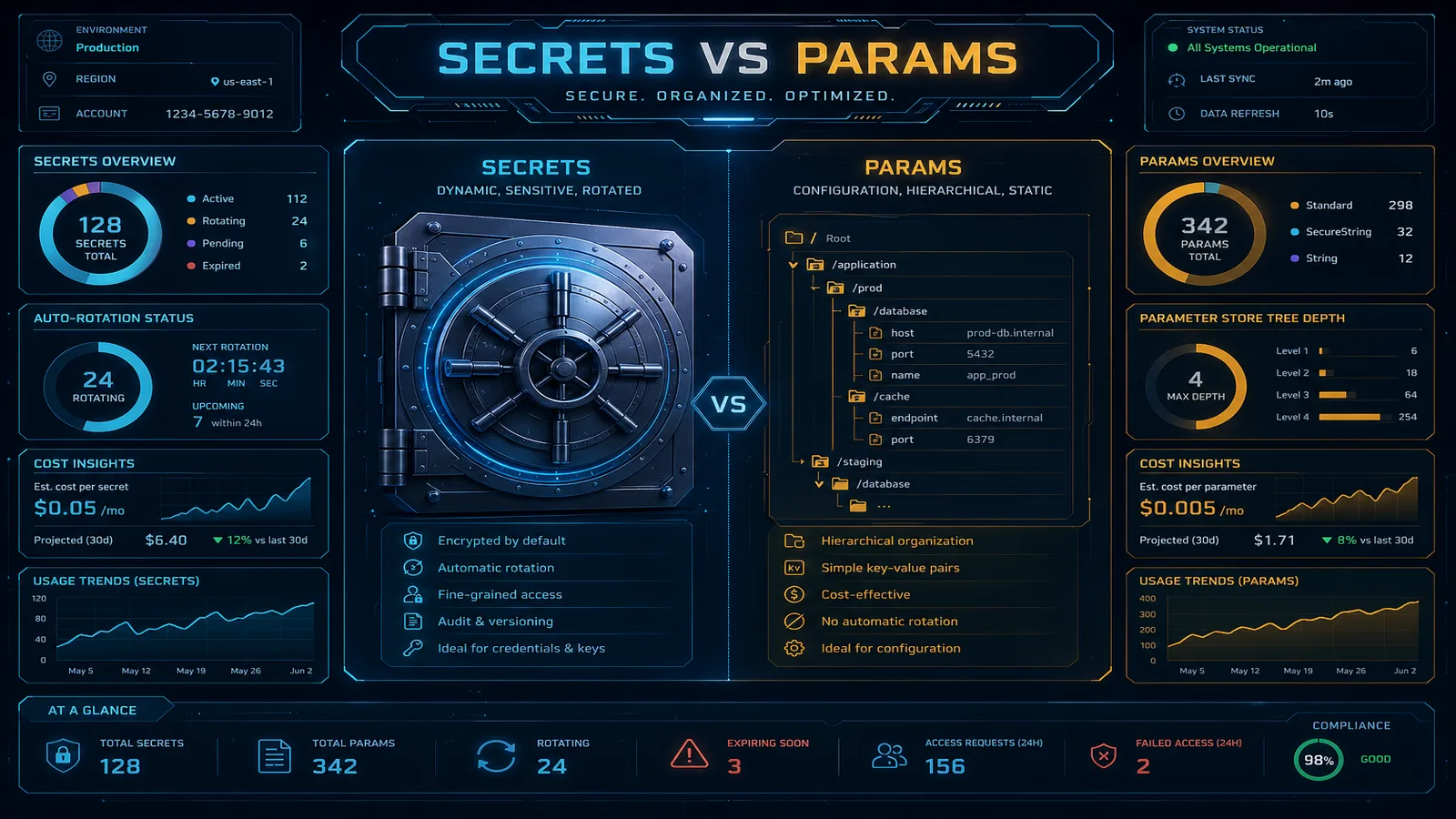
A practical comparison of AWS Secrets Manager and SSM Parameter Store — pricing, rotation, encryption, cross-account access, and clear guidelines for when to use each service for secrets and configuration management.
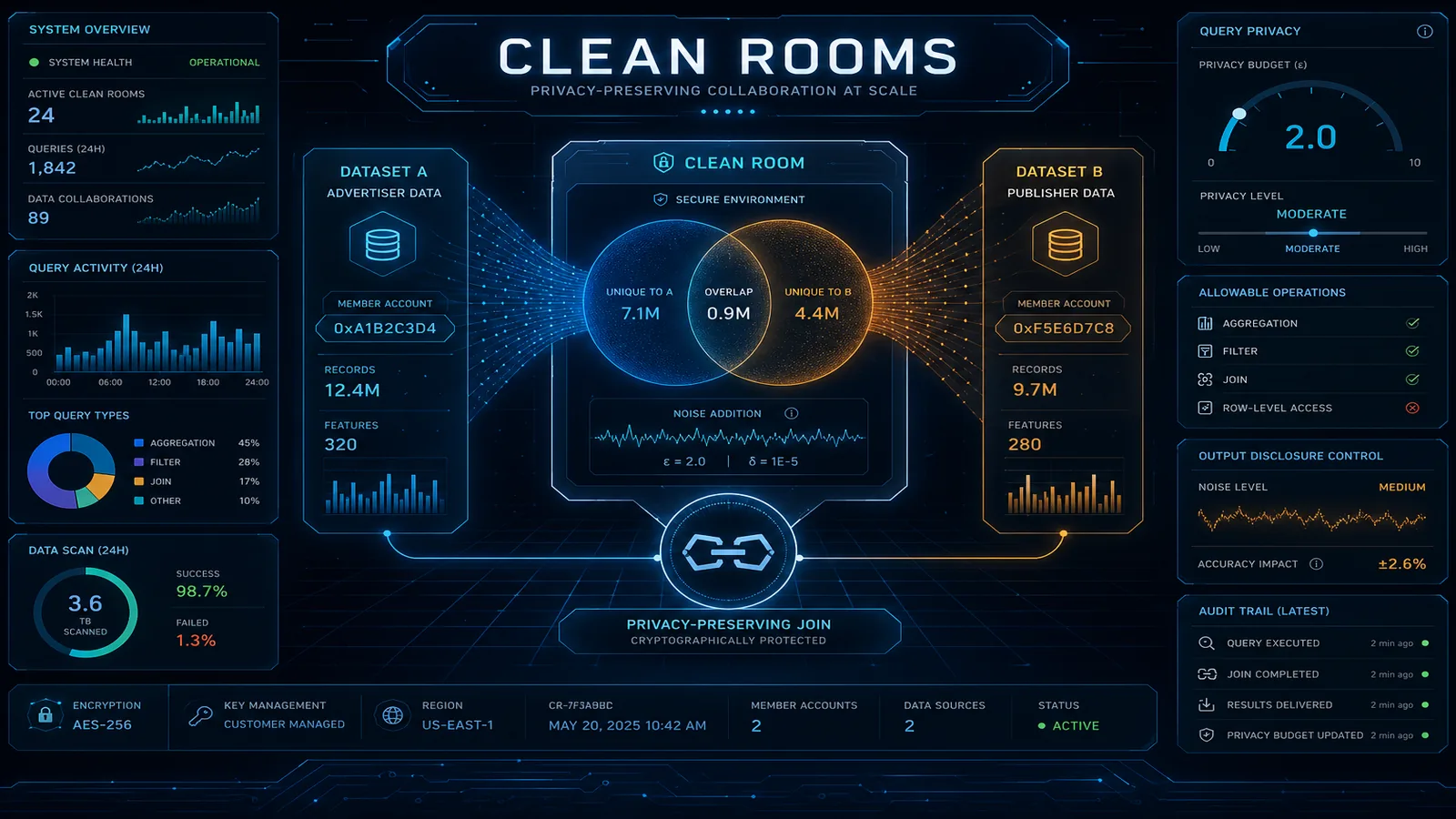
AWS Clean Rooms lets two companies analyze combined data without either seeing the other's raw records. Complete guide to collaboration setup, analysis templates, and compliance evidence for GDPR and SOC 2.
Network & Application Security
WAF, API Protection & VPC Hardening
Layer-7 defenses, GraphQL/API rate limiting, and production-grade VPC patterns that survive real traffic.
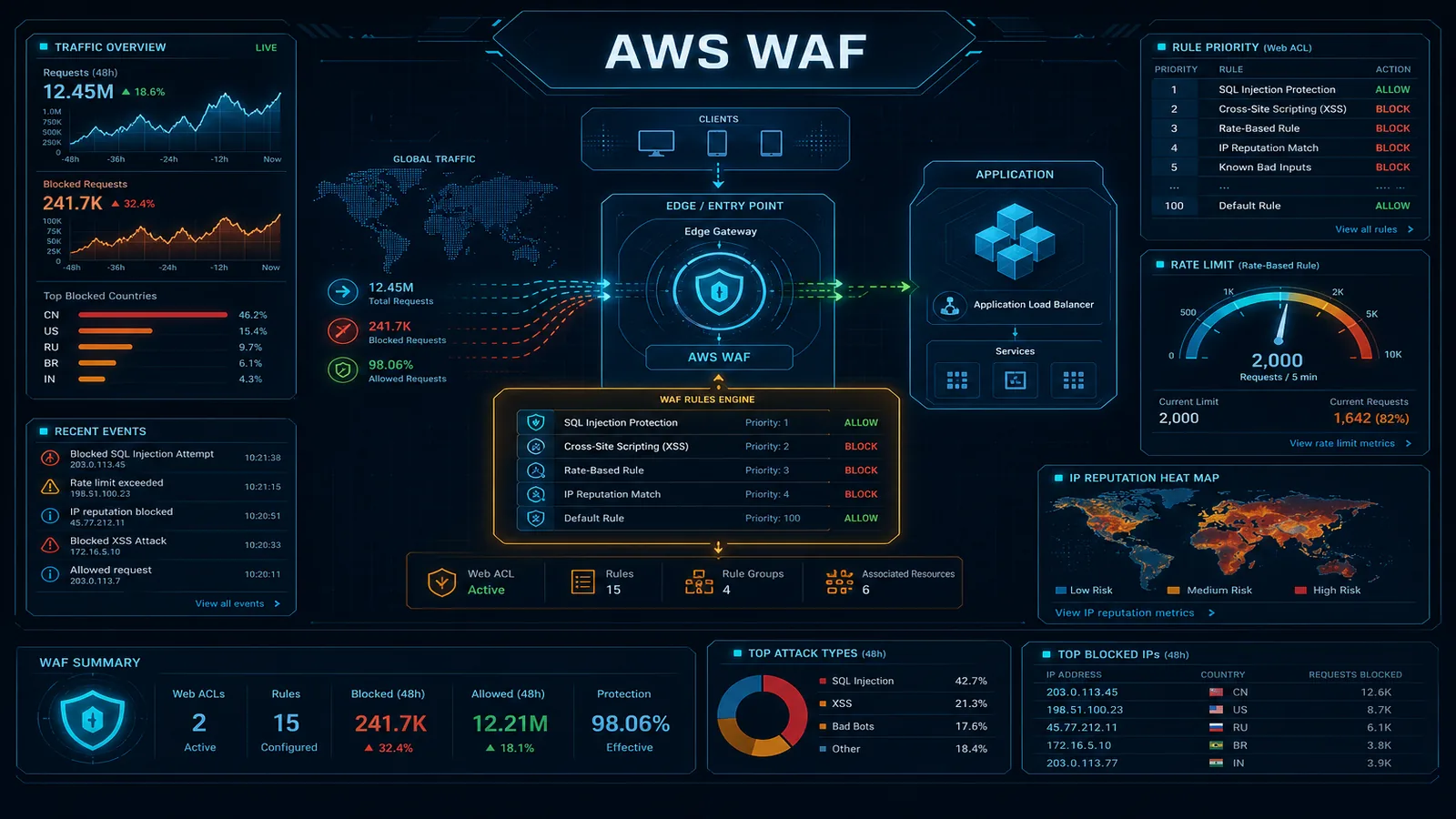
A practical guide to AWS WAF for production web applications — managed rule groups, custom rules, rate limiting, bot control, and the layered defense strategy that protects without blocking legitimate traffic.
AWS WAF protects APIs from SQL injection, XSS, DDoS, and account takeover attacks. This guide covers advanced WAF rules, rate limiting, bot control, and production patterns for defending REST APIs and GraphQL endpoints.
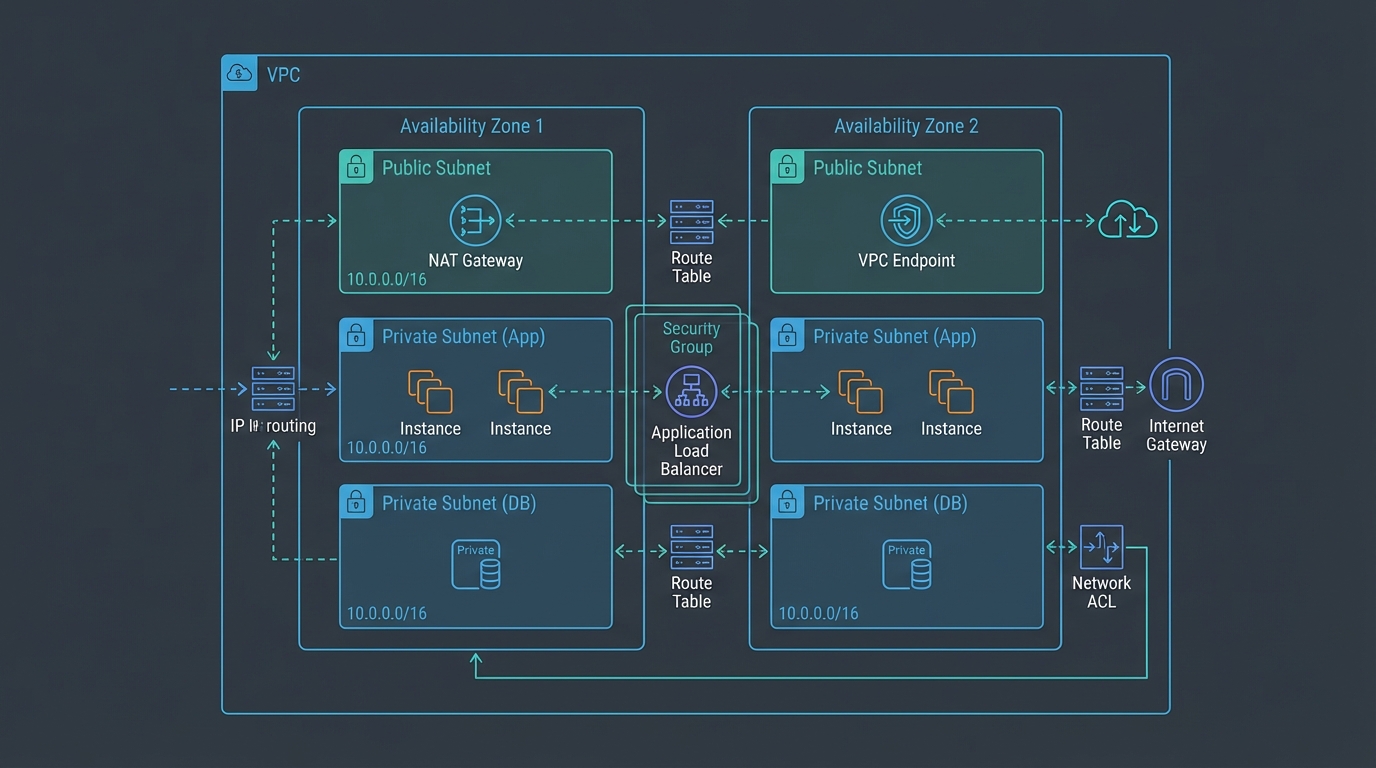
A practical guide to AWS VPC networking — CIDR planning, subnet strategies, NAT gateways, VPC endpoints, Transit Gateway, and the network architecture patterns that scale with your organization.
Governance & Multi-Account
Control Tower, Landing Zones & Drift Detection
Org-wide guardrails, account isolation strategy, and continuous compliance monitoring as code.
Most AWS security breaches aren't caused by AWS failures — they're caused by misconfiguration. Here are 10 concrete best practices to harden your AWS environment in 2026.
AWS Control Tower automates multi-account management — setting up guardrails, enforcing compliance policies, and centralizing billing. This guide covers setup, customization, and production governance patterns.
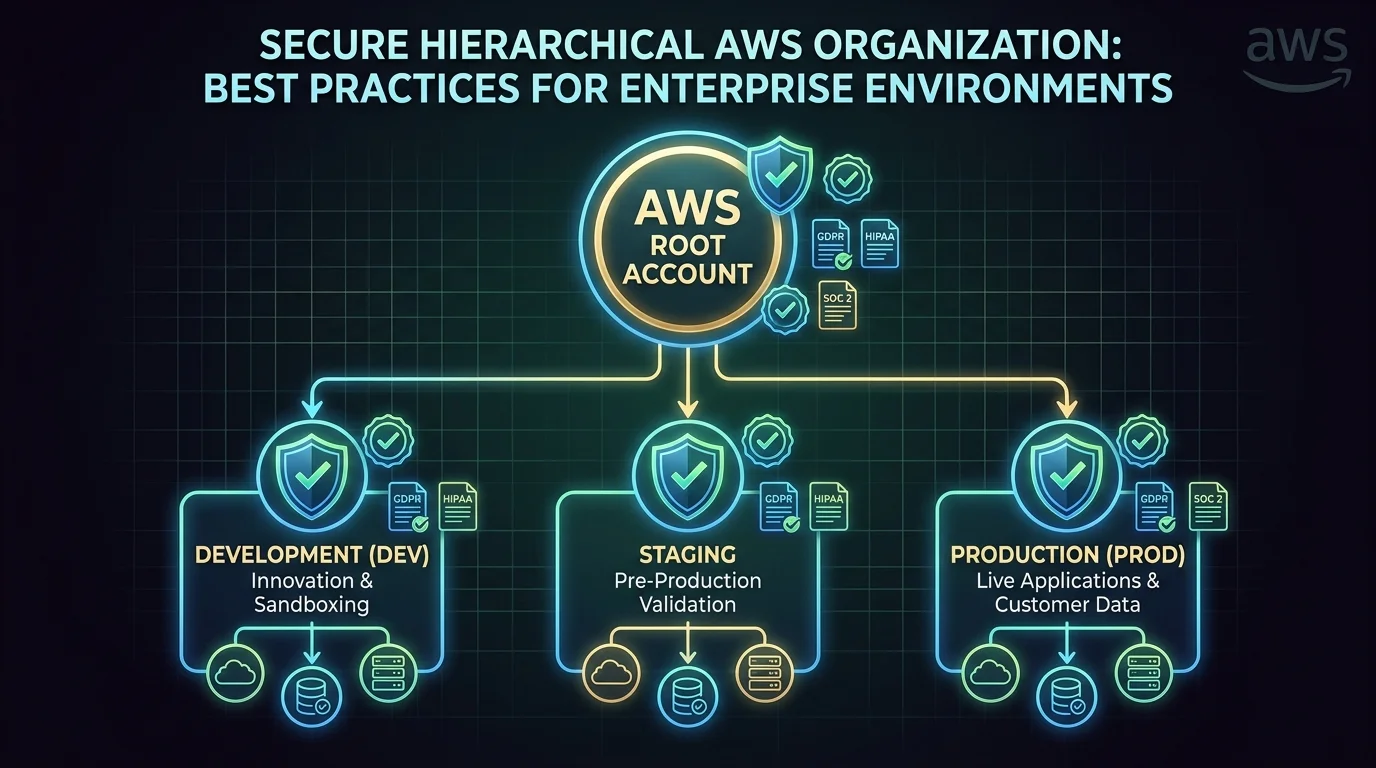
How to structure your AWS organization with multiple accounts for security, compliance, and cost isolation — using AWS Organizations, Control Tower, and a well-designed landing zone.
A practical guide to the 6 pillars of the AWS Well-Architected Framework and review process — what each pillar covers, why it matters, and how to apply it to your AWS workloads.
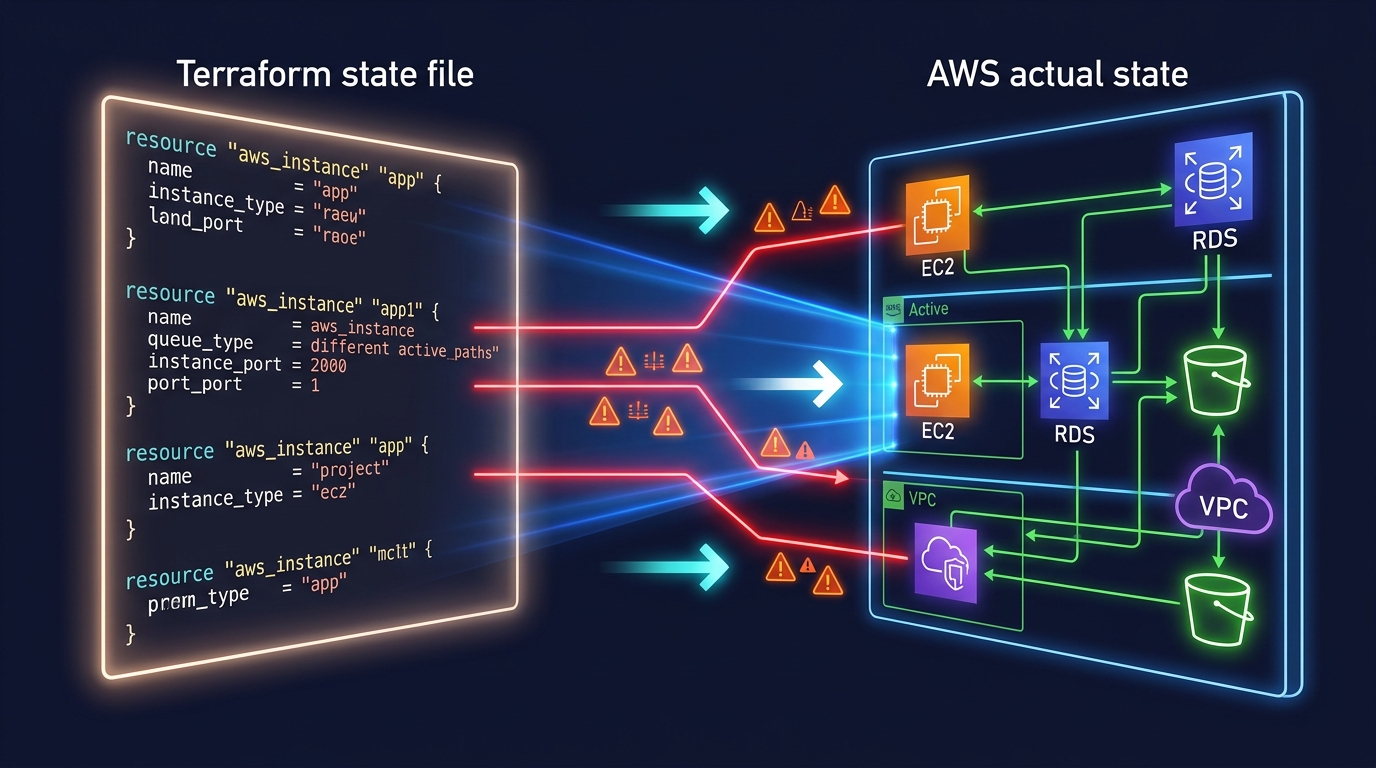
Infrastructure drift—when your actual AWS resources differ from what your IaC declares—causes silent failures and makes disaster recovery impossible. Learn how to detect drift systematically and fix it before it breaks production.
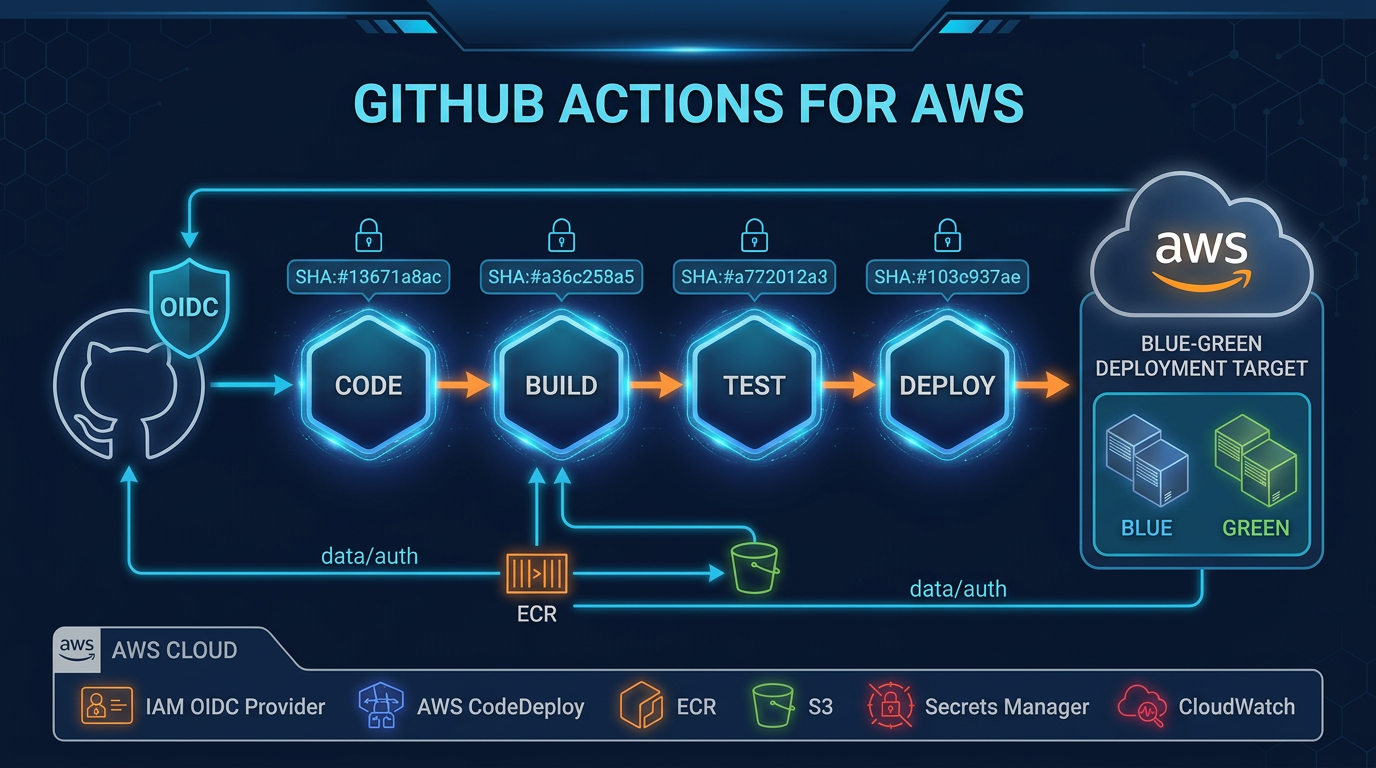
Production-grade GitHub Actions patterns for AWS workloads — OIDC authentication, pinned actions, blue-green deployments, build caching, and the security mistakes that leave your pipeline open to supply chain attacks.
AI Security — Our Specialty
Bedrock Guardrails, HIPAA-Compliant AI & GenAI Governance
AI-specific risk: prompt injection, PII leakage, hallucinations, and compliant model deployment for regulated industries.
Amazon Bedrock Guardrails protect foundation models from harmful outputs — filtering on prompt injection, jailbreaks, toxicity, and PII. This guide covers setup, testing, cost optimization, and production safety patterns for GenAI applications.
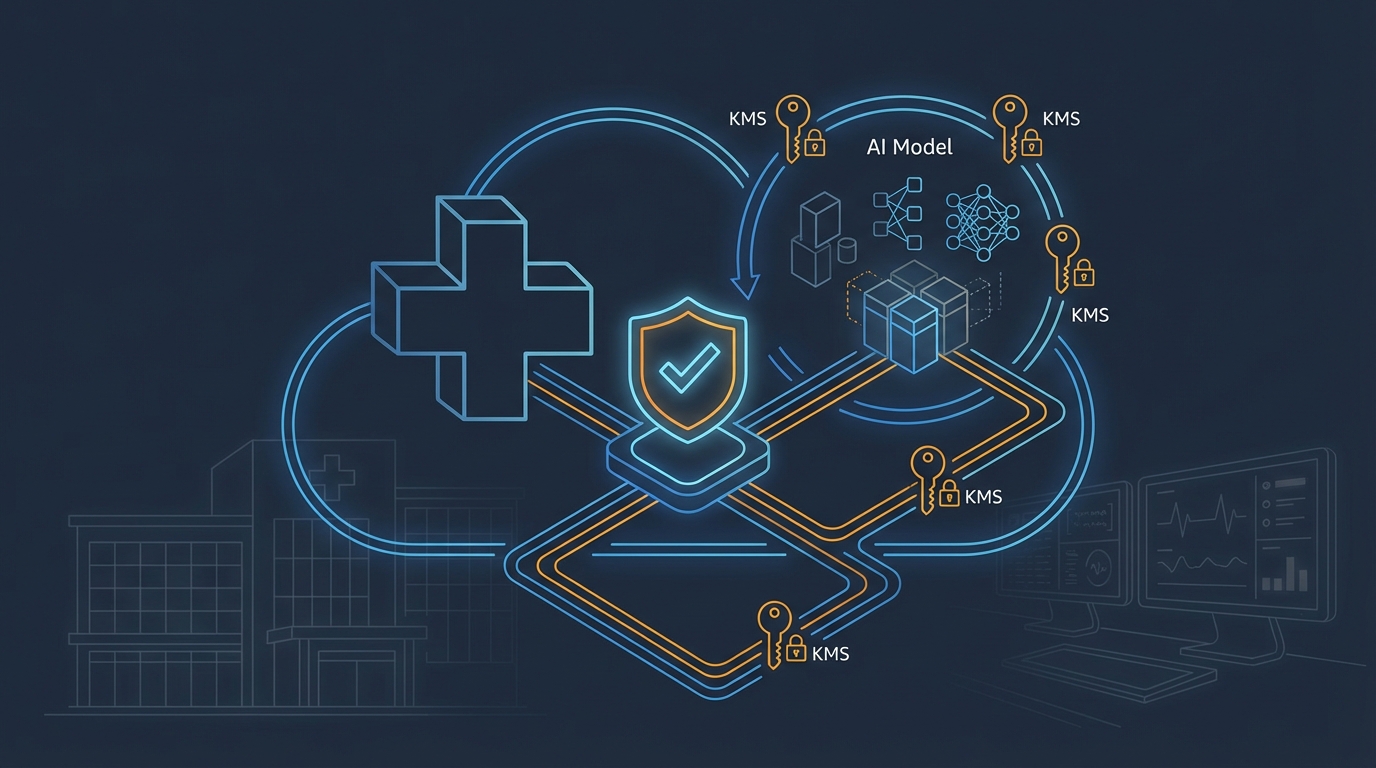
Production guide for HIPAA-compliant generative AI on AWS Bedrock — BAA scope, eligible models, Guardrails for PHI redaction, Knowledge Bases for RAG over clinical data, VPC isolation, and the audit evidence package OCR investigators expect.
Deploying GenAI without guardrails is a compliance incident waiting to happen. Here is how to build a production-grade AI governance layer on AWS using Amazon Bedrock Guardrails, least-privilege IAM, and continuous evaluation.
Free Tools & Tag Archives
Self-serve assessments and broader content
Run a quick gap check, or browse the full security/compliance archive beyond this curated hub.
HIPAA Compliance Checker
15 questions across PHI controls, access management, audit logging, and encryption. Get a gap report before your auditor does.
Frequently asked questions about AWS security and compliance
The questions buyers actually ask before signing — multi-framework scope, evidence ownership, GRC tool integration, and ongoing cost.
We need HIPAA, SOC 2, and PCI DSS — can you handle multi-framework scope?
Yes. Most regulated SaaS clients land with overlapping scope, so we map the controls once against AWS-native services (Audit Manager, Security Hub, Config) and reuse the same evidence pipeline for each framework. Where the frameworks diverge — for example, PCI DSS 4.0.1 script integrity (Requirement 6.4.3) or HIPAA-specific BAA boundaries — we add the framework-specific controls without duplicating the foundational work. Net effect: a single integrated audit prep instead of three sequential ones.
How does AWS Audit Manager fit into your compliance engagement?
We use Audit Manager as the evidence pipeline, not the policy framework. It auto-collects technical evidence (CloudTrail logs, Config rules, IAM access analyzer findings) against the prebuilt frameworks for SOC 2, HIPAA, PCI DSS, NIST 800-53, and ISO 27001. Your team — or our consultants — still writes the policies, runs risk assessments, and manages vendor reviews. Audit Manager replaces the spreadsheet-and-screenshot evidence collection, which is where most teams burn time before an audit.
When do we need a 3PAO vs. CPA firm vs. notified body?
Different frameworks require different assessor types. SOC 2 audits must be conducted by a licensed CPA firm. PCI DSS Level 1 (≥6M transactions/year) requires a Qualified Security Assessor (QSA), and FedRAMP requires a Third Party Assessment Organization (3PAO) listed on the FedRAMP marketplace. ISO 27001 certification requires an accredited certification body (notified body in EU terminology). HIPAA has no formal certification — it is enforced by HHS OCR, so the bar is "demonstrate due diligence" rather than "pass a specific assessor." Our gap-assessment phase always confirms the right assessor type before quoting a timeline.
Do you provide the BAA, or just the AWS-side controls?
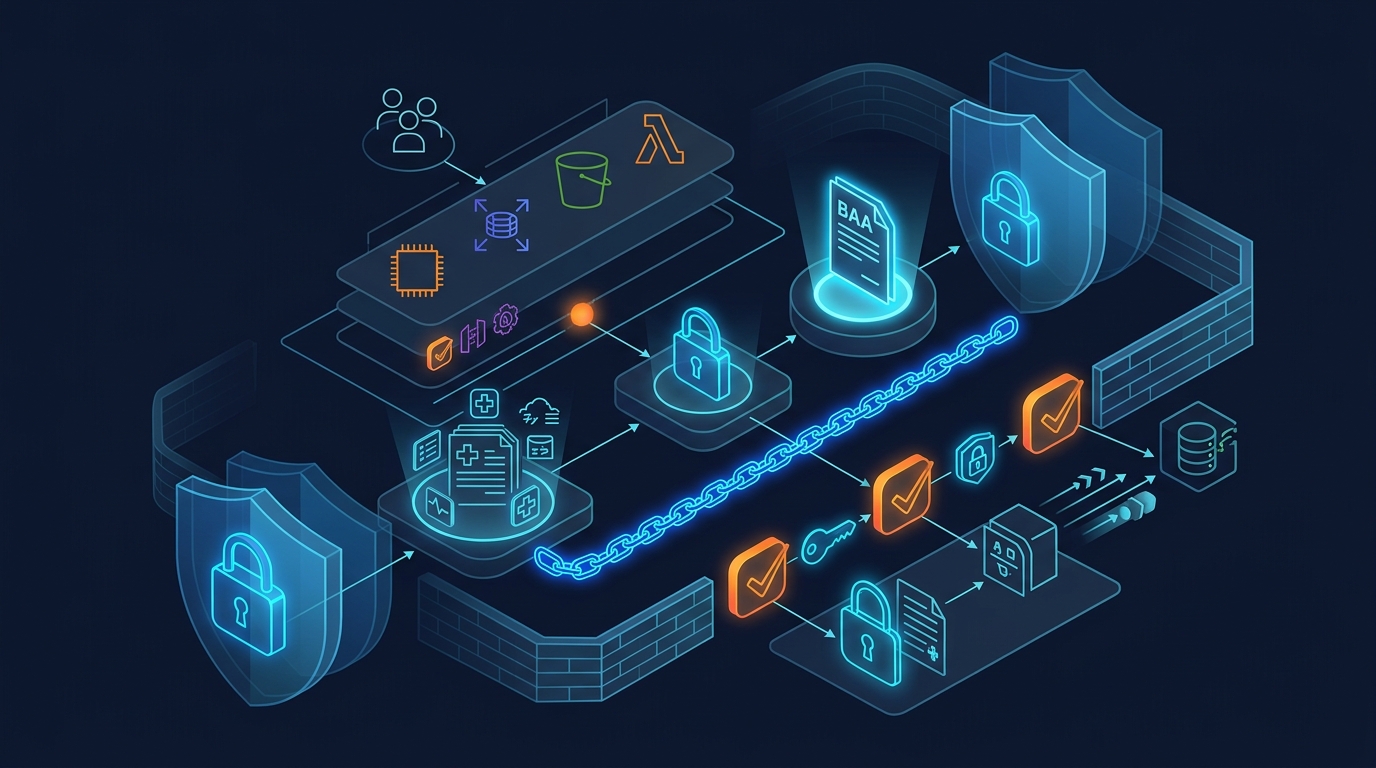
AWS provides the Business Associate Addendum directly through AWS Artifact — that covers AWS as your subprocessor. We help you (a) confirm you only use HIPAA-eligible services on the workload side, (b) implement the technical safeguards (encryption, access logging, transmission security) under HIPAA §164.312, and (c) draft your downstream BAAs with anyone you share PHI with. We do not act as your covered-entity-side legal counsel — your healthcare attorney owns the BAA terms and Notice of Privacy Practices.
How do AI workloads (Bedrock, SageMaker) change the compliance scope?
AI workloads add three control surfaces that traditional compliance frameworks did not contemplate: (1) prompt-injection and PII leakage risk in inference paths, (2) training-data lineage and consent for fine-tuning, and (3) model governance — versioning, approval workflows, and audit trails for who changed which model when. Bedrock now has Guardrails (PII redaction, content filters, denied topics) that are HIPAA-eligible, and SageMaker has model cards and MLOps governance hooks. We treat AI compliance as an additive control set on top of standard HIPAA/SOC 2 — not a replacement.
What evidence packages do you produce, and who owns them post-engagement?
You own everything we produce: control narratives mapped to the framework, AWS architecture diagrams (Security Hub findings, Config rules, IAM Access Analyzer reports), the policy library (information security, access control, incident response, vendor management), risk-assessment workbook, and the Audit Manager evidence pipeline. Everything lives in your AWS account and your document repository. The only thing we keep is a redacted reference architecture for our internal patterns library.
Can you integrate with our existing GRC tool (Vanta, Drata, Secureframe)?
Yes. We work with Vanta, Drata, Secureframe, and Tugboat Logic regularly. The pattern is consistent: the GRC tool is your control inventory and evidence dashboard for auditors, AWS Config + Security Hub is the source of truth for technical findings, and we wire the read-only AWS integration so the GRC tool reflects live state instead of point-in-time snapshots. We do not push you off your existing tooling — most of our clients arrive with one already in place.
What does ongoing compliance monitoring cost after the initial engagement?
Two cost components: AWS service costs (Security Hub at ~$0.0010 per check, Config at ~$0.003 per evaluation, GuardDuty at ~$1.00 per million CloudTrail events — typically $200–$2,000/month at mid-market scale) and engagement costs (we offer a managed compliance retainer that covers quarterly control reviews, annual policy refresh, audit liaison, and on-call support during your audit window — ranges from $4K–$12K/month depending on framework count and account scale). Most clients also keep a small reserve for the assessor fees themselves, which we do not control.
Need Expert Help?
Our articles share what we know. Our consulting engagements apply that knowledge to your specific environment, regulatory scope, and threat model.
We use cookies and similar technologies to analyze site traffic, personalize content, and provide social media features. By clicking "Accept," you consent to our use of cookies. You can adjust your preferences at any time.