Network & Application Security

AWS WAF, Verified Access, Network Firewall & VPC Hardening

Layer-7 defenses, ZTNA for workforce apps, stateful L3-L7 firewalling, and production-grade VPC patterns.

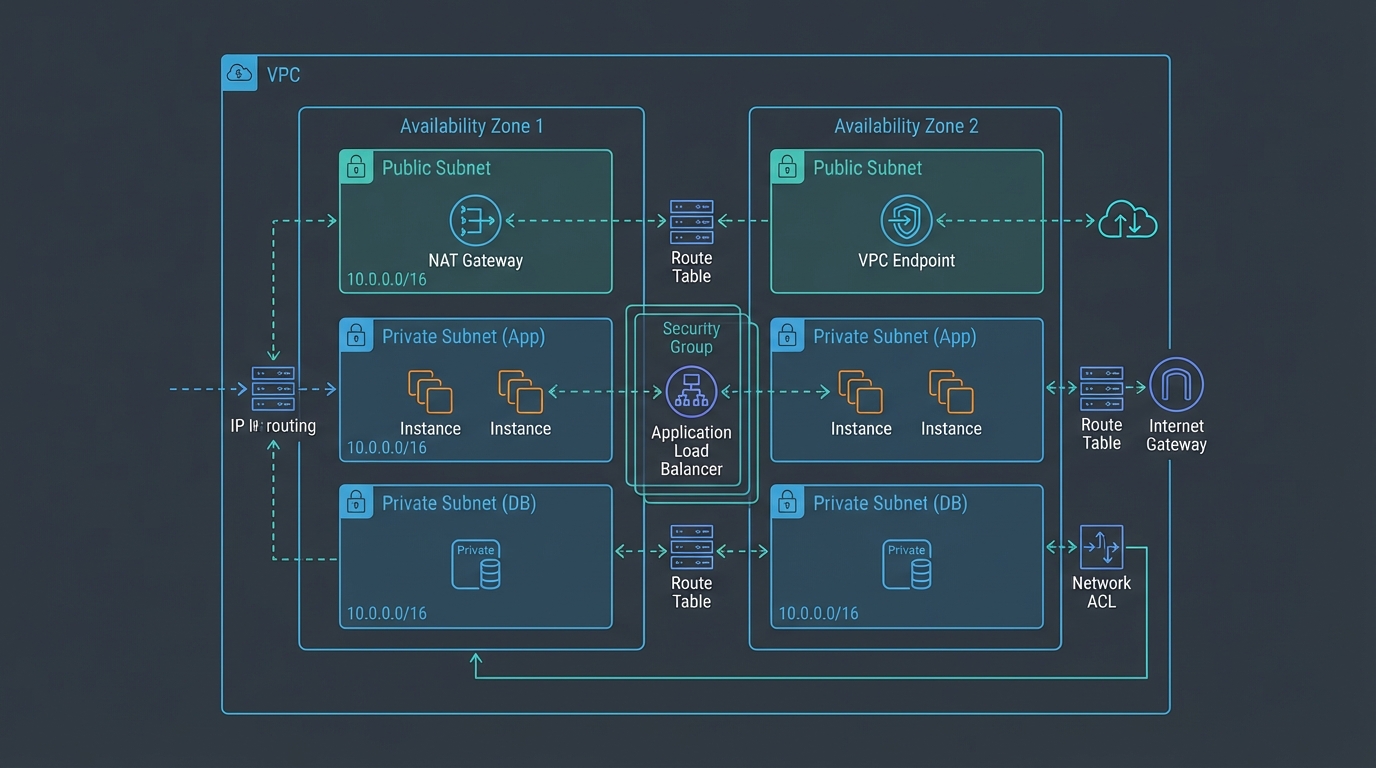
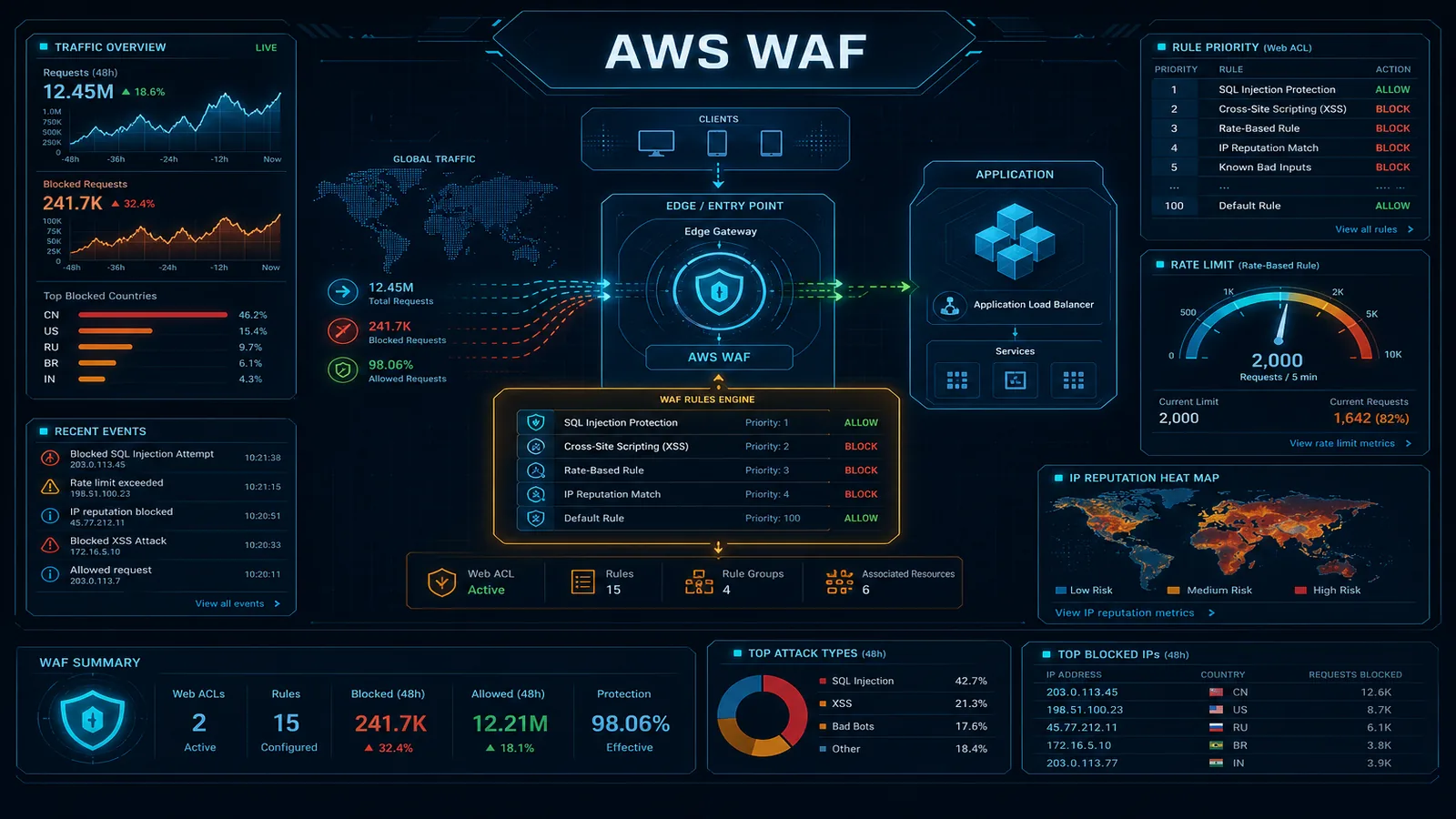
WAF managed rules and a default VPC are not enough for any serious production workload. The guides below cover layer-7 defenses, API-specific rate limiting and bot protection, AWS Verified Access for AWS-native ZTNA (replacing legacy VPN for workforce app access with IAM Identity Center / OIDC trust providers and Cedar policy), AWS Network Firewall plus Firewall Manager for stateful L3-L7 inspection at multi-account scale, and VPC patterns that hold up under real traffic and regulatory scope.

Part of the AWS Security & Compliance hub.

Guides

5 guides in this subtopic

Services

Services that put these guides into practice

Engagements where we apply the patterns above to your specific environment, regulatory scope, and threat model.

AWS Security Consulting

AWS security consulting from an AWS Select Tier Partner. 2-week assessment, 4–6 week remediation, zero disruption. IAM hardening, public exposure, compliance gaps, and continuous monitoring.

AWS Penetration Testing Services

AWS-aware penetration testing — IAM privilege escalation, S3 misconfiguration, instance metadata exploitation, web app and API testing. OSCP-certified testers, OWASP/PTES methodology, AWS-compliant scope.

Related subtopics

Continue exploring the AWS security & compliance hub

Sibling subtopics that buyers usually evaluate alongside this one.

Threat Detection & Response

Continuous monitoring, agentless vulnerability scanning, OCSF data lakes, forensic investigation, and automated remediation.

IAM & Access Control

Least-privilege patterns, workforce SSO with identity propagation, customer auth, and fine-grained Cedar-policy authorization.

Governance & Multi-Account

Org-wide guardrails, account isolation strategy, and continuous compliance monitoring as code.

FAQ

Frequently asked questions about network & application security

Is AWS WAF enough, or do we also need AWS Network Firewall?
They protect different layers and traffic shapes. WAF inspects HTTP/HTTPS traffic at the application layer (CloudFront, ALB, API Gateway, AppSync, Cognito, Verified Access) and is the right tool for SQL injection, XSS, bot mitigation, OWASP-pattern blocking, rate limiting, and geographic blocking. Network Firewall is a stateful network-layer (L3-L7) firewall for VPCs — it inspects all traffic in and out of a VPC (TLS-inspection optional), runs Suricata-compatible IDS/IPS rules, and enforces domain-based egress filtering. Most regulated workloads run both: WAF in front of the public application, Network Firewall on the VPC edge for east-west and egress control. Firewall Manager pushes a single Network Firewall policy across every account in your AWS Organization.
When should we replace VPN with AWS Verified Access?
Verified Access is the right call for workforce access to internal HTTPS (and now TCP) applications — Jenkins, internal dashboards, ArgoCD, Grafana, internal SaaS clones — where the legacy AWS Client VPN gives the user a flat network that is hard to scope. With Verified Access, each application has its own endpoint, trust providers (IAM Identity Center, generic OIDC, or device posture from Jamf / CrowdStrike / Jumpcloud), and a Cedar policy that decides per-request whether to allow access. There is no client to install for HTTP apps. Keep Client VPN only for legacy use cases that need raw TCP/UDP at scale to broad subnets (finance/healthcare back-office tools, RDP fleets) — and even then, plan the Verified Access migration as those legacy apps go web-first.
How does AWS Firewall Manager fit alongside Control Tower?
Firewall Manager is the multi-account policy engine; Control Tower is the multi-account landing zone. They are complementary. Once Control Tower has provisioned your accounts and OUs, Firewall Manager pushes WAF rule groups, Network Firewall stateful policies, Shield Advanced protections, security-group baselines, and DNS Firewall policies as Organization-level policies. New accounts inherit the policies on creation; drift (a manually-edited security group, a missing WAF rule) is auto-remediated or flagged based on the policy mode. Without Firewall Manager you end up writing per-account Terraform — workable for 5 accounts, painful at 50, broken at 200.

Need expert help on AWS security and compliance?

Our consulting engagements apply this guidance to your specific environment, regulatory scope, and threat model.