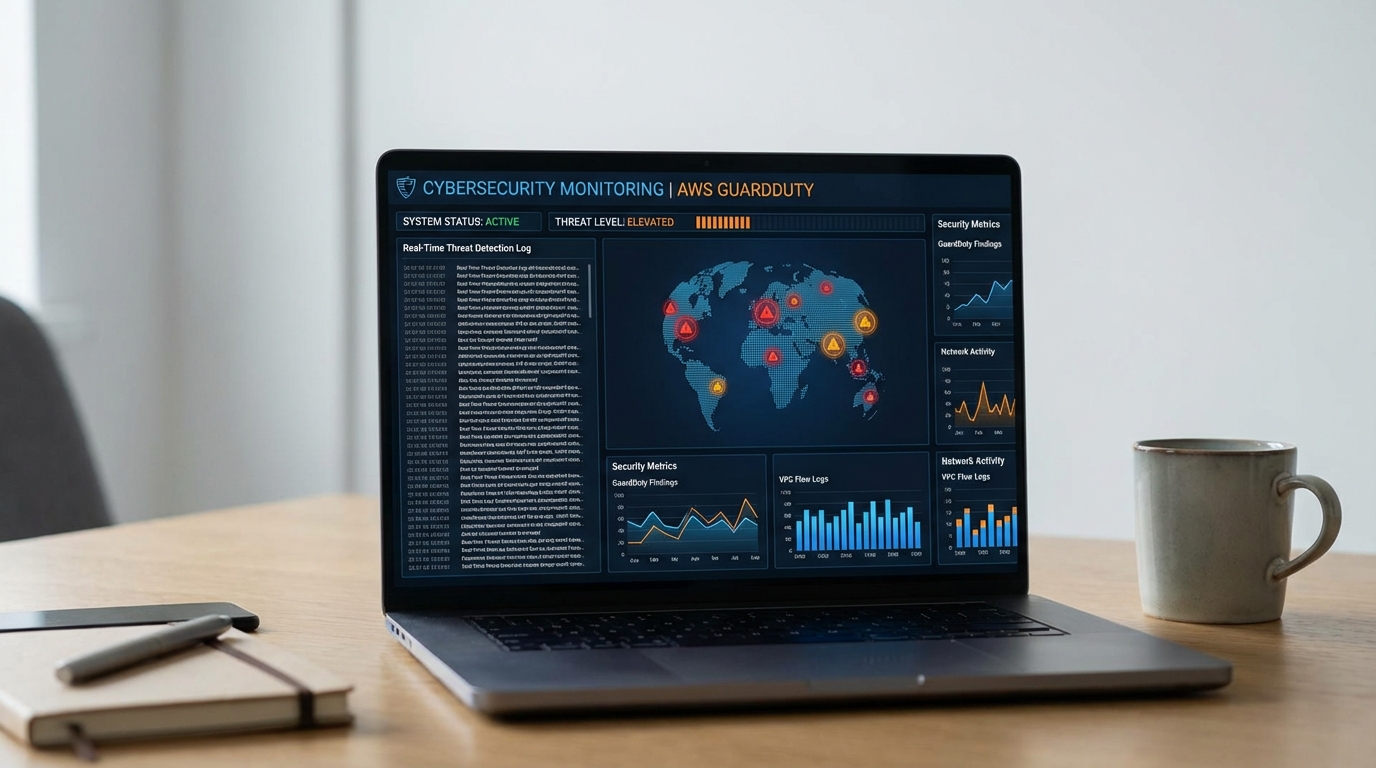
Threat Detection & Response

AWS GuardDuty, Security Hub, Inspector, Detective & Security Lake

Continuous monitoring, agentless vulnerability scanning, OCSF data lakes, forensic investigation, and automated remediation.

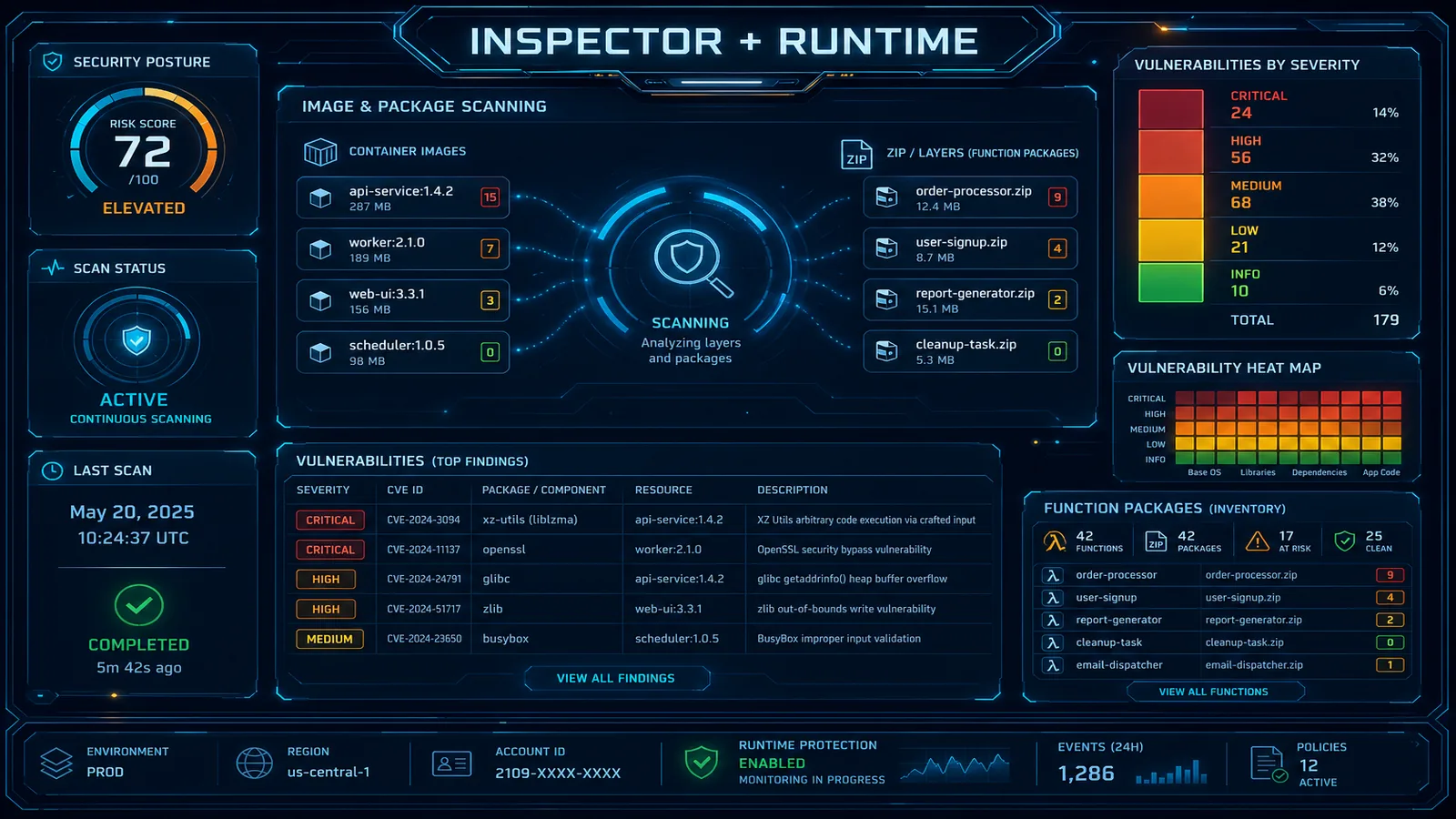
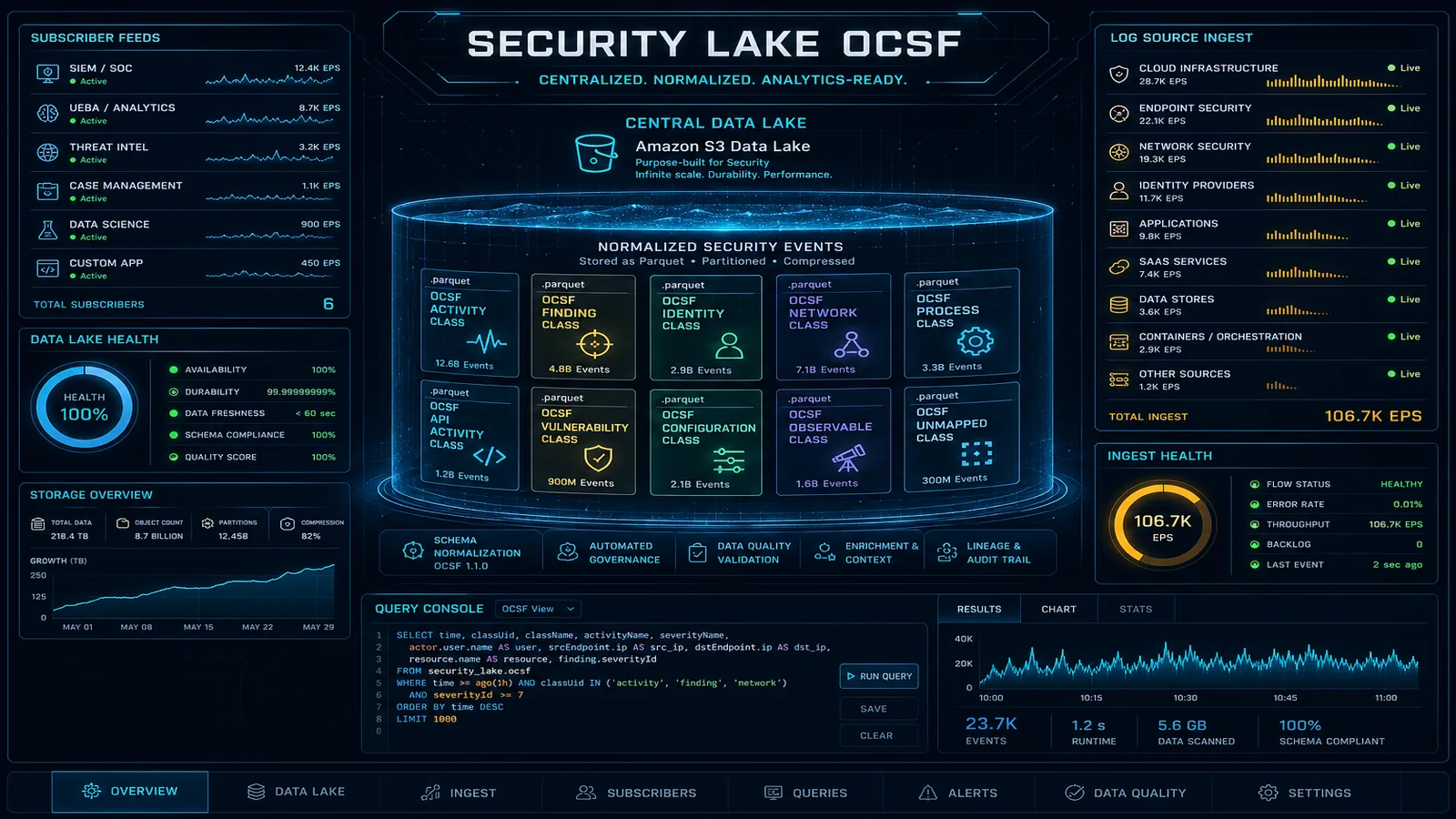
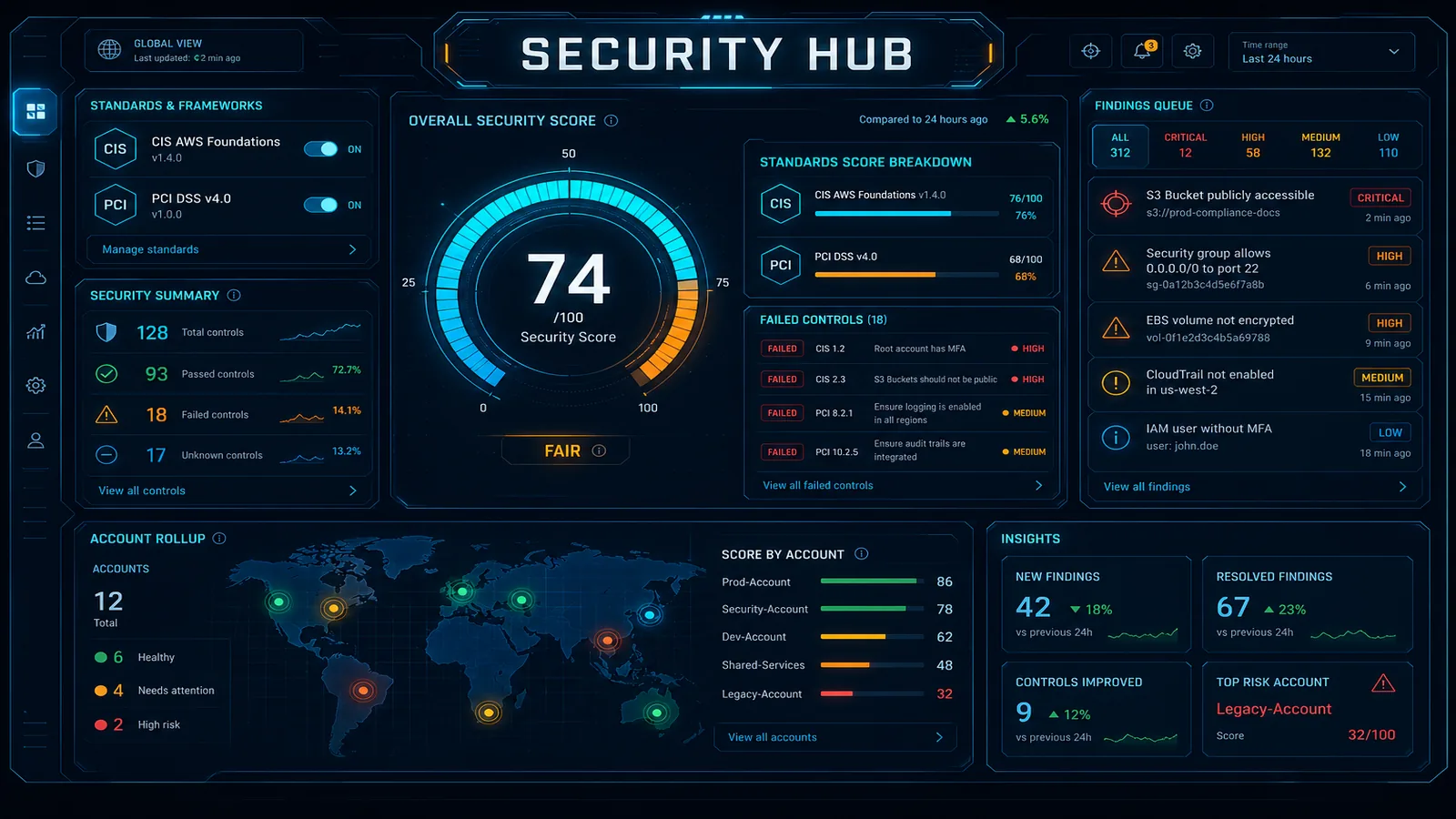
AWS-native threat detection is enough for most workloads — once it is configured correctly. These guides cover GuardDuty across CloudTrail, VPC, EKS, S3, RDS, Lambda, and EC2 Runtime; Security Hub on its 2025-revised resource-based "Essentials" pricing; Inspector v2 with agentless EC2 (EBS-snapshot scanning), Lambda code scanning, and CI/CD code-repo scanning; Amazon Detective for graph-based forensic investigation across GuardDuty / VPC / CloudTrail; and Security Lake with OCSF 1.1 (1.2 in adoption). Plus the automation that turns findings into remediation runbooks instead of dashboard noise.

Part of the AWS Security & Compliance hub.

Guides

7 guides in this subtopic

Services

Services that put these guides into practice

Engagements where we apply the patterns above to your specific environment, regulatory scope, and threat model.

AWS Managed SOC & MDR Services

24/7 managed SOC and MDR for AWS — GuardDuty, Security Hub, Security Lake. Threat hunting, automated containment, incident response from an AWS Select Tier Partner.

AWS Security Consulting

AWS security consulting from an AWS Select Tier Partner. 2-week assessment, 4–6 week remediation, zero disruption. IAM hardening, public exposure, compliance gaps, and continuous monitoring.

Related subtopics

Continue exploring the AWS security & compliance hub

Sibling subtopics that buyers usually evaluate alongside this one.

Data Security

Bucket-level controls, secret rotation, KMS post-quantum, Macie DSPM, and clean-room collaboration without raw-data sharing.

Governance & Multi-Account

Org-wide guardrails, account isolation strategy, and continuous compliance monitoring as code.

Network & Application Security

Layer-7 defenses, ZTNA for workforce apps, stateful L3-L7 firewalling, and production-grade VPC patterns.

FAQ

Frequently asked questions about threat detection & response

Do we still need GuardDuty if Security Hub is already on?
Yes — they are complementary, not redundant. Security Hub Essentials is the aggregator: it ingests findings from AWS services and partner tools, runs continuous standards checks (AWS Foundational Security Best Practices, CIS, PCI DSS, NIST 800-53 r5), and emits a normalized severity score. GuardDuty is one of those finding sources — it produces threat-detection findings (cryptocurrency mining, anomalous CLI activity, credential exfiltration, malware, EKS runtime threats) by analyzing CloudTrail, VPC Flow Logs, DNS logs, S3 data events, EKS audit logs, RDS login events, and Lambda invocations. Without GuardDuty, Security Hub still runs the standards checks but has no behavioral threat-detection feed.
When should we add Amazon Detective on top of GuardDuty?
Add Detective when finding triage takes more than a few minutes per investigation. Detective ingests GuardDuty, VPC Flow Logs, CloudTrail, Route 53, and EKS audit logs and pre-builds the entity graph (IPs, principals, resources, finding chains) so you click into a finding and see the linked behaviour over the prior 30 days without writing CloudWatch Logs Insights queries. Most teams hit the threshold once they cross ~50 GuardDuty findings/week or once a security analyst is dedicated to AWS investigations. Below that, jumping straight to CloudTrail Lake or Athena on Security Lake is acceptable.
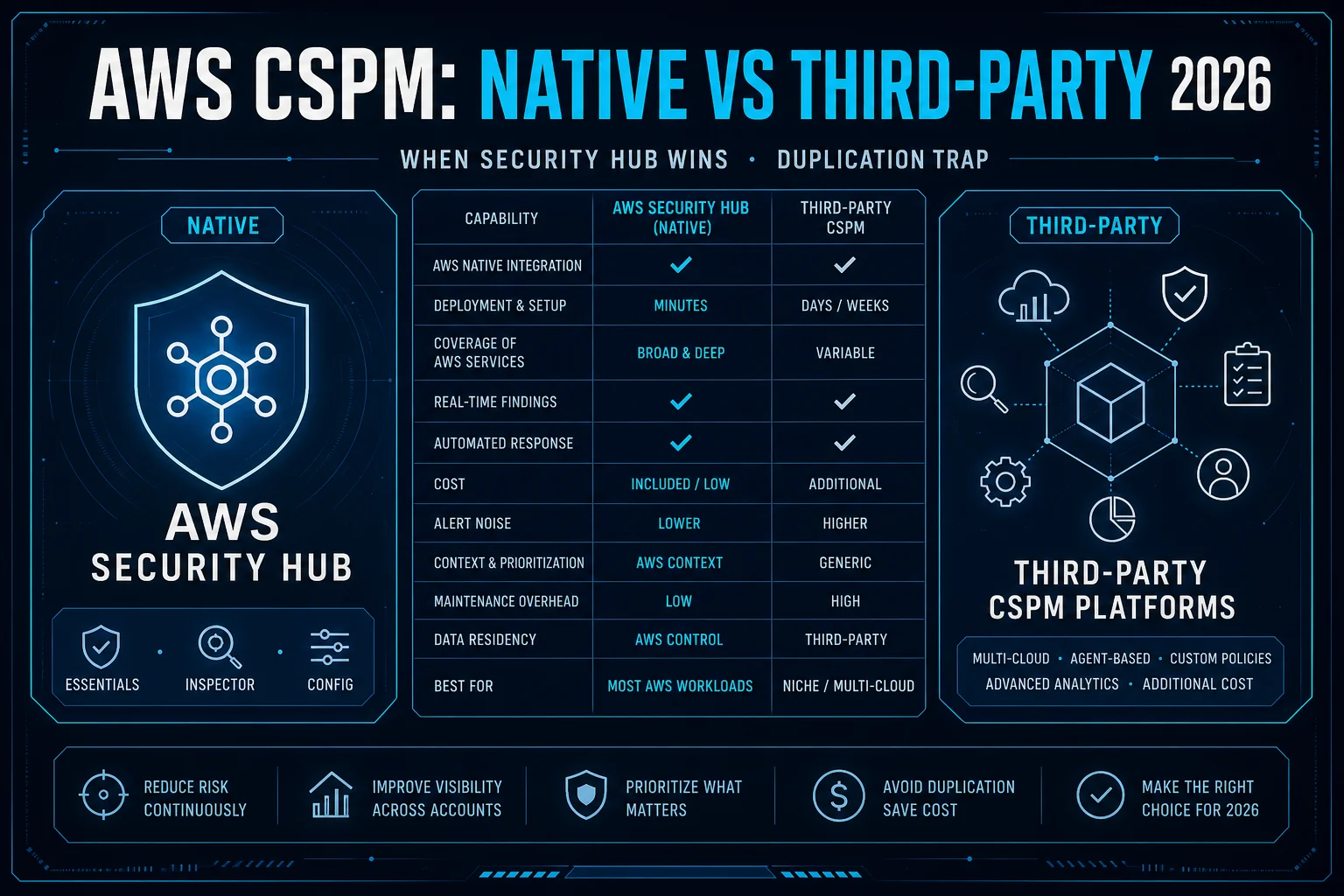
Inspector v2 vs third-party CSPM tools?
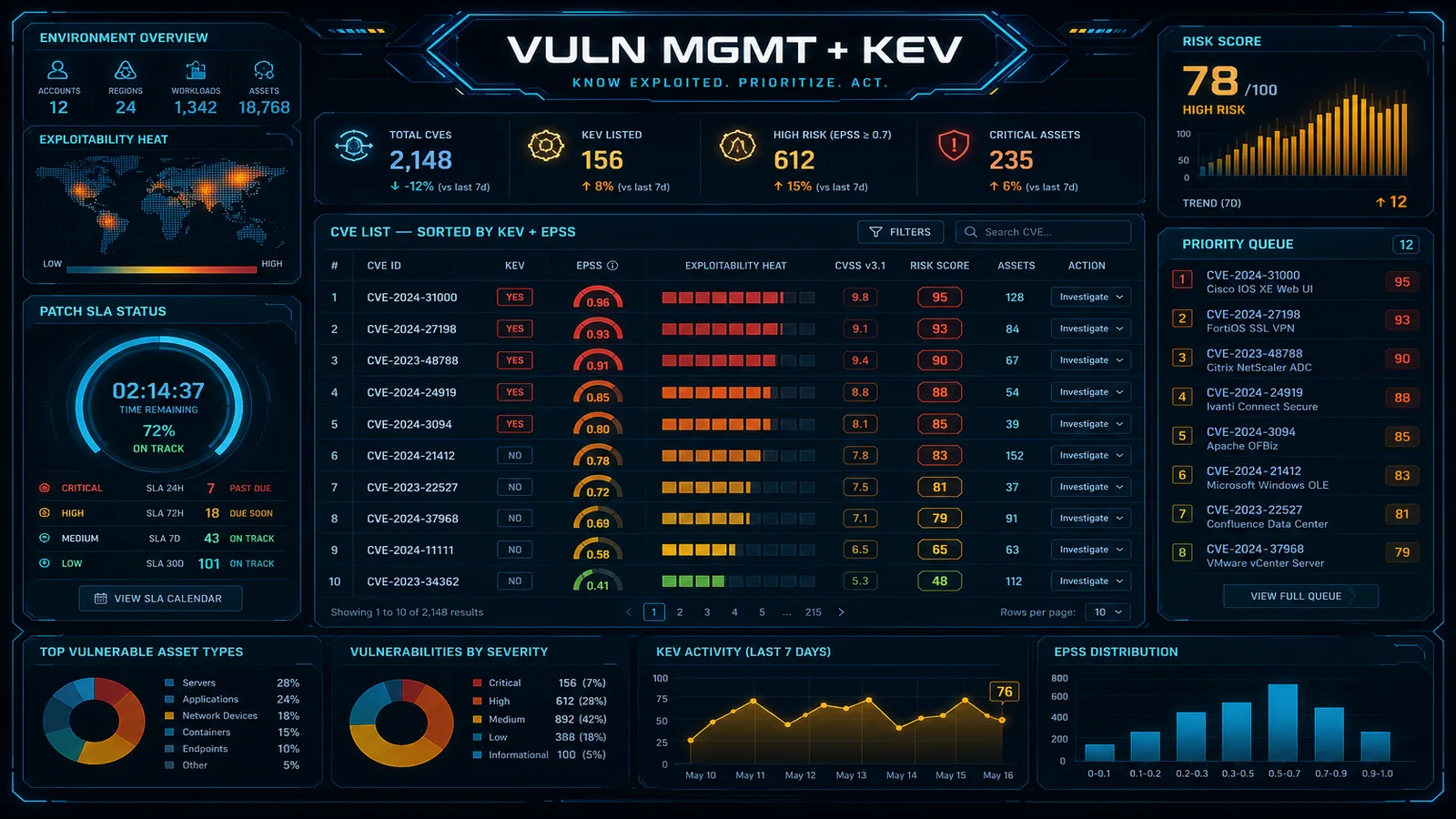
Inspector v2 is best-in-class for AWS-native vulnerability and code scanning: agentless EC2 via EBS snapshots, container image scanning in ECR, Lambda function and Lambda code scanning, and (since 2025) CI/CD scanning of supported code repositories. It is the right call for AWS-only estates because findings flow directly to Security Hub with one CVSS + KEV-aware severity. A third-party CSPM (Wiz, Lacework, Orca, Rapid7) earns its line item when you span multi-cloud, need posture findings beyond vulnerability (data exposure, attack-path graphs), or have a SOC that already lives in that console. We do not recommend duplicating findings — pick one source of truth per finding type.

Need expert help on AWS security and compliance?

Our consulting engagements apply this guidance to your specific environment, regulatory scope, and threat model.