Data Security

Encryption, Secrets, PII Discovery, Post-Quantum & Privacy-Preserving Analytics

Bucket-level controls, secret rotation, KMS post-quantum, Macie DSPM, and clean-room collaboration without raw-data sharing.

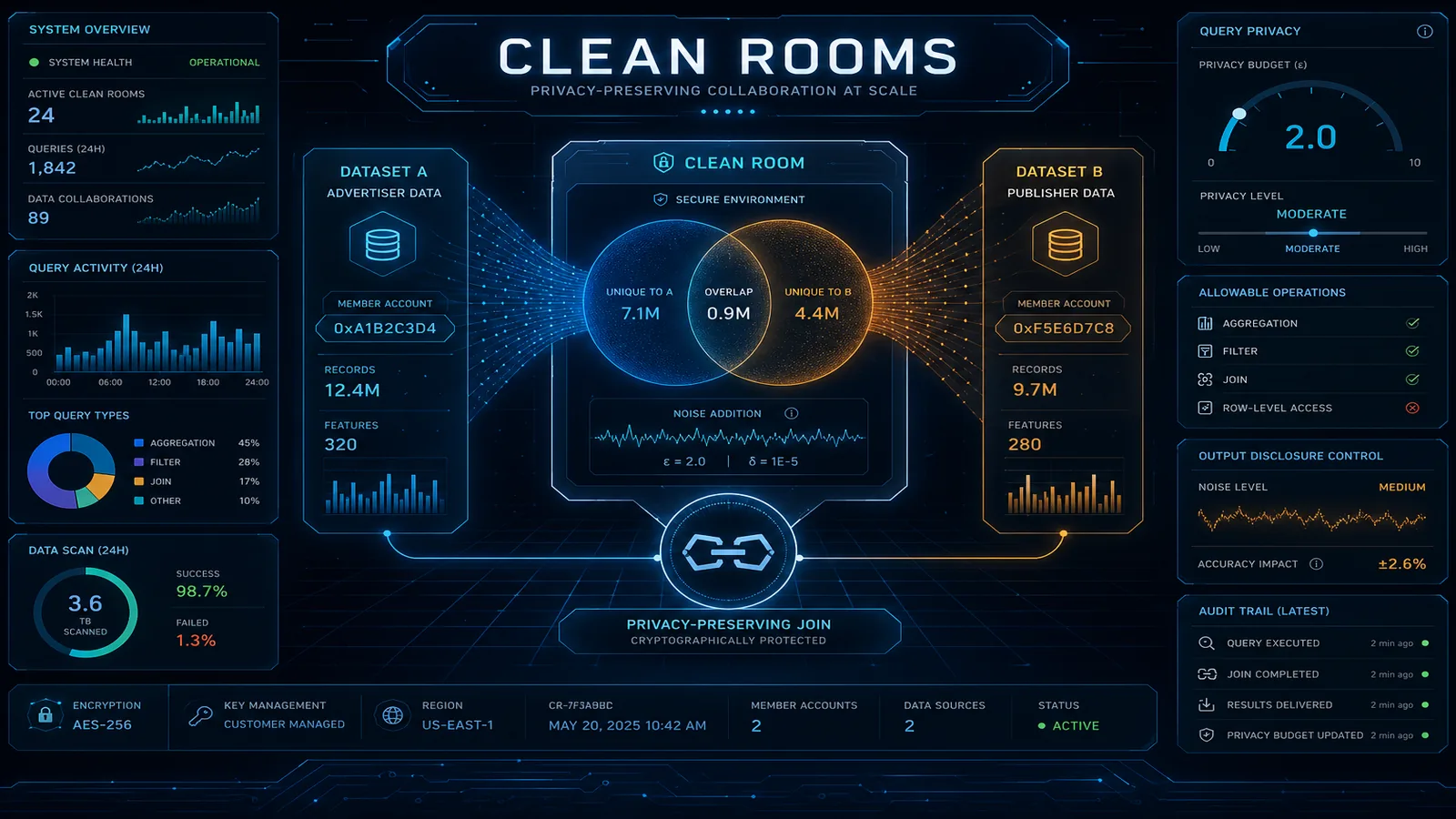
Most "AWS data breaches" are S3 misconfigurations, leaked secrets, or unencrypted analytics joins. The guides below cover bucket-level controls and Block Public Access patterns, secret rotation with Secrets Manager, AWS KMS post-quantum cryptography (ML-KEM hybrid TLS now in KMS, ACM, and Secrets Manager since April 2026; ML-DSA digital signatures GA in KMS), Amazon Macie for PII discovery and DSPM in S3, and privacy-preserving analytics with Clean Rooms.

Part of the AWS Security & Compliance hub.

Guides

6 guides in this subtopic

Services

Services that put these guides into practice

Engagements where we apply the patterns above to your specific environment, regulatory scope, and threat model.

AWS Security Consulting

AWS security consulting from an AWS Select Tier Partner. 2-week assessment, 4–6 week remediation, zero disruption. IAM hardening, public exposure, compliance gaps, and continuous monitoring.

Cloud Compliance Services — HIPAA, SOC 2, PCI DSS on AWS

Cloud compliance services — HIPAA, SOC 2, PCI DSS, ISO 27001, GDPR. Expert consulting from FactualMinds.

Related subtopics

Continue exploring the AWS security & compliance hub

Sibling subtopics that buyers usually evaluate alongside this one.

Threat Detection & Response

Continuous monitoring, agentless vulnerability scanning, OCSF data lakes, forensic investigation, and automated remediation.

Compliance Frameworks

Framework-by-framework guidance — what auditors expect, what AWS provides, and what your team configures.

AI Security

AI-specific risk: prompt injection, PII leakage, hallucinations, and compliant model deployment for regulated industries.

FAQ

Frequently asked questions about data security

Is Amazon Macie worth the cost vs S3 Block Public Access alone?
Block Public Access prevents accidental exposure; Macie tells you what would have been exposed. The two answer different questions. Macie continuously discovers and classifies sensitive data (managed identifiers for ~140 PII/PHI/PCI categories plus custom regex, keyword, and ML-based classifiers) across your S3 estate, surfaces unencrypted or publicly accessible buckets containing sensitive data, and feeds findings to Security Hub. The cost — buckets evaluated daily plus per-GB job-based scans — is meaningful at petabyte scale, so most teams scope Macie to known-sensitive prefixes (production application data, backups, data-lake landing zones) rather than the full account. For HIPAA/PCI/GDPR scope, Macie is the cheapest credible "where is the regulated data?" answer.
Is post-quantum KMS a 2026 decision or a 2027 decision?
For long-lived ciphertexts and signatures, it is a today decision. KMS, ACM, and Secrets Manager now negotiate ML-KEM-1024 hybrid TLS by default for the AWS SDKs that support it — turn it on for any data flow that protects information with a >5-year sensitivity horizon (financial records, healthcare records, intelligence, IP, long-term archives) because of the "harvest now, decrypt later" risk. ML-DSA digital signatures in KMS are GA for code-signing and document-signing workflows where signature longevity matters. For ephemeral request/response traffic, classical ECDHE is still acceptable until 2030+, but most teams find the hybrid mode adds no measurable latency and avoids a future migration sprint.
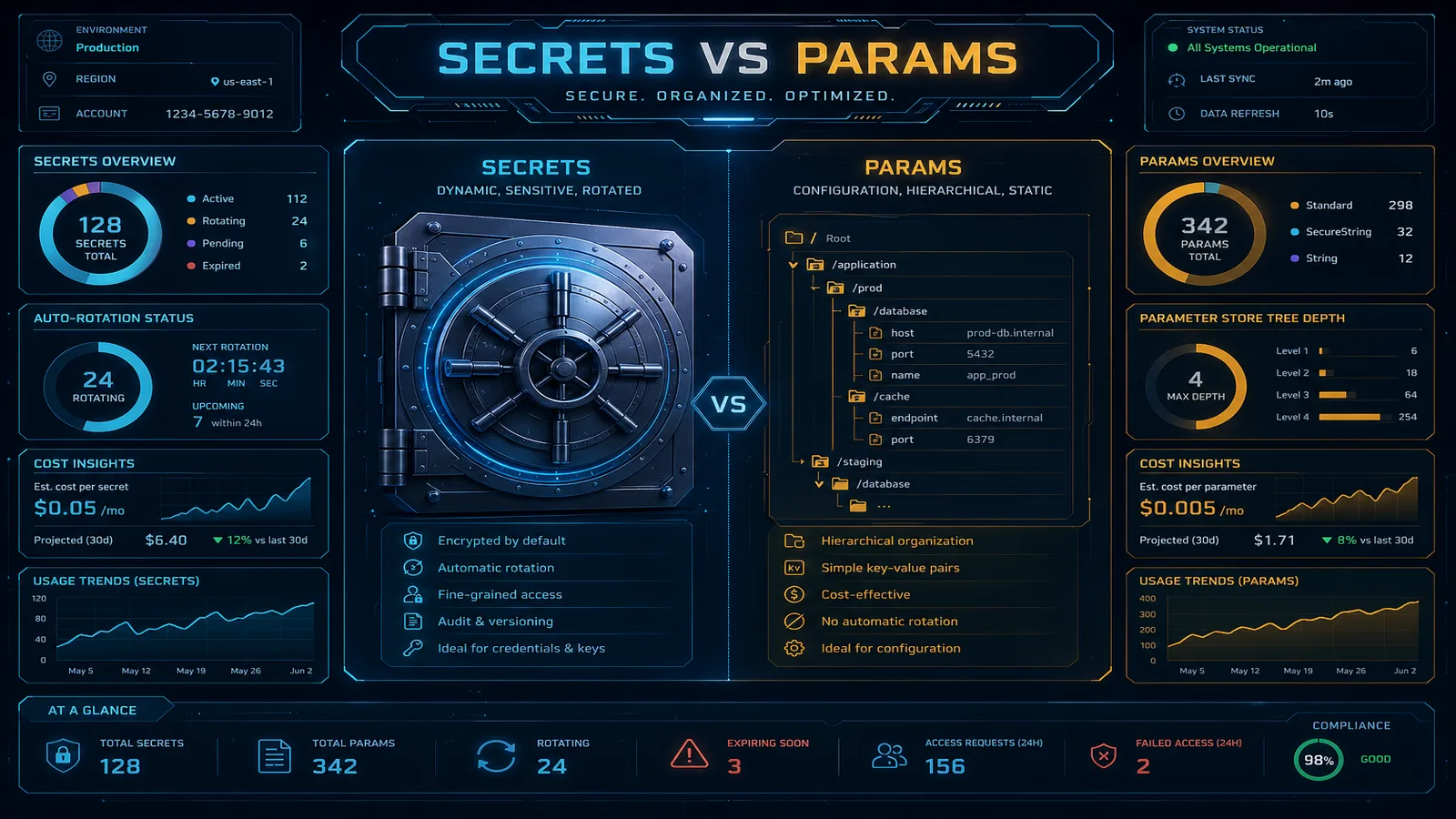
Secrets Manager vs Parameter Store SecureString — which to pick?
Secrets Manager when you need rotation. Parameter Store SecureString when you do not. Secrets Manager bundles automatic rotation Lambdas (RDS, Aurora, DocumentDB, Redshift, Redshift Serverless, single-user/multi-user templates) and replication across regions; you pay per secret per month plus per API call. Parameter Store SecureString is free for standard parameters (up to 4 KB, 10K parameters per region); rotation is a DIY EventBridge-scheduled Lambda. Most teams run a hybrid: Secrets Manager for database credentials and third-party API keys that need rotation; Parameter Store for non-secret config (feature flags, region lists, ARNs) and the SecureString tier for low-rotation tokens. Both integrate with KMS and CloudTrail for evidence.

Need expert help on AWS security and compliance?

Our consulting engagements apply this guidance to your specific environment, regulatory scope, and threat model.