AI Security

Bedrock & SageMaker Security From Day One

AI-specific risk: prompt injection, PII leakage, hallucinations, and compliant model deployment for regulated industries.

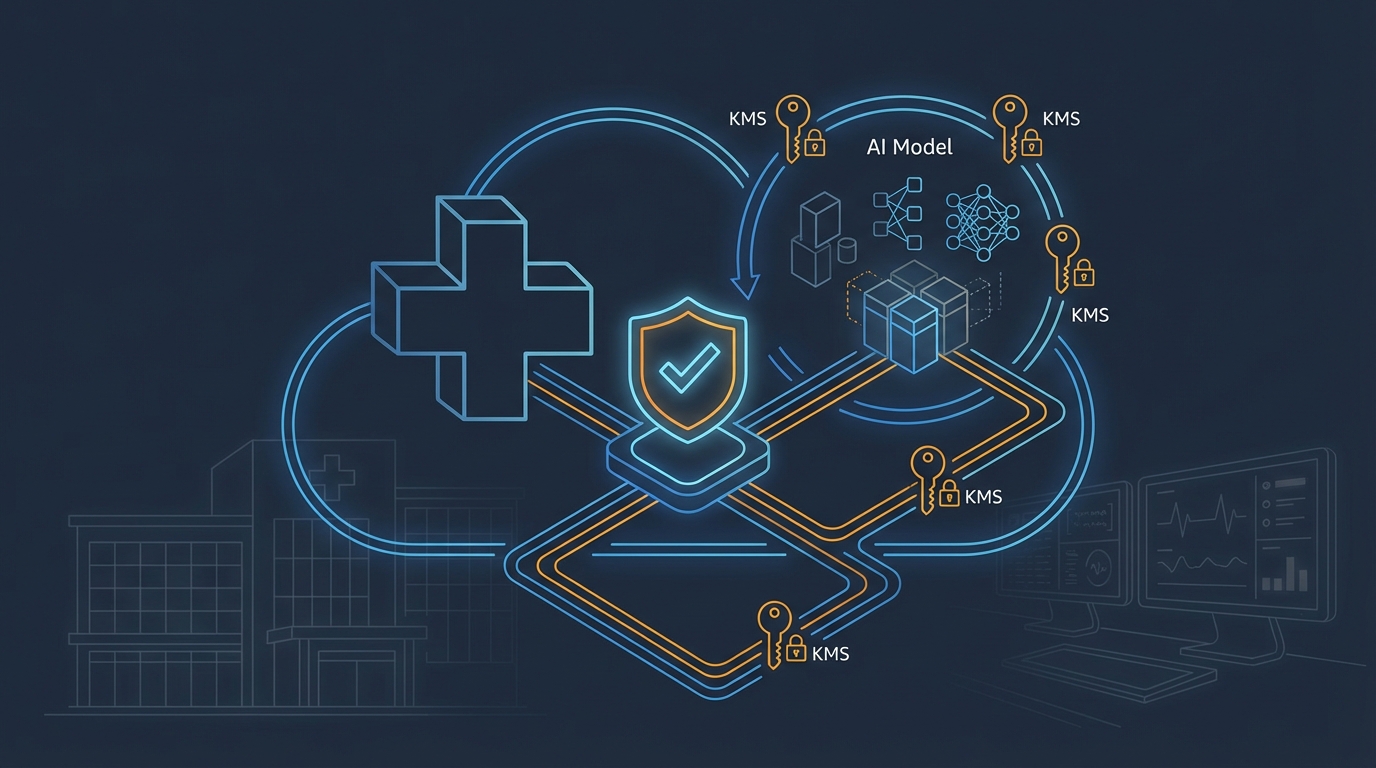
AI workloads add three control surfaces traditional compliance frameworks did not contemplate: prompt-injection and PII leakage in inference paths, training-data lineage and consent, and model governance. The guides below cover Bedrock Guardrails (PII redaction, text and image content filters, denied topics, word filters, contextual grounding checks, and Automated Reasoning checks for math-validated factuality at ~99% accuracy — all HIPAA-eligible), HIPAA-eligible AI architectures including Bedrock AgentCore, and GenAI governance for regulated industries.

Part of the AWS Security & Compliance hub.

4
Guides
2
Related Services
Select Tier
AWS Consulting Partner

Guides

4 guides in this subtopic

FAQ

Frequently asked questions about ai security

Do Bedrock Guardrails replace prompt-injection testing?
No — Guardrails are a runtime defence, not a substitute for adversarial testing. Guardrails block known-bad output classes (PII leakage, denied topics, content categories, off-topic queries, ungrounded responses) on every inference, but a sufficiently novel prompt-injection chain can still induce harmful behaviour the guardrail does not pattern-match. The right pattern: deploy Guardrails for steady-state defence, run quarterly adversarial red-team exercises (manual + tools like garak, PyRIT, or AWS Bedrock Evaluations adversarial suites), and feed every confirmed bypass back into the Guardrail policy as a denied topic, regex, or grounding rule. NIST AI RMF and the EU AI Act Annex III both require ongoing risk assessment — point-in-time testing alone does not satisfy either.
How does Bedrock Automated Reasoning differ from contextual grounding?
Contextual grounding compares the model output against the retrieval-augmented source documents and rejects responses that are not corroborated — the right tool for "did you cite something we provided?" Automated Reasoning compares the model output against a formal logic policy you encode (rules, constraints, allowed conclusions) and mathematically validates that the output is consistent with the policy — the right tool for "is this answer logically valid given our business rules and regulations?" Use grounding for retrieval-augmented generation over your knowledge base; use Automated Reasoning when the answer must satisfy explicit rules (HR policy, insurance underwriting, regulatory determinations, eligibility logic) where a hallucinated correct-sounding answer would be a liability. AWS reports ~99% validated-response accuracy on the public benchmark; production accuracy depends on policy completeness.
Is Amazon Bedrock HIPAA-eligible — including AgentCore?
Yes. Amazon Bedrock has been HIPAA-eligible (covered by the AWS BAA) since 2023, and AWS added Bedrock AgentCore to the HIPAA Eligible Services list in February 2026. Confirm the model you use is HIPAA-eligible (most foundation models on Bedrock are; some third-party models opted out) by checking the AWS HIPAA Eligible Services page for the current list. The Guardrails feature itself is HIPAA-eligible — including the PII redaction, content filters, contextual grounding, and Automated Reasoning checks. Your responsibility: encrypt traffic in transit (Bedrock supports ML-KEM hybrid TLS), encrypt logs at rest with KMS-CMK, scope IAM permissions to the minimum, and keep prompt and response logs only for the period your data-retention policy permits.

Need expert help on AWS security and compliance?

Our consulting engagements apply this guidance to your specific environment, regulatory scope, and threat model.