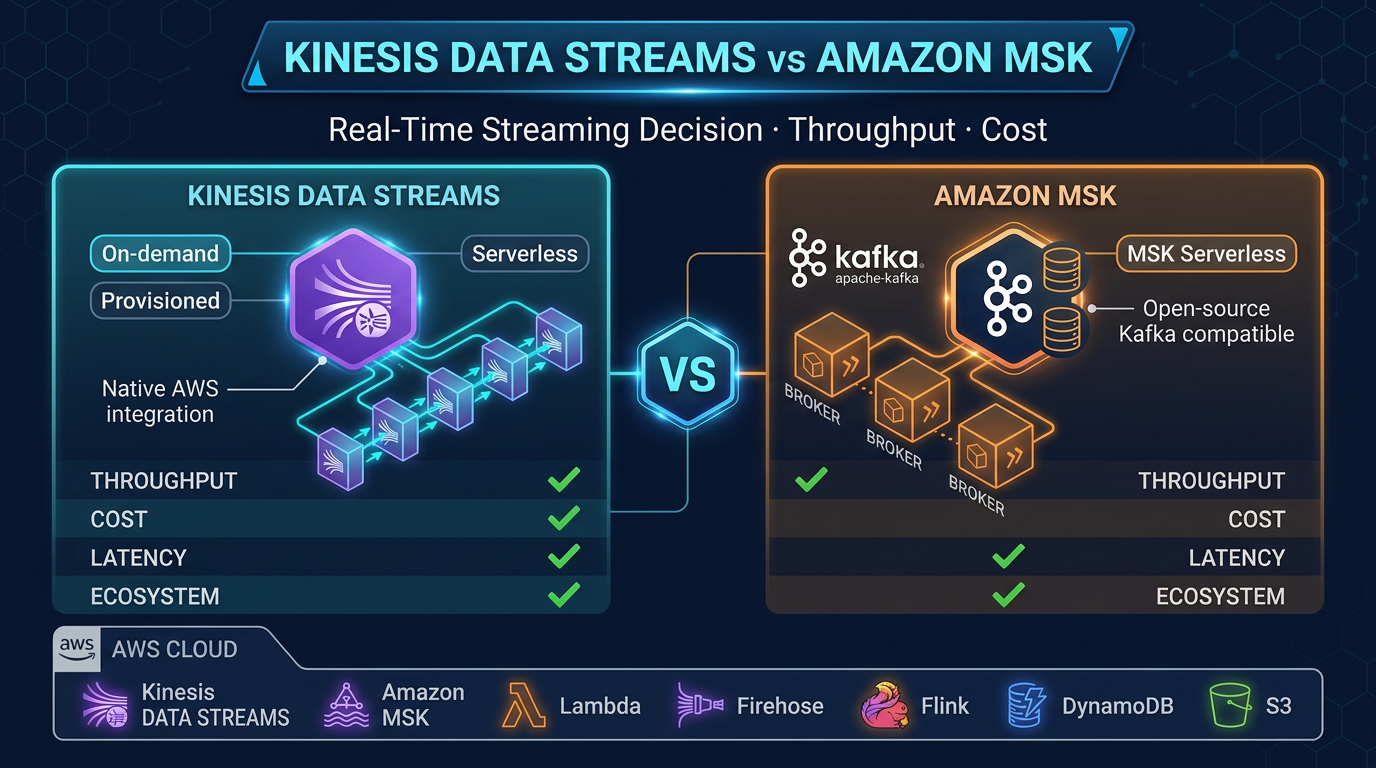
Amazon Kinesis Data Streams vs MSK: Real-Time Streaming Decision Guide
Kinesis Data Streams and Amazon MSK both handle real-time streaming on AWS, but they serve different architectures. Here is how to choose between them for your workload.

Kinesis Data Streams and Amazon MSK both handle real-time streaming on AWS, but they serve different architectures. Here is how to choose between them for your workload.

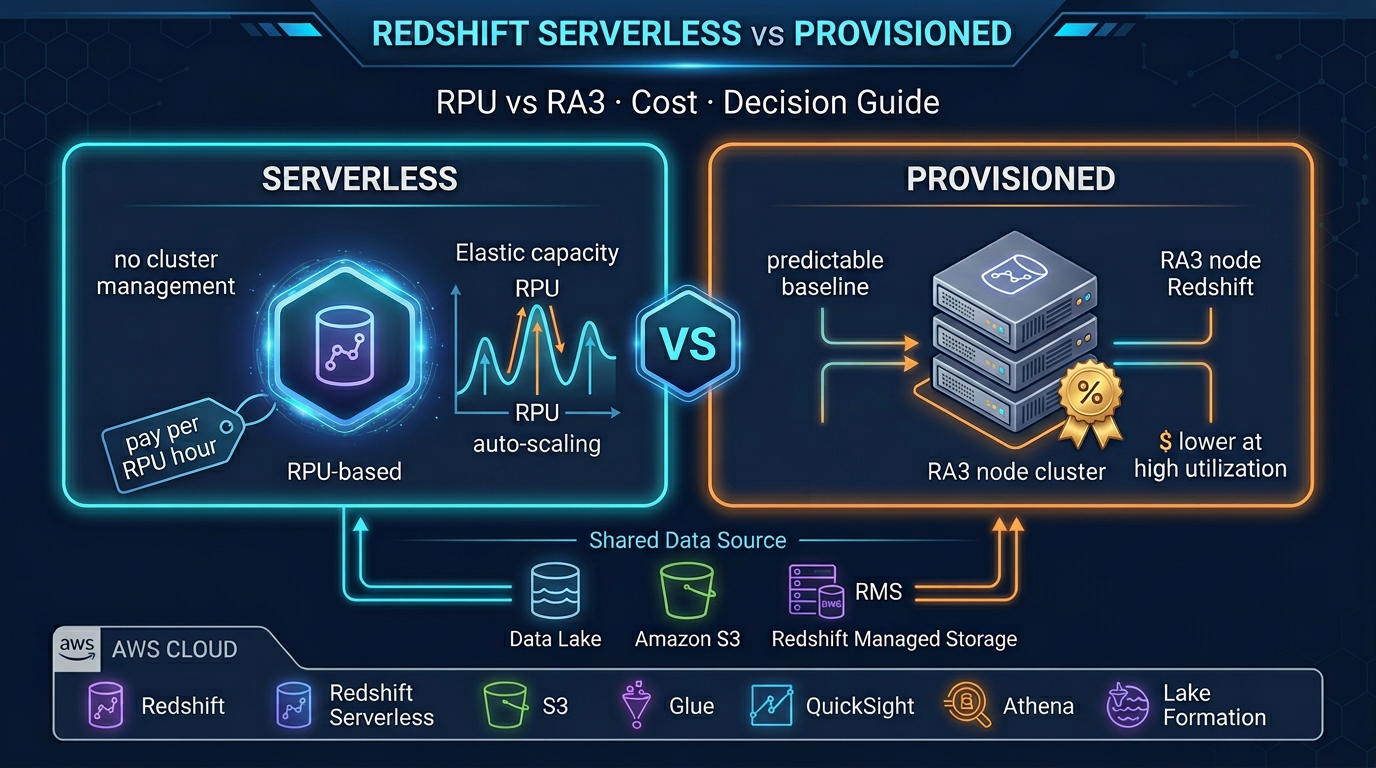
Serverless RPUs vs Provisioned RA3 — still not automatic. July 2026 refresh: base 4–1024 RPUs, Max RPU-hours, AI-driven scaling, when RI wins.

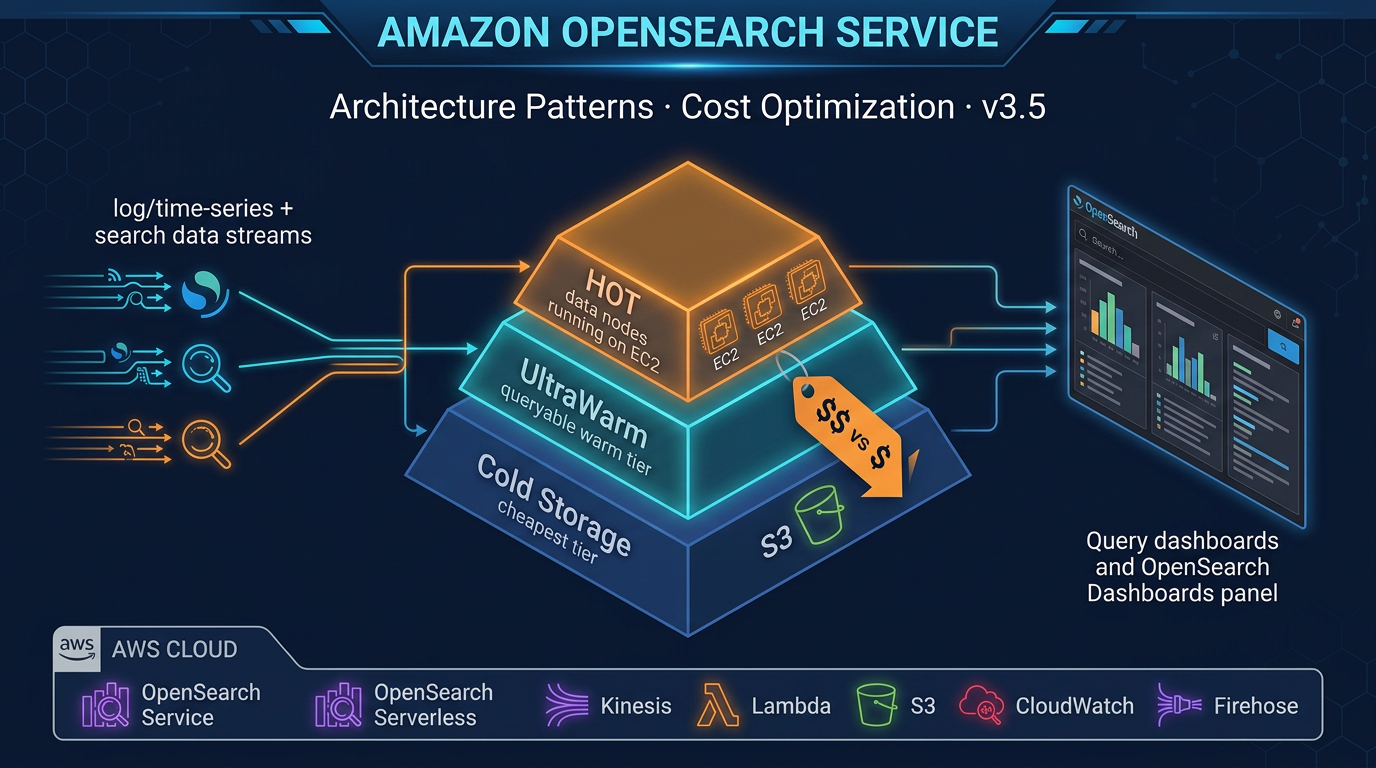
Amazon OpenSearch Service powers search, log analytics, and time-series workloads on AWS. Here are the architecture patterns and cost levers that matter most in production.

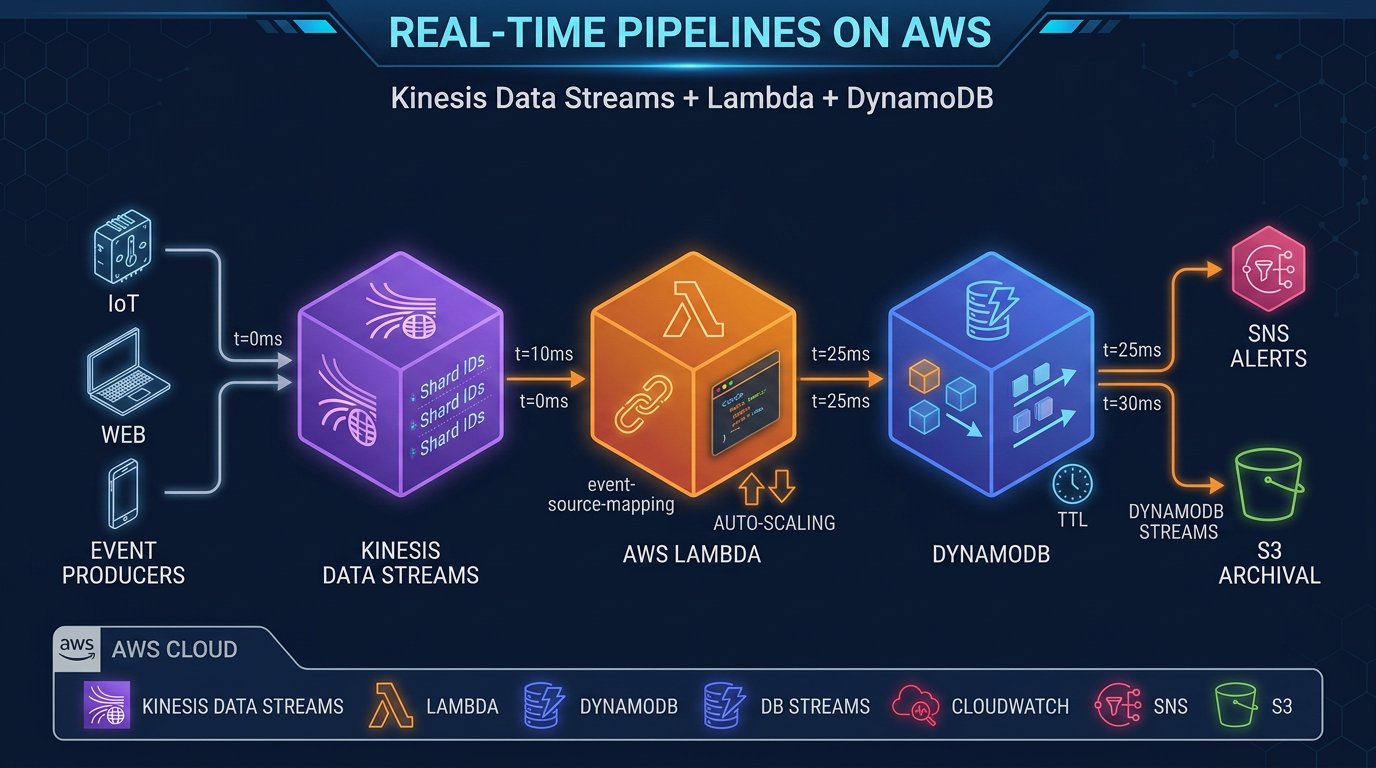
Kinesis Data Streams combined with Lambda and DynamoDB is the simplest path to a real-time data pipeline on AWS. Here is the complete architecture, code patterns, and operational guidance.

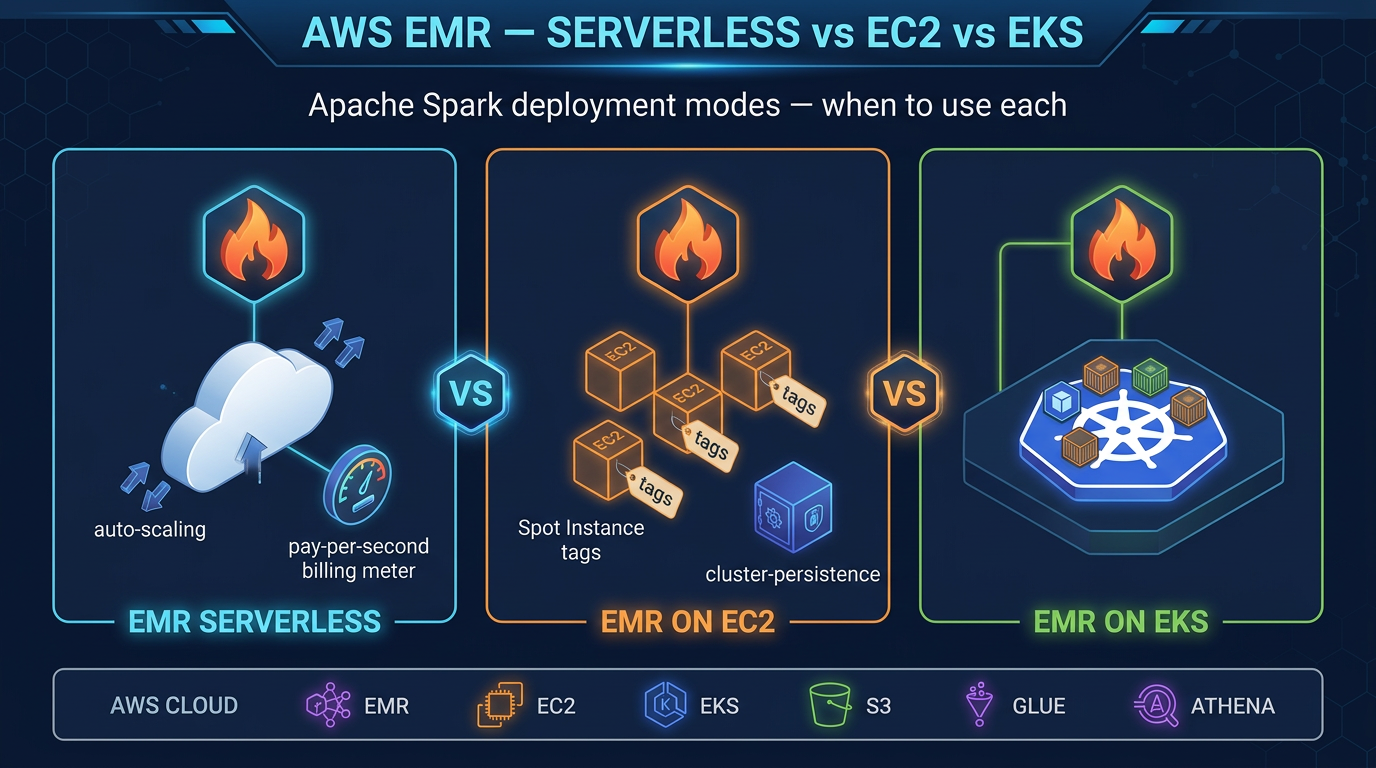
EMR Serverless vs EC2 vs EKS for Spark. July 2026 refresh — Spot limits, cold start, Iceberg on all three, and a decision matrix for intermittent vs 24/7 jobs.

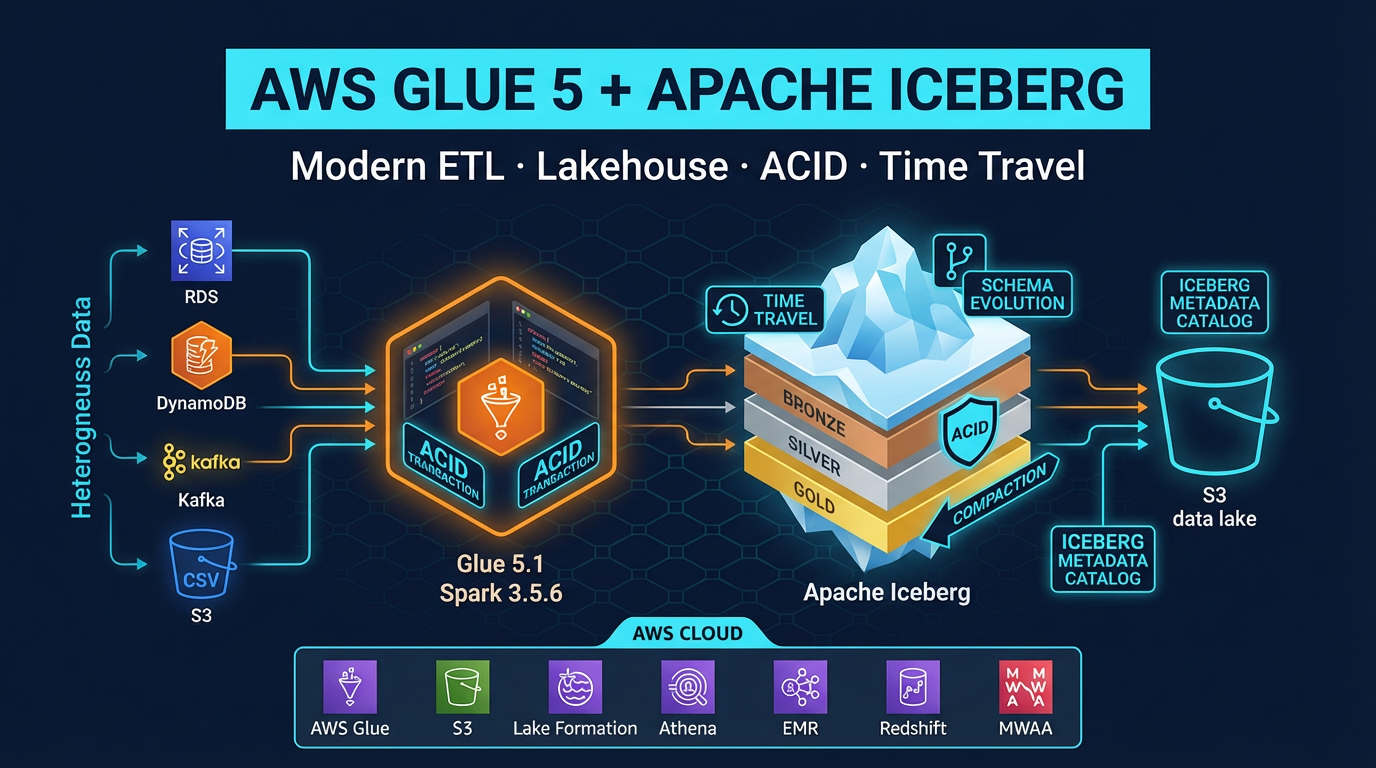
Glue 5.1 (Spark 3.5.6, Iceberg 1.10.0) for lakehouse ETL. July 2026 refresh — Iceberg v2 vs v3, Lake Formation writes, compaction, Athena compatibility.

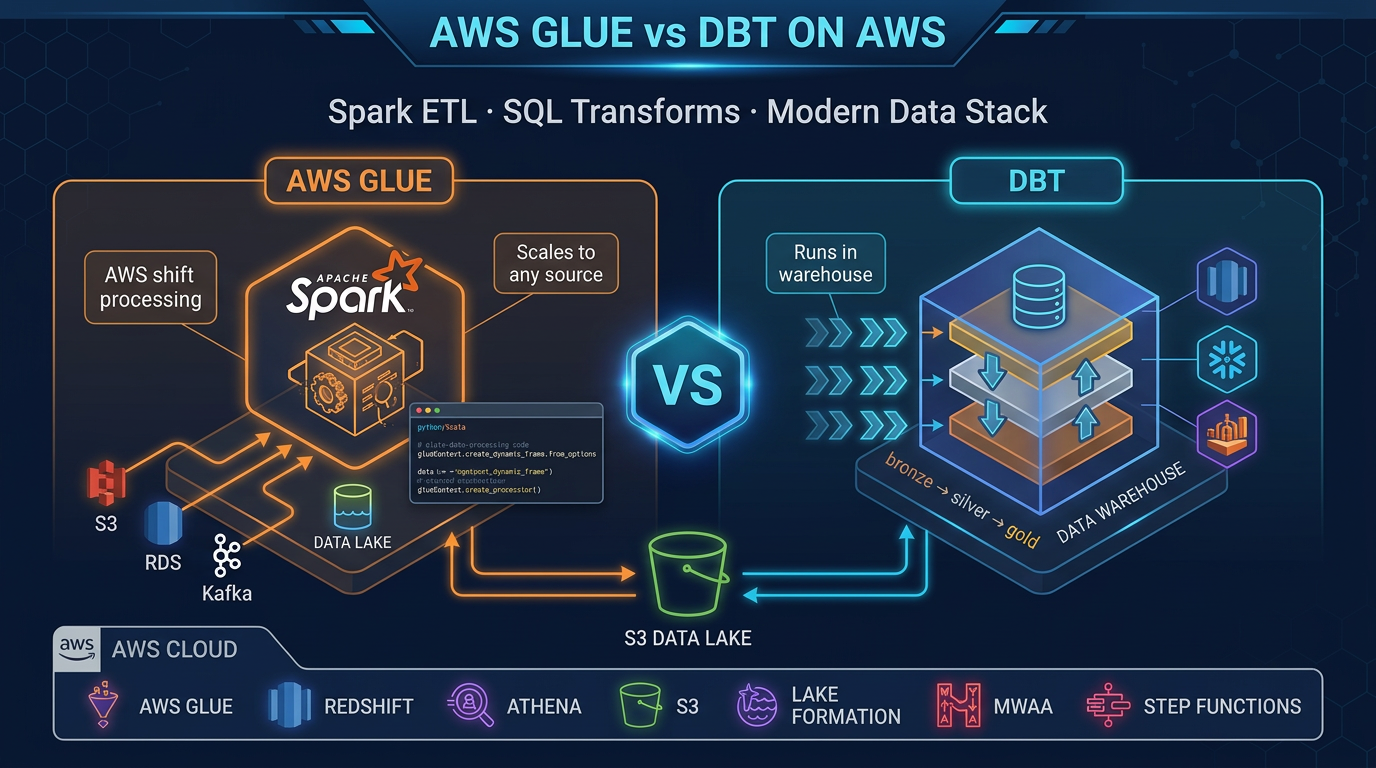
Glue does EL; dbt does T. July 2026 refresh — Glue 5.1 DPU economics, dbt-athena/Redshift, and the combined stack most teams converge on.

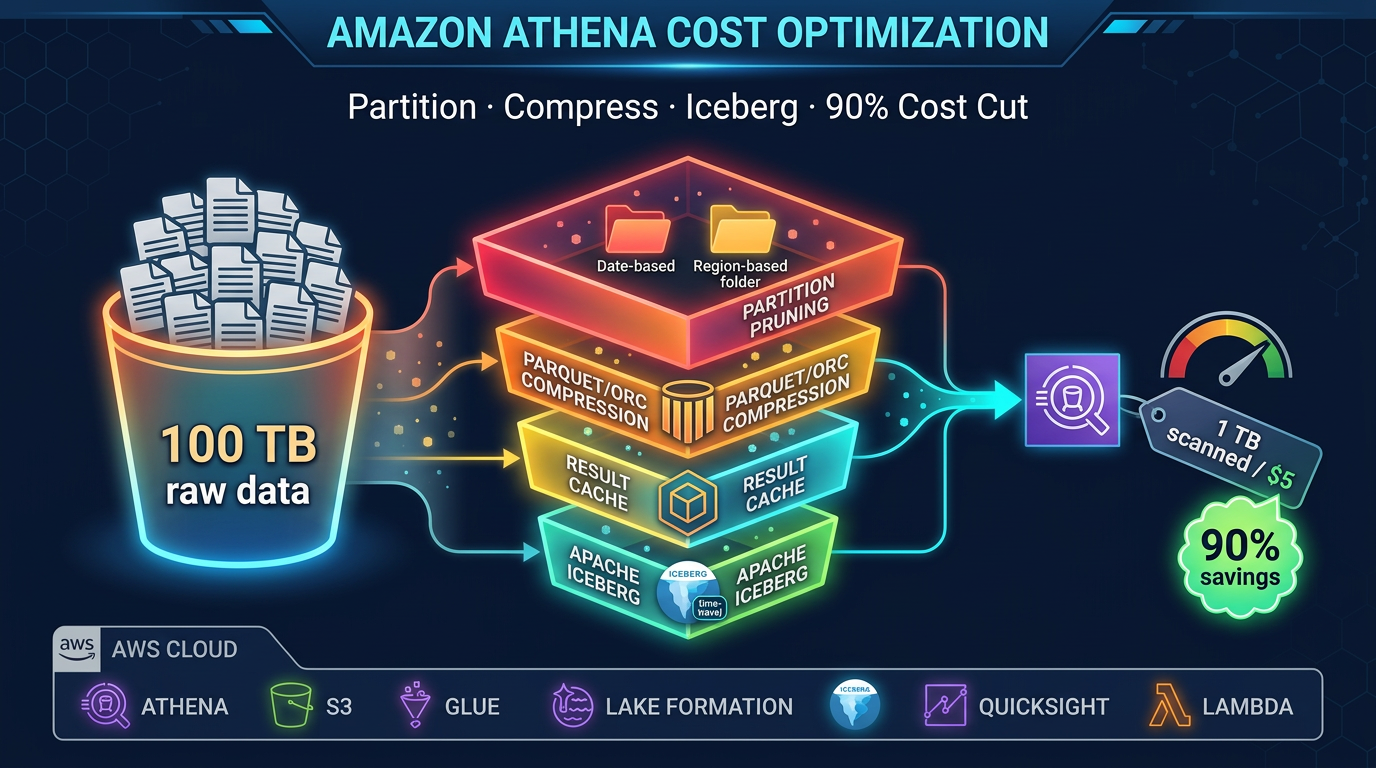
Athena still bills ~$5/TB scanned (or Capacity Reservations by DPU). July 2026 refresh — partitions, Parquet/Iceberg, workgroups, and when provisioned capacity wins.

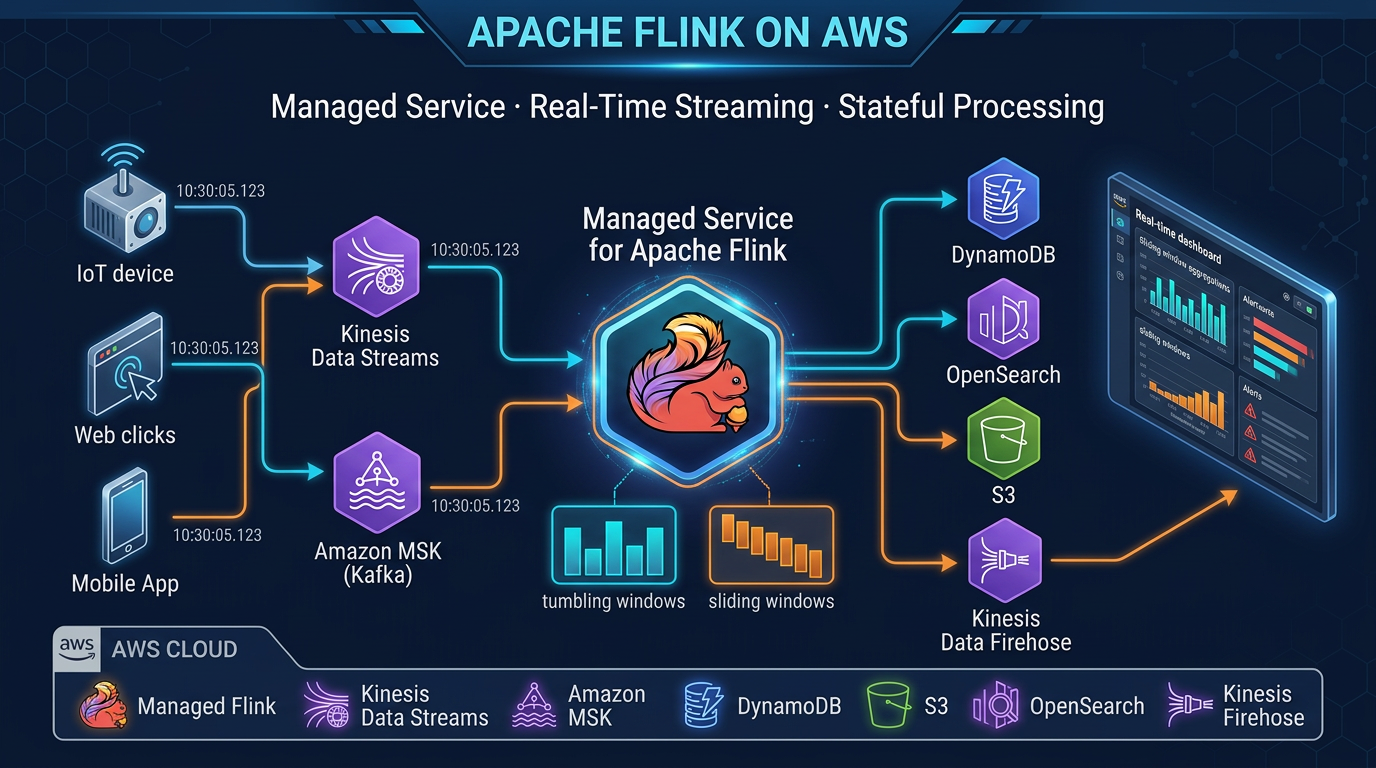
Managed Flink for stateful streaming. July 2026 refresh — KDA name EOL, KPU + orchestration KPU, per-second billing, Flink vs Lambda decision matrix.
We use cookies and similar technologies to analyze site traffic, personalize content, and provide social media features. By clicking “Accept,” you consent to our use of cookies. You can adjust your preferences at any time.