Tagged

aws

Tagged articles
282
8 min

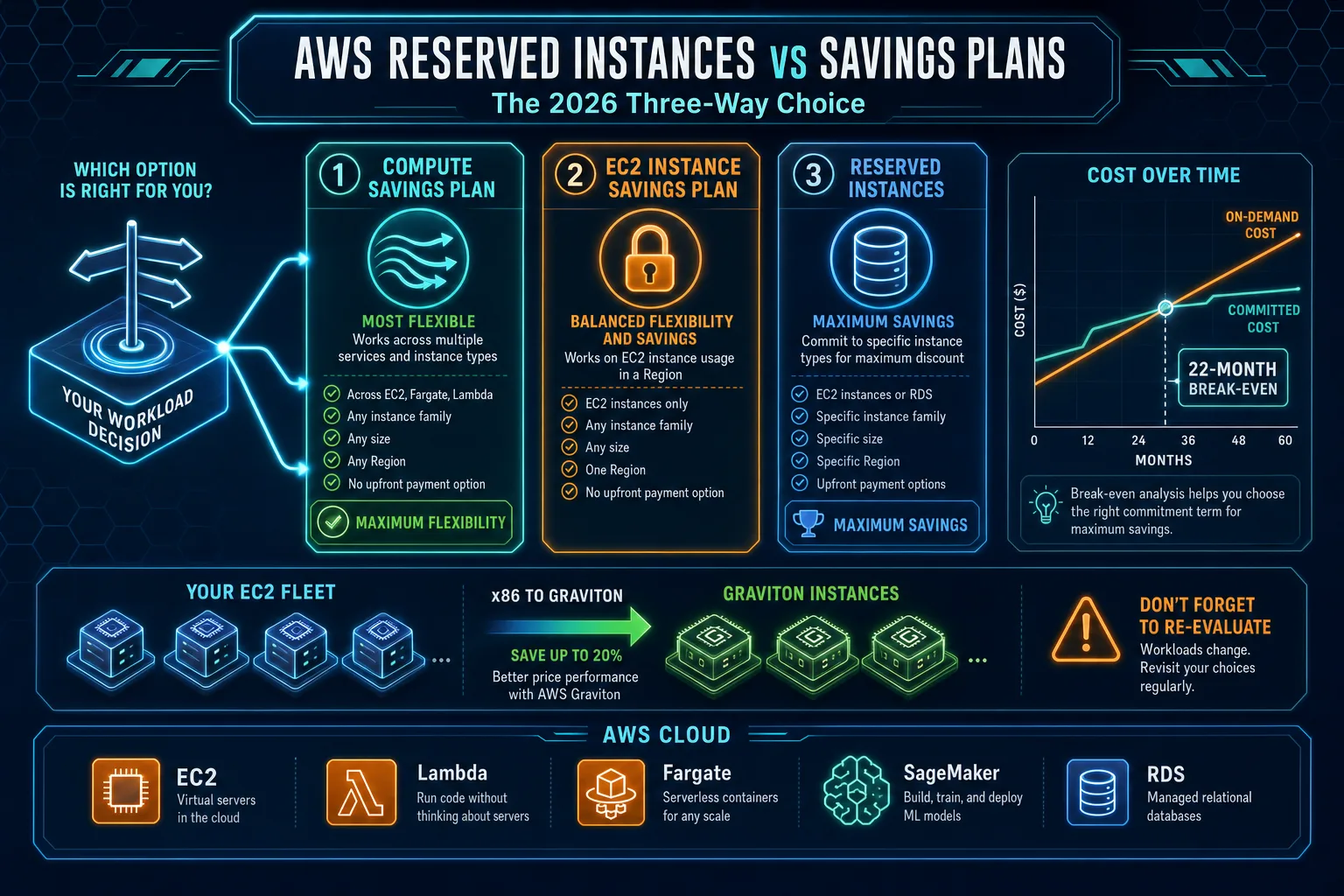
Reserved Instances vs Savings Plans on AWS (2026): The Three-Way Choice, the 22-Month Break-Even, and When to Skip Commitment Entirely

Most "RI vs Savings Plan" content treats them as peers. In mid-2026 they are not. A 3-year All-Upfront Compute Savings Plan saves a composite ~$60k/mo SaaS roughly $864k over 3 years vs a 1-year No-Upfront plan, but breaks even at ~22 months and locks instance-family flexibility. Buy the wrong commitment and a Graviton migration strands the discount. This post gives the decision tree we use.

Kevin W.
8 min

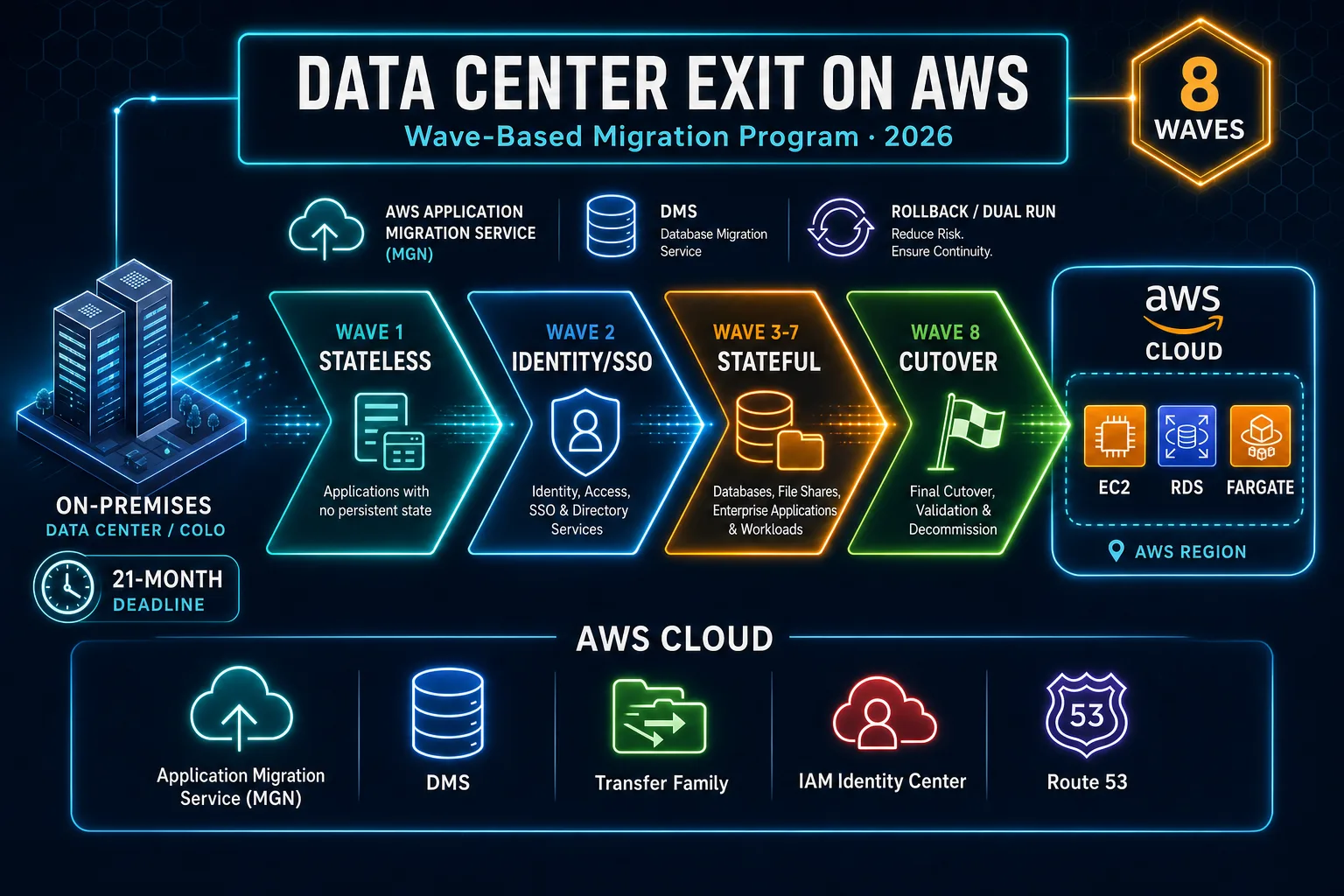
Data Center Exit on AWS (2026): Wave Design, the 22-Month Program, and Why Big-Bang Cutovers Fail on People Before Tech

A composite mid-market manufacturer exited a colo of 150 workloads and ~400 TB in 21 months across 8 waves, with 47 minutes of unplanned cutover downtime (industry median per Gartner: ~4 hours per major cutover). The single-wave alternative bid came in at ~$4.8M; the wave-based program ran ~$2.1M. The post covers how the wave plan, dependency cutoff, and rollback layer fit together against a hard landlord deadline.

Palaniappan P
4 min

AWS Global Accelerator vs CloudFront & Route 53 (2026)

Global Accelerator charges about $0.025 per provisioned accelerator per hour, even while disabled, and adds Data Transfer-Premium on top of normal data transfer. Two static Anycast IPv4 addresses (or four addresses in dual-stack: two IPv4 and two IPv6) front ALBs, NLBs, EC2, or EIPs across Regions; that pricing model changes whether you beat CloudFront or Route 53 latency records alone.

Palaniappan P