n8n and Amazon Bedrock AgentCore: Orchestrate Workflows, Run Agents in Production
Quick summary: AgentCore Harness went GA June 17, 2026. Use n8n for process orchestration and @aws/n8n-nodes-agentcore to invoke Harness — pin the ARN in production. Reuse the Gateway ~180→95 ms canary; do not treat n8n as the agent runtime.
Key Takeaways
- AgentCore Harness went GA June 17, 2026
- Use n8n for process orchestration and @aws/n8n-nodes-agentcore to invoke Harness — pin the ARN in production
- Reuse the Gateway ~180→95 ms canary; do not treat n8n as the agent runtime
- AWS lifecycle notice (June 30, 2026) — Amazon Bedrock Agents Classic is in maintenance for new customers after July 30, 2026
- Net-new agent builds should use Bedrock AgentCore
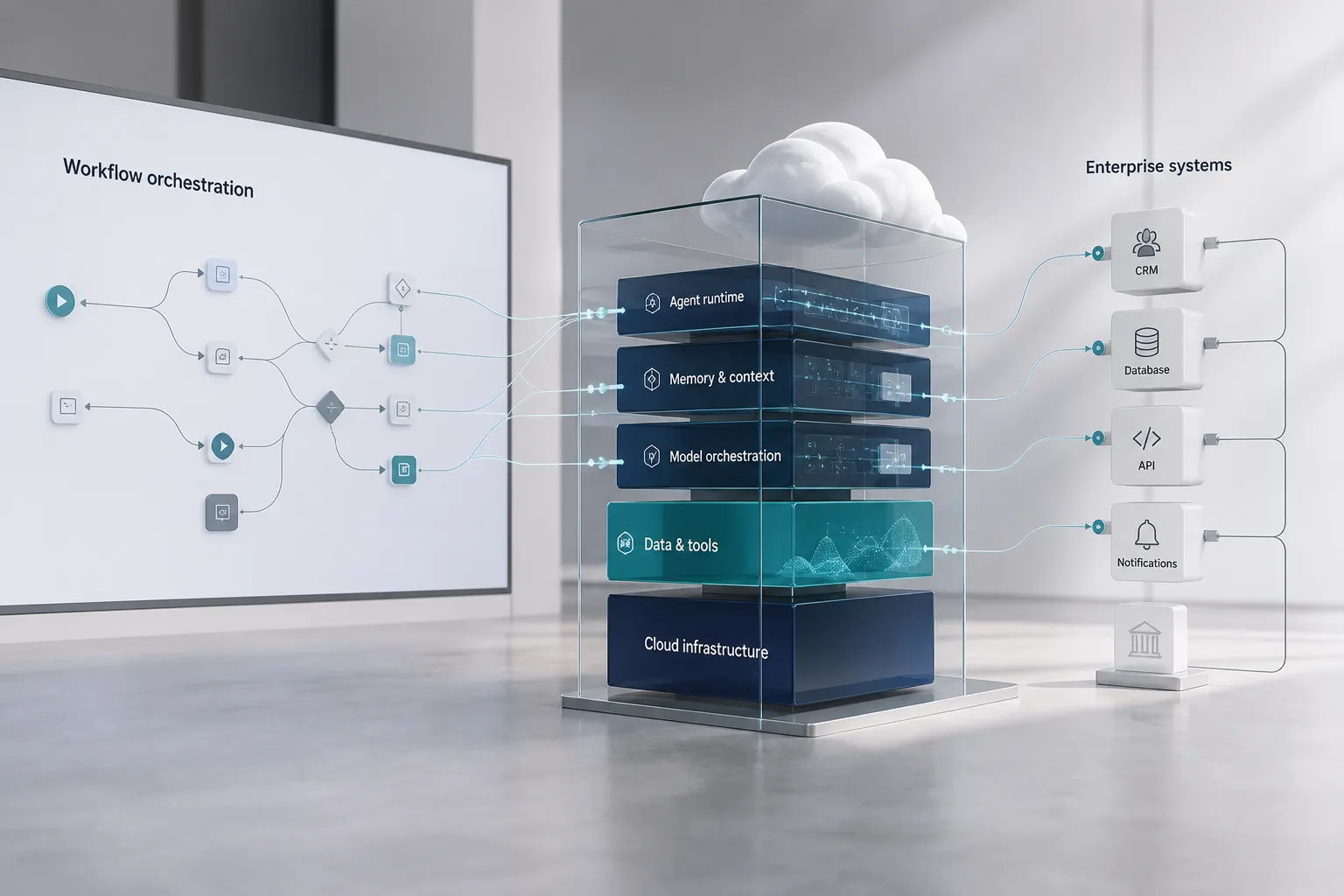
Table of Contents
AWS lifecycle notice (June 30, 2026) — Amazon Bedrock Agents Classic is in maintenance for new customers after July 30, 2026. Net-new agent builds should use Bedrock AgentCore. Full matrix: lifecycle roundup.
Building an AI agent is increasingly a weekend prototype. Operating several agents inside real business processes — ticket queues, CRM stages, approval chains, overnight batch jobs — is a different problem.
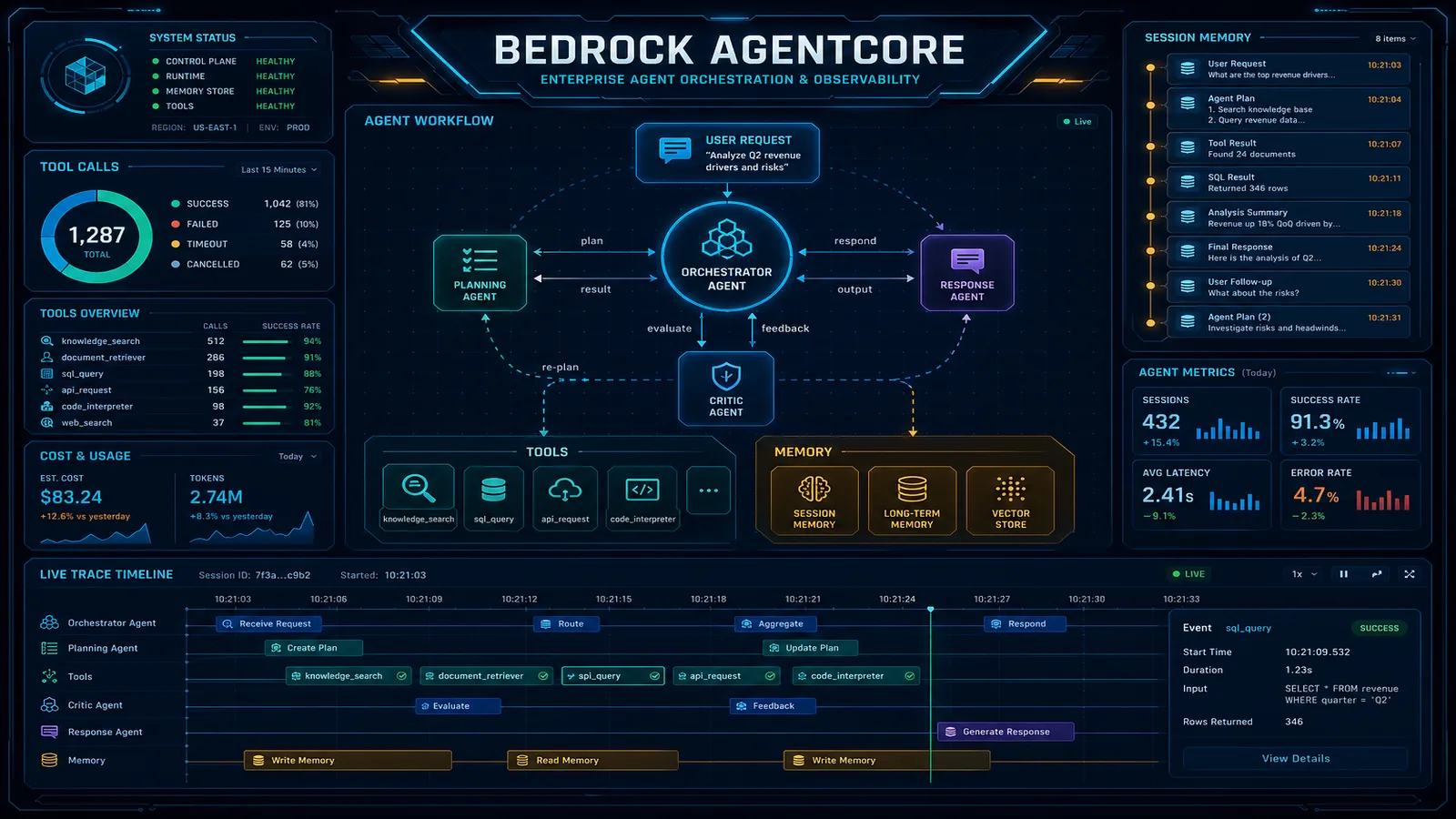
On June 17, 2026, AgentCore Harness reached general availability: a managed, config-driven agent loop on the same platform as Runtime, Memory, Gateway, and Identity (What’s New). AWS then shipped a verified n8n community node, @aws/n8n-nodes-agentcore, so a workflow can invoke that harness without you writing the agent loop (AWS ML Blog, n8n listing).
The architecture that holds up is not “n8n as the agent platform.” It is:
n8n orchestrates the business process. Amazon Bedrock AgentCore runs the agent.
First-party signals we reuse (not a combined n8n + AgentCore load test) — Gateway server-side tools cut median tool round-trip ~180 ms → ~95 ms on a B2B CRM assistant (12 tools, ~8k turns/day) — Gateway post. Support-style AgentCore platform TCO silhouette: 50K sessions/mo ~$791/mo plus model (decision guide). Self-host n8n on EKS often lands ~$500+/month in us-east-1 versus n8n Cloud until execution volume is high — EKS guide. Model AgentCore lines on the pricing calculator.
Reproduce this — Decision gates live under
examples/architecture-blog-2026/n8n-agentcore/: responsibility matrix, IAM caller vs execution role, Monday checklist. Official node examples (importable workflows) are in the AWS n8n-nodes-agentcore repo.
Opinionated take: pin a Harness ARN (and a named endpoint when you version) in every production n8n workflow. Leave the ARN blank only in non-prod so the node can auto-provision. The trade-off is extra AWS control-plane work versus n8n-driven harness drift.
AI agents need more than an LLM
A Converse call plus a clever system prompt is not a production agent. The moment the model must touch enterprise systems, the missing pieces show up as outages, surprise bills, or silent wrong writes.
| Gap | What breaks in a real process |
|---|---|
| Tool access | The model “knows” the order is late but cannot call the OMS without an authenticated tool. |
| Authentication | A shared API key in an n8n credential becomes every customer’s identity. |
| Memory | Yesterday’s refund promise vanishes on the next webhook because session IDs were blank. |
| Multi-step work | Classification is one node; drafting a reply, checking policy, and updating the ticket are a process. |
| Human approval | Refunds over a threshold must wait on a person — that is a workflow state, not a prompt instruction. |
| Reliability | n8n retries the workflow. The agent still needs isolation, timeouts, and a stop reason you can branch on. |
| Observability | Ticket SLA dashboards do not show which tool call failed inside the microVM. |
| Evaluation | Traces say what happened. Quality gates say whether it was acceptable. |
| Scale and security | Code that runs inside the n8n process shares that process. AgentCore sessions run in isolated microVMs (Harness security). |
The B2B CRM assistant silhouette above is why tool round-trip and Policy belong on Gateway, not in a pile of n8n HTTP nodes the model cannot be constrained from calling.
What broke — Teams that treated n8n’s built-in AI Agent node as the production runtime hit the gap the AWS node README states plainly: memory, code, and browser then run in (or beside) the shared n8n process, sessions die with the execution timeout, and you operate the stores yourself. Detection: first multi-tenant conversation leaked or a long research turn hit the workflow timeout. Fix: invoke AgentCore Harness via
@aws/n8n-nodes-agentcore; keep n8n for routing and approvals. Related counter-case: scaling n8n main replicas withoutEXECUTIONS_MODE=queueduplicates workflow runs — EKS checklist.
What n8n does best
n8n is a workflow automation and integration platform: a visual engine that connects SaaS, APIs, databases, webhooks, and (now) AWS agent infrastructure.
Use it for:
- Event-driven entry — webhooks from ticketing, CRM, or API Gateway.
- Scheduled jobs — nightly exception queues, weekly digest generation.
- Deterministic branching — if priority = P1, if amount > threshold, if region = EU.
- Human-in-the-loop — Wait / approval nodes before irreversible writes.
- Glue — map fields, enrich from a database, post to Slack, patch the system of record.
That is workflow orchestration: you specify the graph. The next node is not a surprise.
Agent runtime is the opposite shape. The model chooses tools, how many times to call them, and when to stop. You still need a loop, a sandbox, memory, and identity around that non-determinism. n8n should wrap that loop, not become it.
Built-in AI Agent node vs AgentCore node
From the AWS node README (capability table, not a FactualMinds benchmark):
| Capability | n8n AI Agent (built in) | AgentCore Harness node |
|---|---|---|
| Memory | In-process Simple Memory, or stores you operate | Managed AgentCore Memory, actor-scoped strategies |
| Code | Code node in the n8n process | Code Interpreter in an isolated microVM |
| Browser | Community nodes you operate | Managed AgentCore Browser |
| Session length | Bounded by n8n execution timeout | Long-running sessions with a per-invocation timeout you set |
| Isolation | Shared n8n process | Isolated microVM per session |
n8n’s AI Agent node is a reasonable fit for a single model call inside a workflow. Production agents that need isolation, managed memory, Browser, or Code Interpreter should go through Harness.
What Amazon Bedrock AgentCore brings
AgentCore is a modular agent platform: build, deploy, and operate agents with supported frameworks and foundation models, without you owning the isolation layer (overview). The n8n node talks to Harness. The rest of the platform is what Harness sits on — do not skip it because the editor looks like a single node.
| Service | Problem it solves | Fit next to n8n |
|---|---|---|
| Harness | You do not want to own the reason–act–observe loop | n8n invokes InvokeHarness; pin ARN in prod |
| Runtime | Custom agent code (Strands, LangGraph, CrewAI, BYO container) needs a serverless host | Use when you outgrow config; n8n can still call an HTTP/MCP endpoint you place in front — the verified node is Harness-first |
| Memory | Multi-turn and cross-session state without a DIY store | Session ID = one conversation; Actor ID = whose notebook |
| Gateway | APIs, Lambda, and MCP as tools with auth | Prefer Gateway once tools multiply or writes need Policy |
| Identity | Workload identity and inbound JWT; credential brokering to tools | Required for per-user OAuth into SaaS; SigV4 does not get on-behalf-of today |
| Browser / Code Interpreter | Real web and real code without running them in n8n | Enable per intent; always-on burns duration (Harness + Strands post) |
| Observability | OTEL-compatible traces into CloudWatch | Complements n8n execution logs; it does not replace them |
| Policy | Cedar (or NL→Cedar) gates on Gateway tool calls | Deterministic allow/deny before the tool runs |
| Evaluations | Quality scoring on sessions/traces | Pair with traces; traces alone are not a quality gate |
Mentioned, not designed here: Payments, Registry, Optimization, Runtime Instances. See What this post doesn’t cover.
Harness vs Runtime stay in the production guide. If the product is a custom graph, export to Strands on Runtime rather than encoding hop caps as n8n IF nodes.
Combined architecture
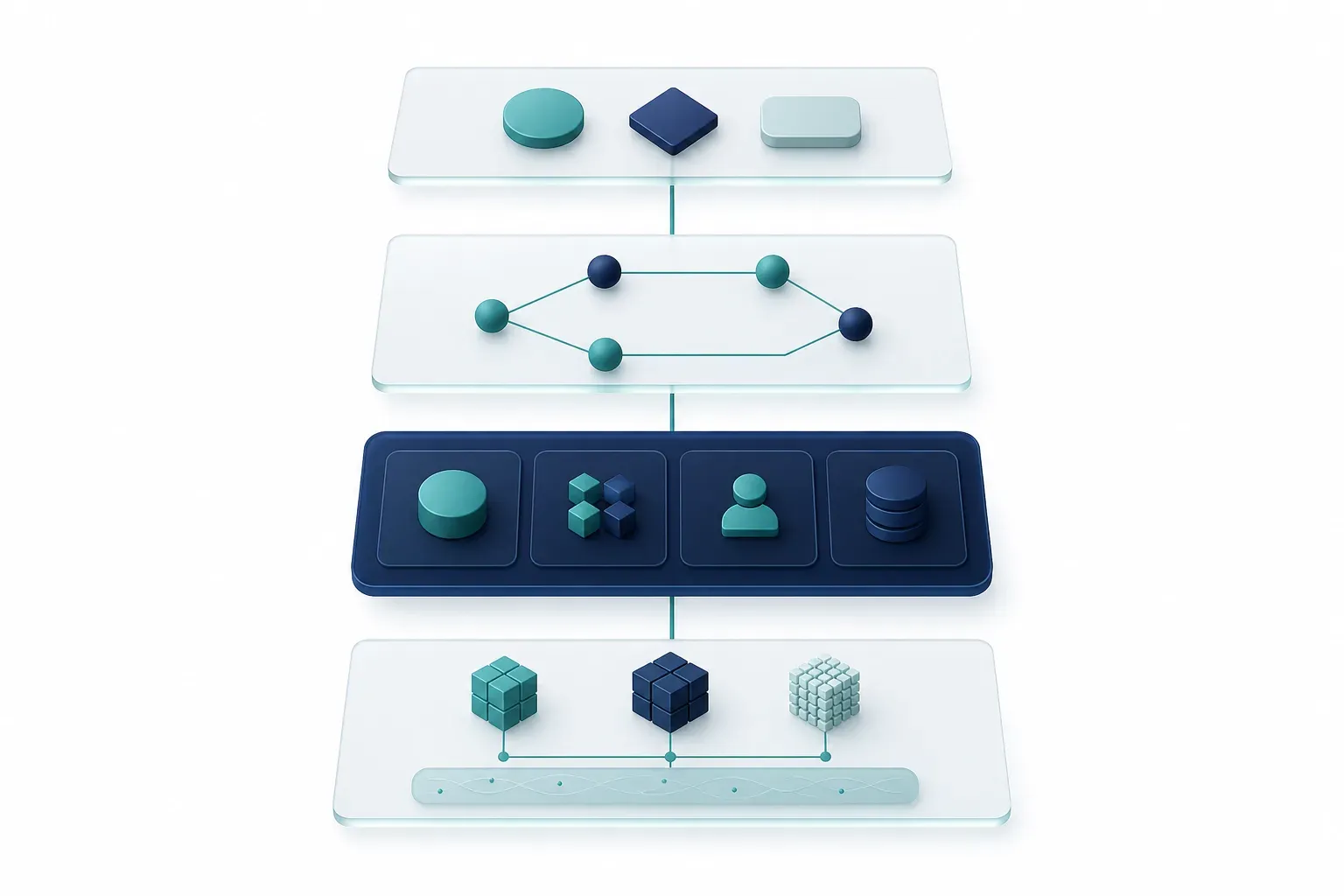
Business events (APIs, webhooks, schedules)
        │
        ▼
n8n — routing, approvals, SaaS/API orchestration
        │
        ▼
Amazon Bedrock AgentCore Harness
  Runtime isolation · Memory · Gateway · Identity · Browser/CI
        │
        ├── Amazon Bedrock / configured model providers
        ├── Enterprise data and APIs (via Gateway)
        └── External services (MCP, OAuth tools)
        │
        ▼
n8n — results, human approval, CRM/ERP/notifications
Conceptual flow
- A business event hits n8n (webhook, queue, cron).
- The workflow collects deterministic context (customer id, ticket fields, region).
- n8n invokes a pinned Harness with Session ID (and Actor ID when Memory is on).
- The harness runs the loop in an isolated microVM; tools go through Gateway, Browser, Code Interpreter, or an inline function back into n8n.
- The node returns the completed result (it consumes the AgentCore event stream; it does not yet forward partial tokens into n8n’s streaming UI — node README).
- n8n continues: approval branch, system-of-record update, notify.
Inline functions are a documented HITL inside the agent turn: the invocation returns stopReason: "tool_use", the workflow computes or collects a human result, a second node placement on the same Session ID sends Tool Results, and the agent resumes. That is not a substitute for n8n approval nodes on irreversible business writes.
Responsibility matrix
| Layer | Responsibility |
|---|---|
| n8n | Workflow and business process orchestration |
| AgentCore | Production agent capabilities and infrastructure |
| Amazon Bedrock | Foundation models and inference (plus Mantle / other providers where the harness is configured) |
| Enterprise systems | CRM, ERP, databases, SaaS, internal APIs |
| Humans | Approval, exception handling, oversight |
Full RACI: responsibility-matrix.md.
Two Harness ARN modes
Documented by AWS and the node — not optional folklore:
| Mode | When | What happens |
|---|---|---|
| ARN blank | Lab | Node creates a harness (~30–60 s first run), reuses it, updates it when node config changes |
| ARN set | Production | Node calls InvokeHarness; filled fields are per-invocation overrides; Agent Name / Force Recreate do not apply |
What broke — Shipping a production workflow with Harness ARN blank. The node owned lifecycle: config edits in n8n updated the live harness, lab Force Recreate created extra resources, and cleanup was a console archaeology exercise. Detection: Cost Explorer /
list-harnessesshowed harnesses with no owner tag. Fix: create the harness via CLI/console/Terraform, pin ARN + named endpoint, delete unused lab harnesses.
Assumes AWS CLI v2 with AgentCore support, a supported Region, and credentials that can list/delete harnesses. Confirm names against current CLI help.
aws bedrock-agentcore-control list-harnesses --region us-west-2
aws bedrock-agentcore-control delete-harness --harness-id <harness-id> --region us-west-2
Example use cases
These are process shapes, not certified connectors. Wire whatever ticketing or CRM APIs you already have.
Customer support
Ticket webhook → n8n loads customer and order records with deterministic HTTP/DB nodes → invoke a support Harness with Actor ID = customer and Session ID = ticket id → agent drafts a reply or recommended action using Gateway tools (read-only first) → if sentiment/amount/policy flags, n8n Wait for a human → n8n posts the approved reply and status back to the ticketing API.
Keep write tools behind Gateway Policy. Do not let the agent POST a refund because the prompt said “be helpful.”
Sales / CRM intelligence
New-lead webhook → n8n enrich (clearbit-class HTTP, internal account API) → invoke an analysis Harness → agent returns structured recommendations (fields you validate) → optional human review on strategic accounts → n8n patches CRM.
The Gateway canary (~180 → ~95 ms on 12 tools) is the reason to put enrichment tools the agent must choose among on Gateway, and keep the CRM patch in n8n after validation.
Operations / back-office
Schedule or queue event → n8n gathers batch context → agent analyzes and calls approved tools (Code Interpreter for stats, Gateway for internal APIs) → n8n fans out to downstream systems → exceptions to a human queue.
The AWS examples folder includes a campaign-statistics template (webhook → Code Interpreter → n8n recomputes and labels → Slack). Use it as a pattern: agent proposes, workflow verifies, then notify.
When n8n should not be the agent runtime
n8n is the wrong place to run the agent loop when any of these are true:
- Isolation — untrusted prompts or multi-tenant data must not share the n8n Node process.
- Identity — you need inbound JWT and on-behalf-of tool calls. Harness security: SigV4 callers do not get per-user Identity token-vault / on-behalf-of scoping; configure inbound OAuth on the harness.
- Long-running work — research, browser tasks, or async agents that outlive a workflow execution timeout.
- Governed tools — write APIs that need Cedar Policy, not an n8n credential with
*. - Observability and evals — you need AgentCore/CloudWatch GenAI traces and Evaluations on sessions, not only “workflow succeeded.”
- Custom topology — supervisors with hop caps, A2A, Graph/Swarm. That is Runtime + Strands, invoked from n8n if you still want process glue.
If the job is one model call with no tools and no memory, you may not need AgentCore at all — Converse or Knowledge Bases may be enough. If the job is employee knowledge work with connectors and seats, compare AgentCore vs Quick Suite.
Reference architecture for AWS customers
Options, not a mandate.
Where n8n runs
- n8n Cloud — the verified node installs (instance owner, one-time). Fastest path; weaker VPC/IRSA story.
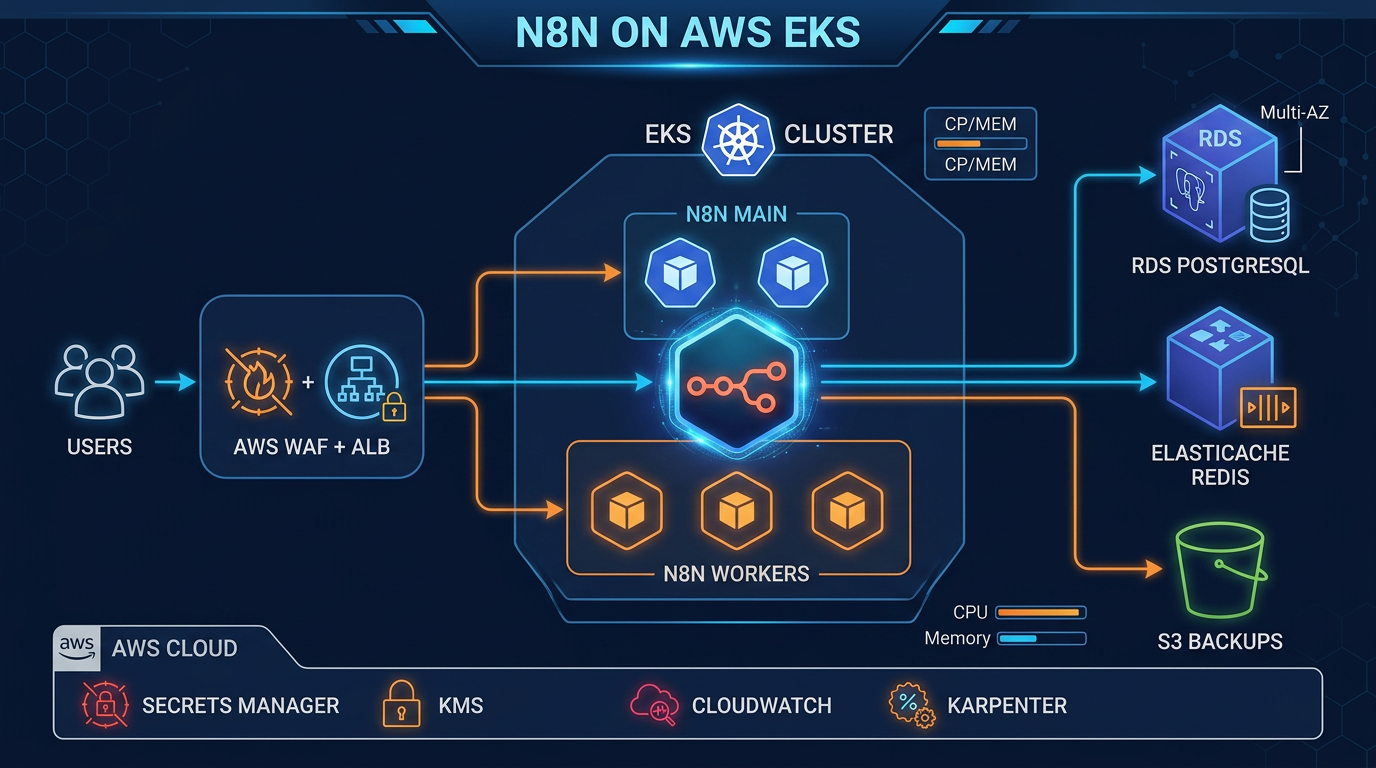
- Self-hosted on Amazon EKS — RDS PostgreSQL Multi-AZ, queue mode + Redis/Valkey, IRSA, ALB + WAF. Details: How to host n8n on AWS EKS. Light/medium self-host often ~$500+/month before you beat Cloud on execution volume — re-quote.
How n8n talks to AgentCore
- Node uses the same credential pattern as other AWS nodes: access key + secret (+ session token for STS).
- Prefer IAM Identity Center / STS temporary credentials. Do not commit keys.
- Execution role ARN on the credential is assumed by AgentCore, not by n8n locally.
- For inbound-OAuth harnesses: control plane stays SigV4; invoke sends
Authorization: Bearerwith a JWT you store on the credential (node README).
VPC agents
Set Network Mode = VPC on the credential (subnets + security groups). AWS: subnets need no internet if you create the listed VPC endpoints — ECR API/DKR, S3 gateway, and Bedrock Runtime if the agent calls Bedrock. First VPC harness create can take minutes; the node waits up to 10 minutes. Canonical list: Harness network configuration.
Logging
- AgentCore: CloudWatch GenAI observability / OTEL spans for the loop and tools.
- n8n: workflow execution history. Do not expect one dashboard to be both.
Separation
n8n host IRSA (Secrets Manager, optional S3 workflow export) ≠ caller IAM in the AgentCore credential ≠ harness execution role. Three identities. Collapse them and you cannot answer “who invoked the refund tool.”
Security considerations
Follow Harness security and AgentCore security. Do not paste a broad policy from a blog.
- Least privilege — caller gets the callers table, scoped to harness ARNs; execution role gets the sample policy plus optional feature blocks you actually use (IAM split).
- Secrets —
N8N_ENCRYPTION_KEYin Secrets Manager + KMS. Agent API keys and OAuth client secrets belong in AgentCore Identity credential providers, not in workflow JSON. - API authentication — SigV4 for invoke unless you need per-user identity, then inbound JWT with tight
aud/ client / scope / claims. - Tool permissions — Gateway Policy on writes; Browser and Code Interpreter off by default.
- Data boundaries — Actor ID + Session ID for Memory; never a shared global notebook for multi-tenant SaaS.
- Human approval — n8n Wait nodes for high-impact side effects even if Gateway would allow the tool.
- Audit — CloudTrail on
bedrock-agentcore.amazonaws.com; retain n8n execution logs with access control. - Trust boundary — anyone who can
InvokeHarnessreaches the tools on that harness. Validate prompts in n8n before invoke if callers are not fully trusted. The harness does not treat prompt text as a policy engine. - Model overrides —
additionalParams/apiBase/modelIdon invoke are pass-through. Do not expose those fields on an n8n webhook you do not trust.
Architecture principles
- Keep workflow orchestration separate from agent reasoning. n8n owns the graph; Harness owns the loop.
- Treat agents as production workloads. Isolation, IAM, spend alarms, versioned endpoints — not a prompt in a Code node.
- Give agents only the tools they require. Gateway + Policy; disable Browser/CI until an intent needs them.
- Use deterministic workflows around non-deterministic reasoning. Validate structured output in n8n before writes.
- Human approval for high-impact actions. Inline functions for in-loop questions; Wait nodes for irreversible business writes.
- Design for observability from day one. AgentCore traces and n8n history; Evaluations before you scale session volume.
- Keep enterprise integrations behind controlled interfaces. Systems of record stay behind Gateway or explicit n8n nodes — not raw credentials in the model context.
What to Do This Week
- Install
@aws/n8n-nodes-agentcoreon a non-prod instance; pin a version. - Create two IAM principals; put temporary caller keys and the execution role ARN on the n8n credential.
- Auto-provision once, copy the Harness ARN, then clone the workflow with ARN pinned.
- Inventory tools: reads on Gateway/MCP; writes behind Policy; Browser/CI off.
- Add Actor ID / Session ID expressions from your ticket or user id — blank session IDs reset memory every run.
- Run the Monday checklist and price the mix on the AgentCore calculator.
As an AWS Partner, FactualMinds works with organizations designing cloud-native AI architectures that connect generative AI capabilities with existing enterprise systems and operational workflows — including n8n on EKS and AgentCore Harness/Runtime cutovers. Contact us if you want a production-readiness review (pin-ARN, IAM split, Gateway Policy, Memory TTL). Related services: Amazon Bedrock consulting · Generative AI on AWS. Glossary: Bedrock AgentCore.
What This Post Doesn’t Cover
- AgentCore Runtime Instances (EC2 capacity providers, 14-day sessions) — Runtime Instances GA.
- Payments, Registry, Optimization product setup.
- Full IAM JSON — AWS’s harness security guide is the source of truth and changes with features.
- A combined n8n + Harness latency or cost test we ran for this article. Cited numbers are from earlier FactualMinds posts and AWS’s own first-run timing (~30–60 s create).
- n8n Cloud vs EKS TCO re-benchmark as of this publish date — re-quote.
- GovCloud / every Region matrix — confirm AgentCore Regions before procurement language.
We have not re-measured Gateway ~180→95 ms on a workflow that also includes n8n HTTP overhead. Treat that canary as AgentCore-side tool RTT, then measure your orchestrator separately.
Frequently asked questions
What is n8n used for in AI agent orchestration?
What is Amazon Bedrock AgentCore?
Can n8n orchestrate multiple AI agents?
When should n8n not be the agent runtime?
What could go wrong if the Harness ARN is left blank in production?
How should enterprises deploy n8n with AWS AI services?
Reference bounds
How the n8n and AgentCore stays bounded
Level 2 — reference architecture. Risk high. Oversight: approval required.
Let n8n orchestrate a workflow and AgentCore run the model, without merging their credentials.
Explore, then act, then confirm, then verify. Explore gathers the context for the n8n and AgentCore. Act stays reversible. Confirm stops before an irreversible step. Verify is a separate check of the outcome.
- Starts when
- A team wants n8n in front of an agent.
- Tools
- A write goes through a router, a permission check, a policy check, and a budget check. The model does not commit it. An approval token lives in tool context, not in the user message.
- Stops for a person
- An n8n node is not approval. The agent role cannot also be the n8n admin credential.
- Checked by
- The handoff lists the fields. A write node still has its own gate.
- Untrusted data
- Workflow payloads that include instructions to skip a node.
- If it fails
- If the n8n and AgentCore stops, name the reason: completed, budget_exceeded, timed_out, cancelled, guardrail_blocked, approval_required, tool_failure, verification_failed, or partial_completion. Retry a timeout at most twice. Back off on rate limits. After repeated verification failure, escalate. Stop when the budget is exhausted or a permission is denied. No unbounded loop. An n8n node is not approval. The agent role cannot also be the n8n admin credential.
This is the reference architecture for the page, not a published production deployment. The shared contract is the AWS store-agent architecture. Permissions and data boundaries are in securing store agents.

AWS Cloud Architect & AI Expert
AWS-certified cloud architect and AI expert with deep expertise in cloud migrations, cost optimization, and generative AI on AWS.