Iceberg MERGE at High Daily Volume
Quick summary: On the order of 100,000 daily updates, a full copy of the Iceberg table is the wrong MERGE. Align the MERGE to the change feed and the partition. Compaction that rewrites the same files is the failure, not the design.
Key Takeaways
- On the order of 100,000 daily updates, a full copy of the Iceberg table is the wrong MERGE
- The Glue 5 Iceberg post and the S3 Tables reference own maintenance
- On 4 October 2026 the open question is the change set: on the order of 100,000 updates a day, teams still copy the table or stack delete files until Athena scans regress
- The CDC into S3 Tables article chooses the pipe
- Athena's Iceberg version support still has to be checked against the Glue 5 post's v2 versus v3 note
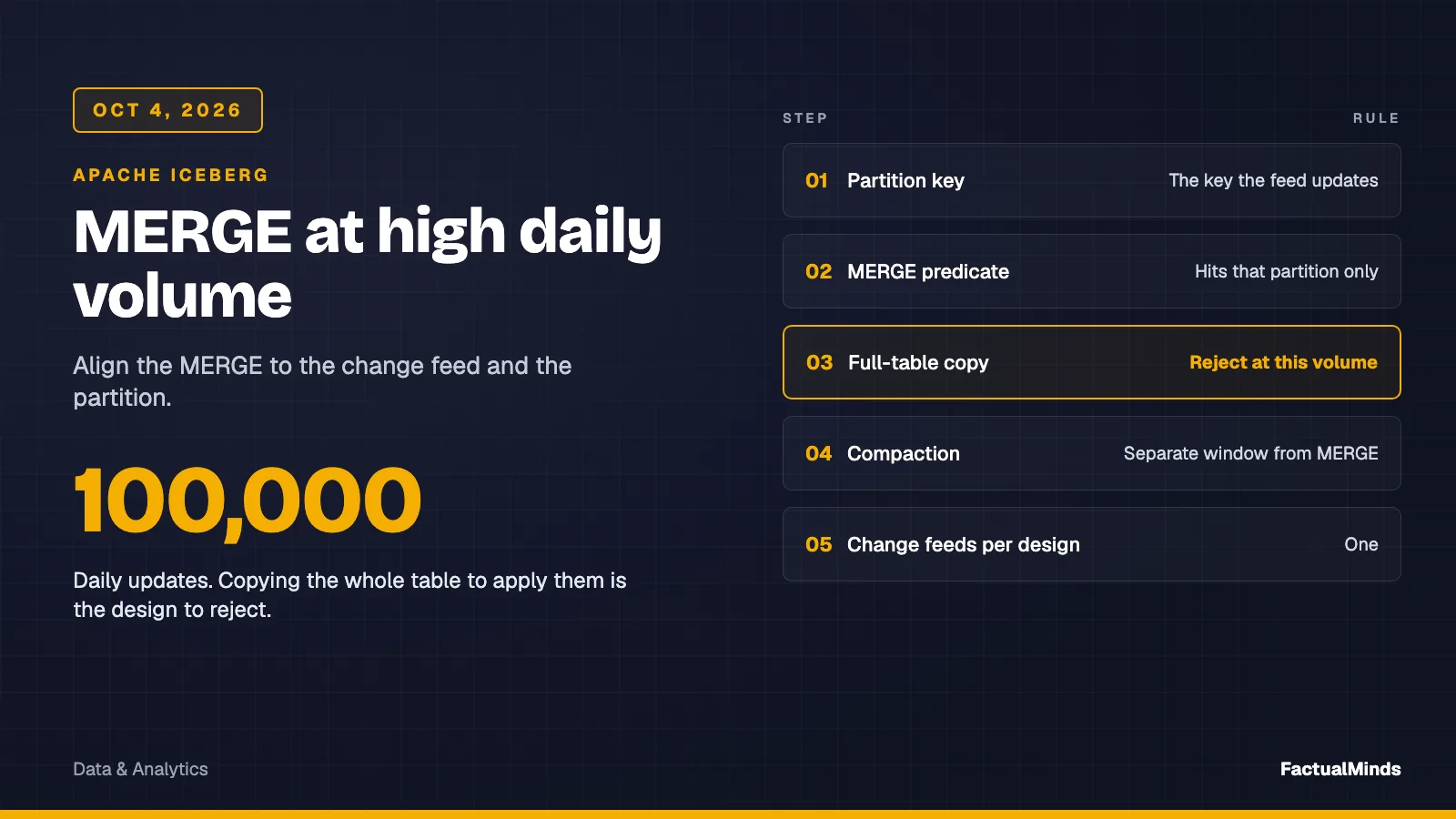
Table of Contents
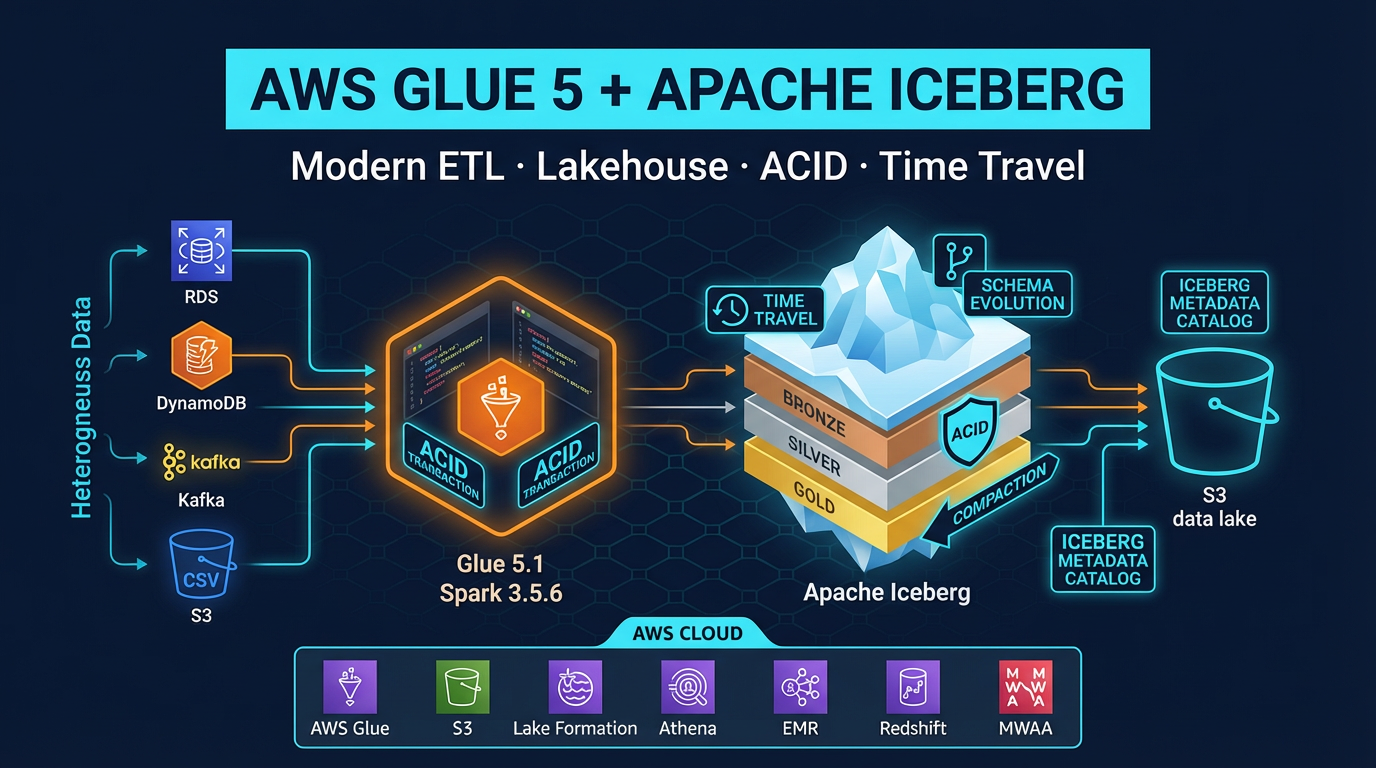
Compaction is already covered. The Glue 5 Iceberg post and the S3 Tables reference own maintenance. On 4 October 2026 the open question is the change set: on the order of 100,000 updates a day, teams still copy the table or stack delete files until Athena scans regress. The CDC into S3 Tables article chooses the pipe. This page is what you do with the feed after it lands.
Athena’s Iceberg version support still has to be checked against the Glue 5 post’s v2 versus v3 note. This page was verified on 4 October 2026. Do not treat that note as frozen.
One MERGE
Partition the target on the key the feed updates. The MERGE predicate should hit that partition, not the whole table. Equality deletes, or a merge-on-read layout you have actually measured, replace a nightly INSERT OVERWRITE of every byte.
Copy-on-write of the entire table is the design to reject at this volume. It works when the change set is the table. It is how a 100,000-row feed turns into a rewrite of everything else.
Compaction stays on the lake article. Run it. Do not run it on the partition the MERGE just finished, in the same window. Maintenance that rewrites the incremental files works against the MERGE.
We recommend the MERGE over the full copy. The trade-off is a predicate you have to get right, and a compaction schedule you have to separate. A green copy job that rewrites the table is not an incremental pipeline.
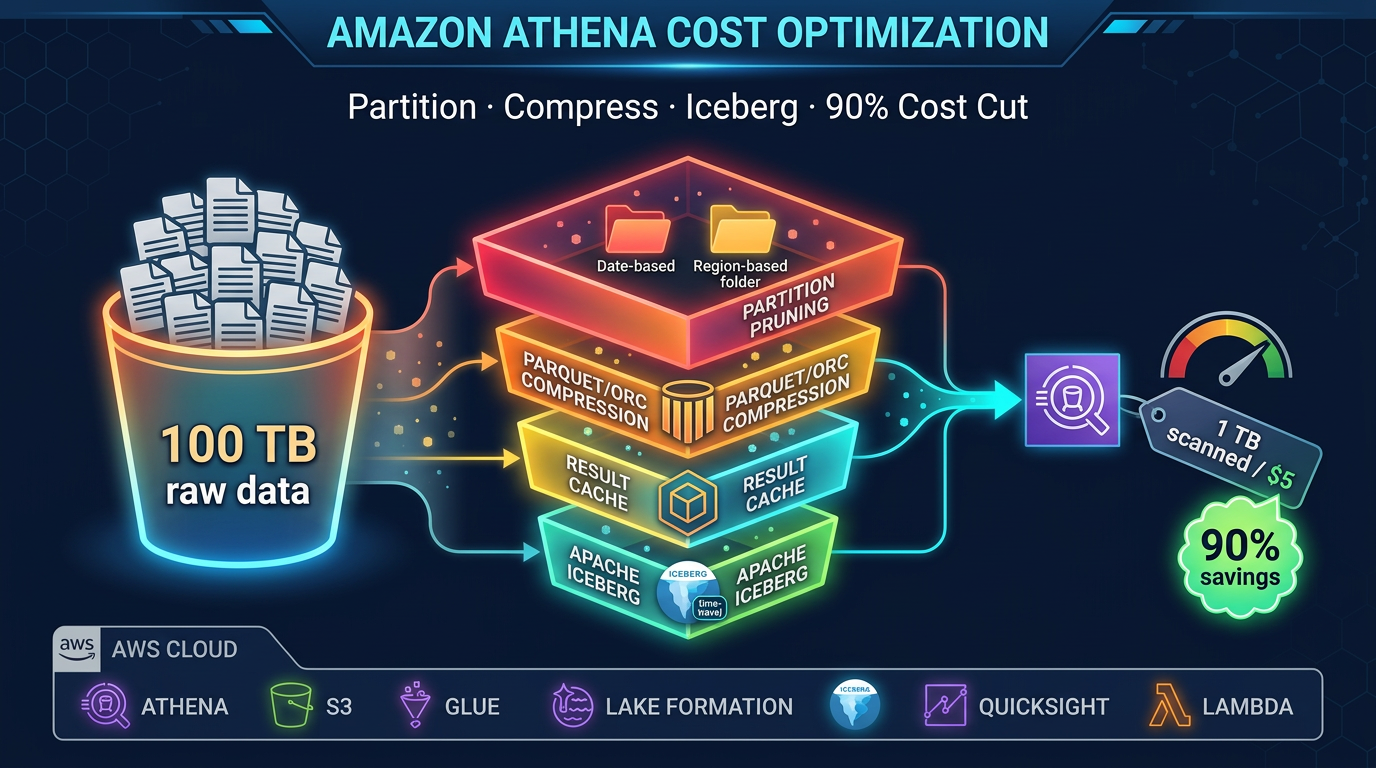
The Athena cost post is where you look when the scan is the bill. Do not add a second cost essay here.
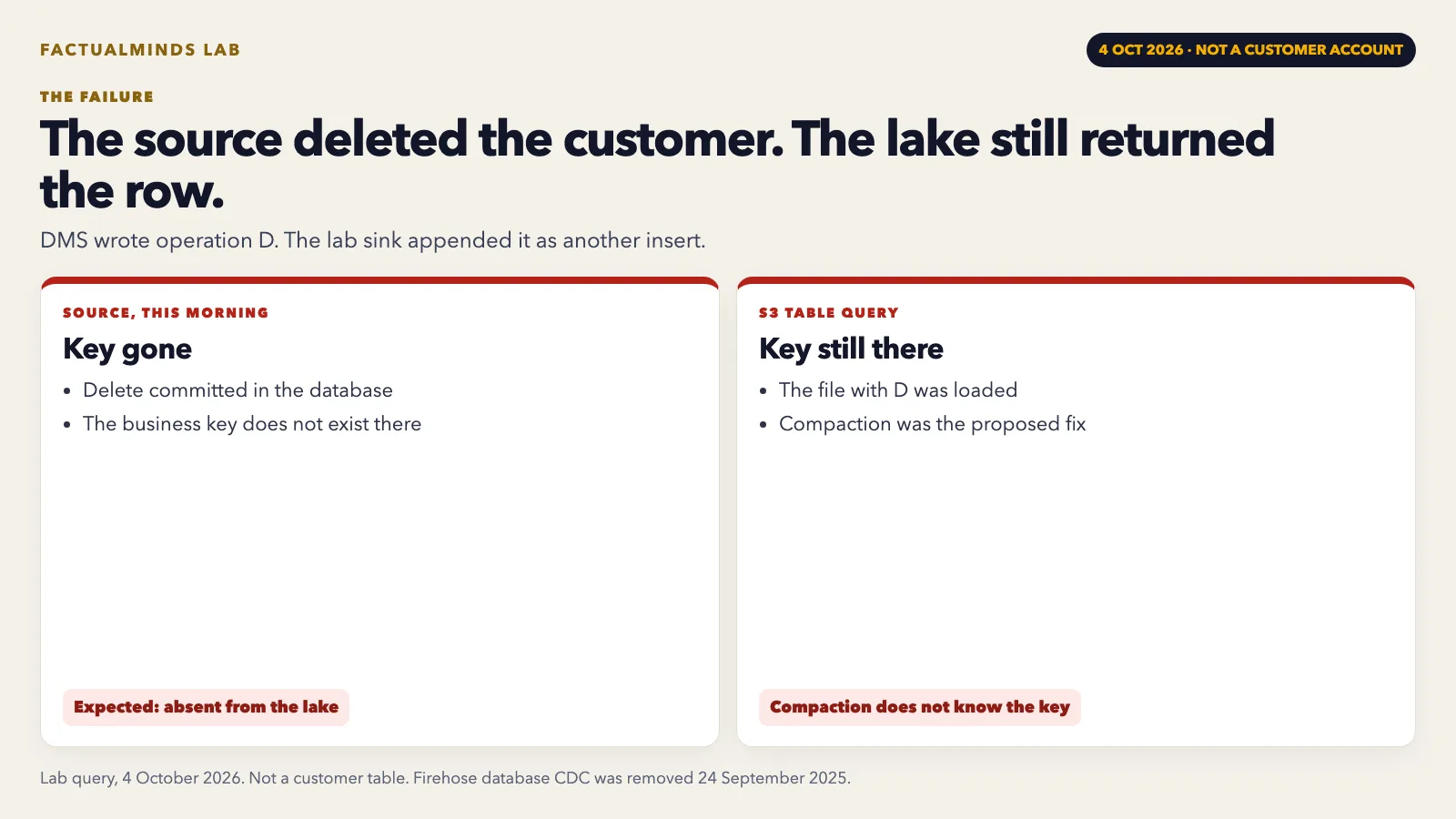
Where this fails
What to Do This Week
- Name the one change feed and the target table.
- Write the MERGE predicate next to the partition spec. If they do not match, fix that before you tune files.
- Stop any job that copies the whole table to apply the feed.
- Separate the compaction window from the MERGE window.
- If the feed does not exist yet, go back to the CDC article and the analytics service.
What This Post Doesn’t Cover
It does not teach compaction, snapshot expiry, or schema evolution. It does not choose Glue versus dbt. It does not explain two writers hitting one commit. That failure has its own article.
Frequently asked questions
How do we apply a large daily change set to Iceberg without rewriting the table?
When should we not copy the table instead of merging?
What could go wrong if compaction runs on the partition the MERGE just wrote?
Is this the compaction article?
What about two jobs committing at once?

Founder, FactualMinds · AWS Cloud Architect & AI Expert
AWS-certified cloud architect and AI expert with deep expertise in cloud migrations, cost optimization, and generative AI on AWS.