
EventBridge Scheduler: Delete the Lambda That Only Calls One API
Quick summary: On 12 May 2026 Scheduler added direct SDK targets. A Lambda whose handler is one API call on a clock is the wrapper to delete. Keep the function when the schedule must branch, read a database, or fan out.
Key Takeaways
- On 12 May 2026 Scheduler added direct SDK targets
- A Lambda whose handler is one API call on a clock is the wrapper to delete
- On 12 May 2026 EventBridge Scheduler added a large set of direct SDK targets, including actions used with Lambda Managed Instances
- Checked again on 4 October 2026, the common leftover is still a function whose handler calls one API and returns
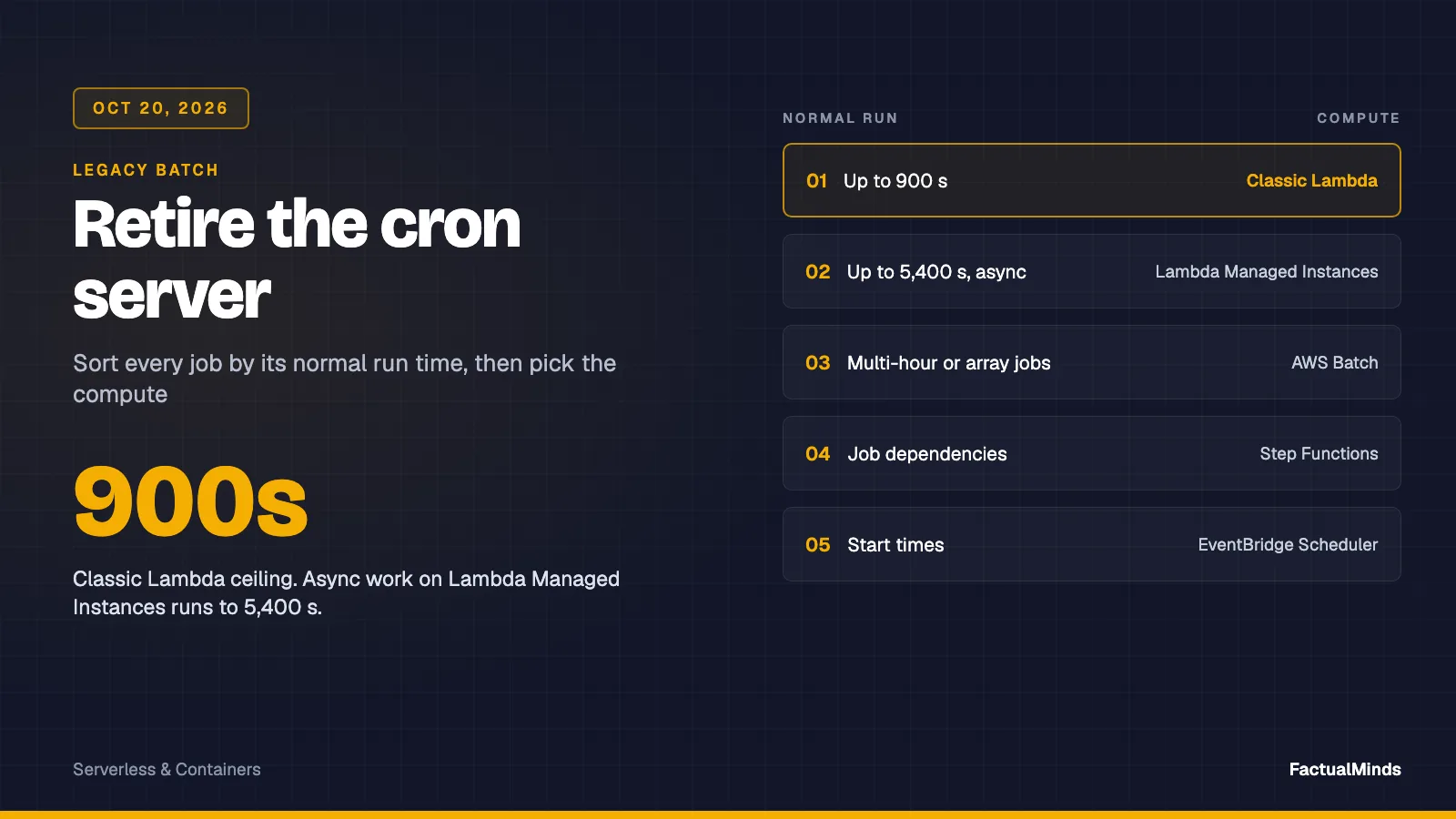
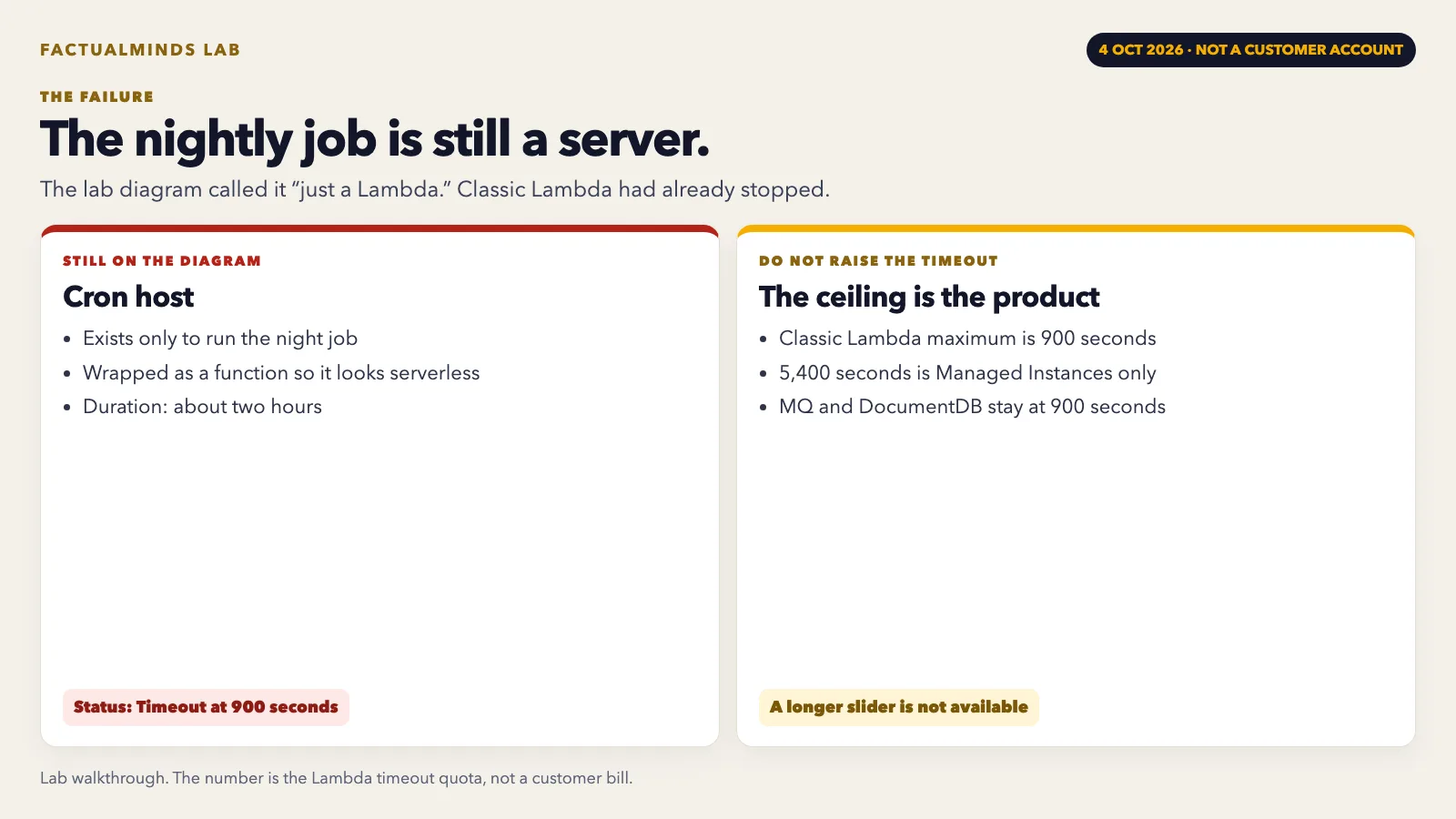
- The legacy batch guide owns jobs with a duration: 900 seconds on classic Lambda, 5,400 seconds async on Lambda Managed Instances, or AWS Batch
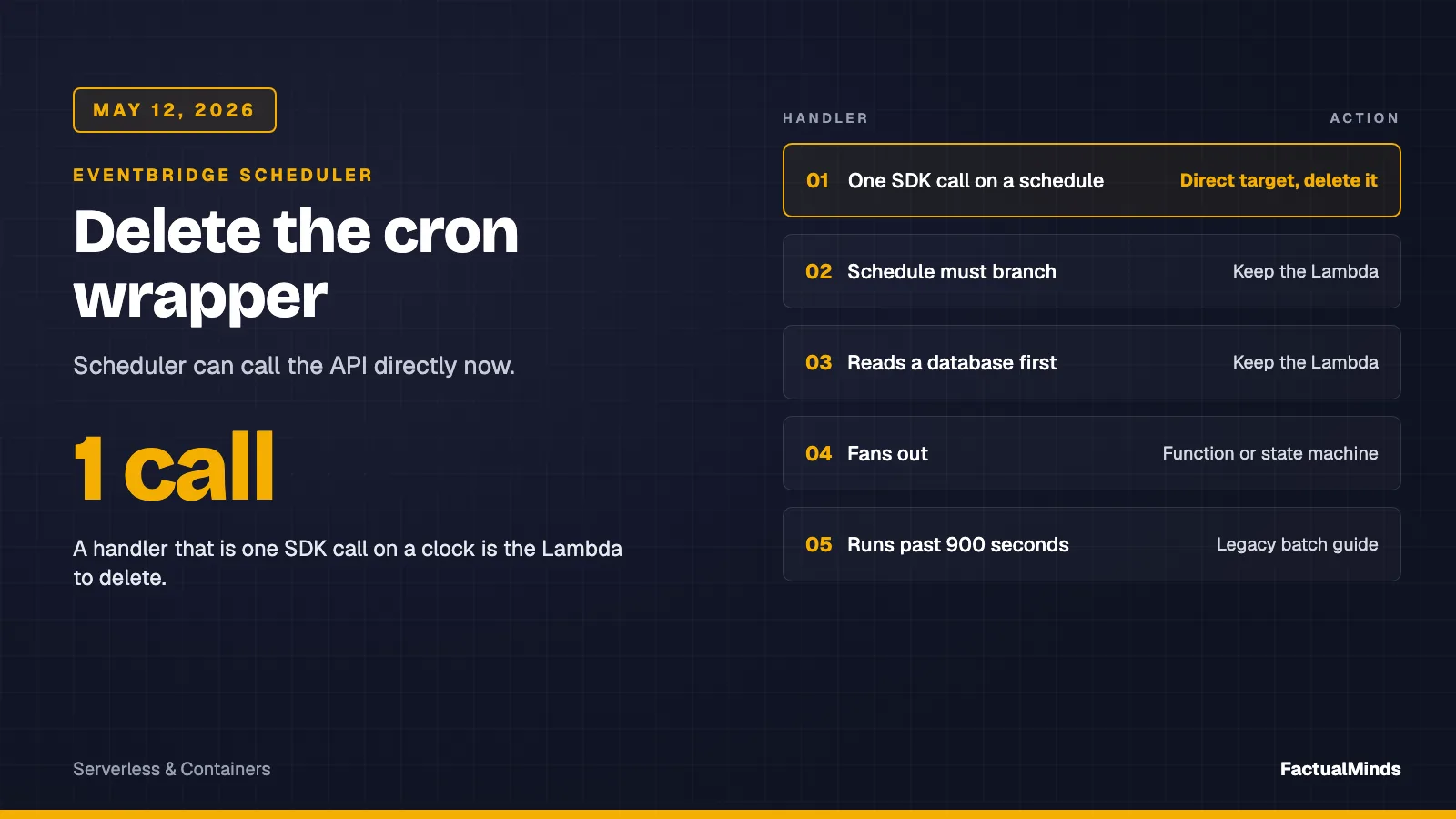
Table of Contents
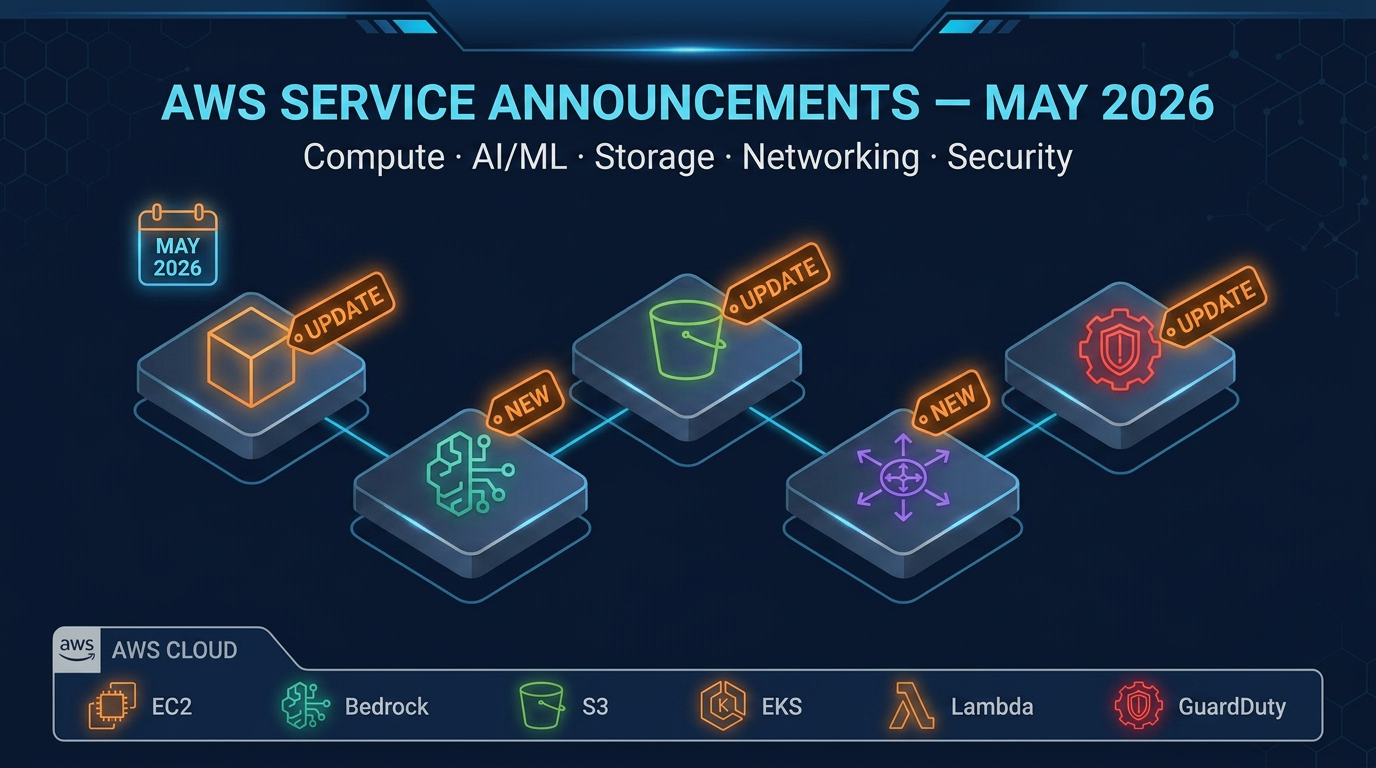
On 12 May 2026 EventBridge Scheduler added a large set of direct SDK targets, including actions used with Lambda Managed Instances. Checked again on 4 October 2026, the common leftover is still a function whose handler calls one API and returns. The EventBridge patterns post mentions Scheduler once. The May announcements post records the date. Neither retires the wrapper.
The legacy batch guide owns jobs with a duration: 900 seconds on classic Lambda, 5,400 seconds async on Lambda Managed Instances, or AWS Batch. Do not put that estate here.
Reproduce this — Copy the one-call inventory. One function per row. If you cannot name the single API, it is not this page.
The rule
If the handler is one SDK call on a schedule, Scheduler is the target and the function goes away. The IAM role moves from the function to the schedule.
Keep the Lambda when any of these is true:
- The schedule must branch. A clock that sometimes should not call the API is logic, not a target.
- The handler reads a database before it decides.
- The handler fans out. One schedule, many targets, with a decision in the middle, is a function or a state machine.
We recommend the direct target over the wrapper. The trade-off is that the schedule’s IAM role can call the API without a place to put a code review of the call. Take that trade when there is no branch to review. Keep the function when the branch is the product.
The primitives checklist is the design-review row for a cron host. This page is the narrower row: the function that only existed because Scheduler could not call the API yet.
Where this fails
What broke — Lab, 4 October 2026. Not a customer account. A schedule that started an instance only on weekdays was converted to a direct target with a daily cron. The weekend start came back. Detection: the keep-Lambda column was blank and the old code had an if. Recovery: put the weekday rule back in a function, or encode it in the schedule expression if it is only a clock. Lesson: “one API call” is not “one API call after a lookup.”
What to Do This Week
- List scheduled functions. Open the handler. If it is one client call, write the API name.
- Recreate that call as a Scheduler target. Delete the function after one successful fire.
- Leave branching, database, and fan-out functions in place and say why.
- Send multi-hour jobs to the legacy-batch guide.
- A pile of these wrappers across accounts is an architecture review, not a longer inventory.
What This Post Doesn’t Cover
It does not list every SDK integration from the May launch. Read the announcement for the set. It does not design batch dependencies, and it does not restate EventBridge versus SNS versus SQS.
Frequently asked questions
Can EventBridge Scheduler call an AWS API without a Lambda?
When should we not delete the Lambda?
What could go wrong if we move a branching schedule onto a direct target?
Is this the legacy batch article?
Where is the May 2026 launch written up?

Enterprise AI Transformation
Enterprise AI transformation and implementation leader focused on pilot-to-production playbooks, with a background in financial services. Writes the FactualMinds guides on serverless, CI/CD, and DevOps on AWS, the delivery plumbing production AI depends on.
 Palaniappan P