AWS SES Marketing Automation with EventBridge and Step Functions (2026)
Quick summary: When to keep Customer.io/Loops vs build journeys with EventBridge + Step Functions + SES — stream isolation, RFC 8058, Pro for DIPs, and a first-party journey architecture checklist.
Key Takeaways
- io/Loops vs build journeys with EventBridge + Step Functions + SES — stream isolation, RFC 8058, Pro for DIPs, and a first-party journey architecture checklist
- Migrating off Elastic Email, Resend Audiences, or a mid-market ESP often stalls on one question: who builds the journeys after the send API moves to Amazon SES
- SES does not ship a drag-and-drop automation builder
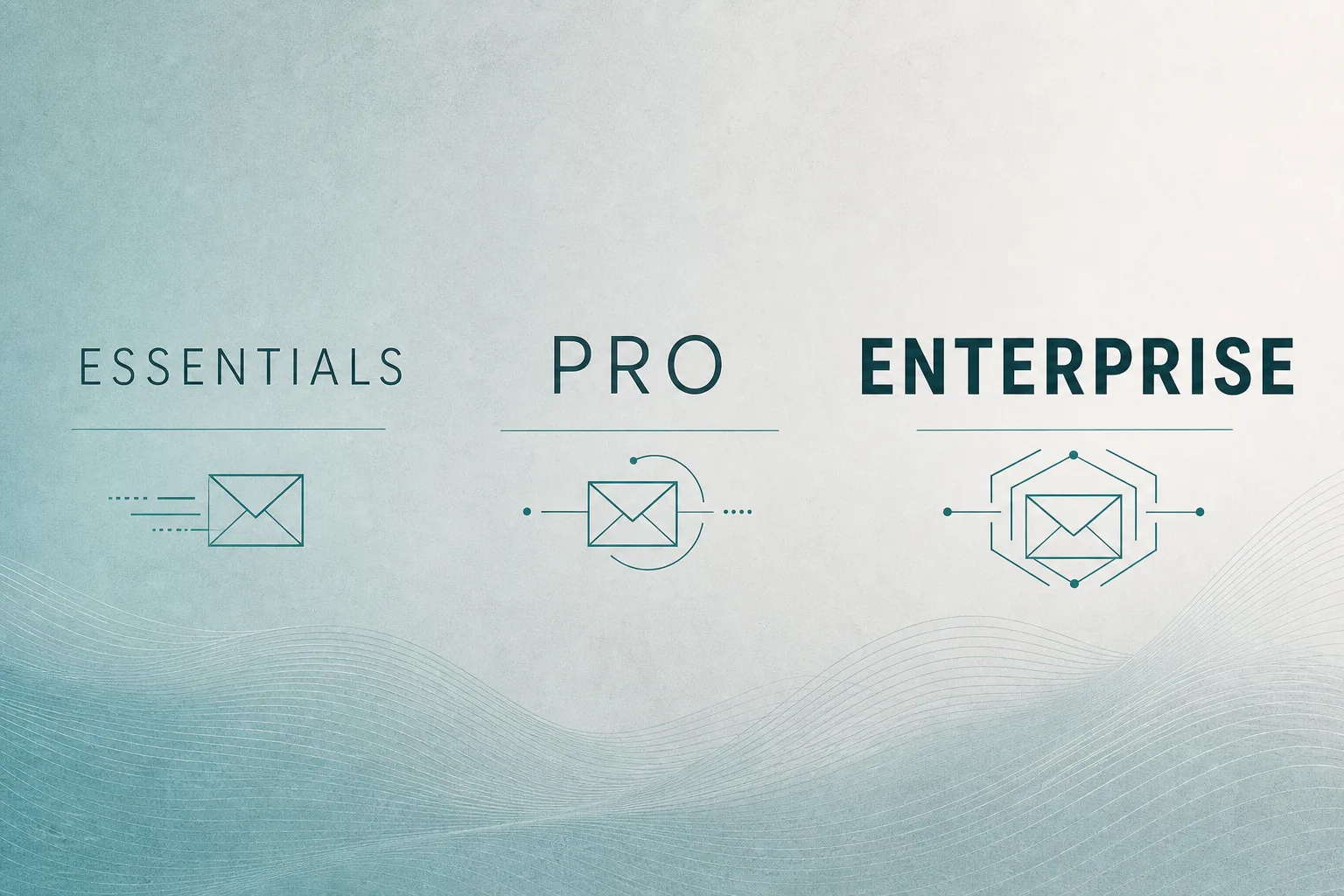
- As of July 21, 2026, SES pricing plans (Essentials / Pro / Enterprise) change how you buy dedicated IPs and Virtual Deliverability Manager — they do not add a marketer UI
- This guide is for platform engineers choosing among build (EventBridge + Step Functions + SES), buy (Customer
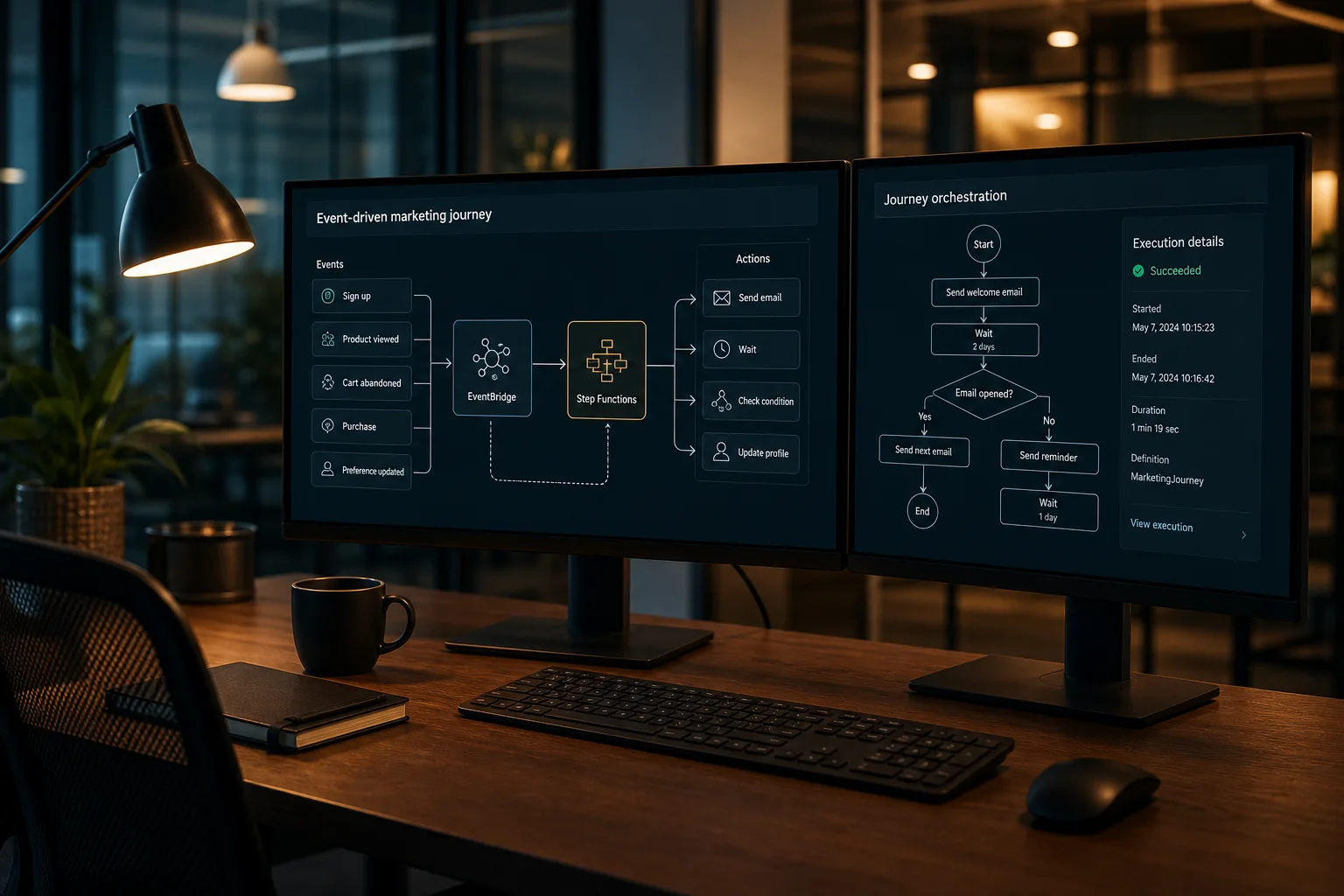
Table of Contents
Migrating off Elastic Email, Resend Audiences, or a mid-market ESP often stalls on one question: who builds the journeys after the send API moves to Amazon SES? SES does not ship a drag-and-drop automation builder. As of July 21, 2026, SES pricing plans (Essentials / Pro / Enterprise) change how you buy dedicated IPs and Virtual Deliverability Manager — they do not add a marketer UI.
This guide is for platform engineers choosing among build (EventBridge + Step Functions + SES), buy (Customer.io / Loops / Klaviyo / Braze), and hybrid. Companion reading: SES for eCommerce, Elastic Email → SES, Resend → SES.
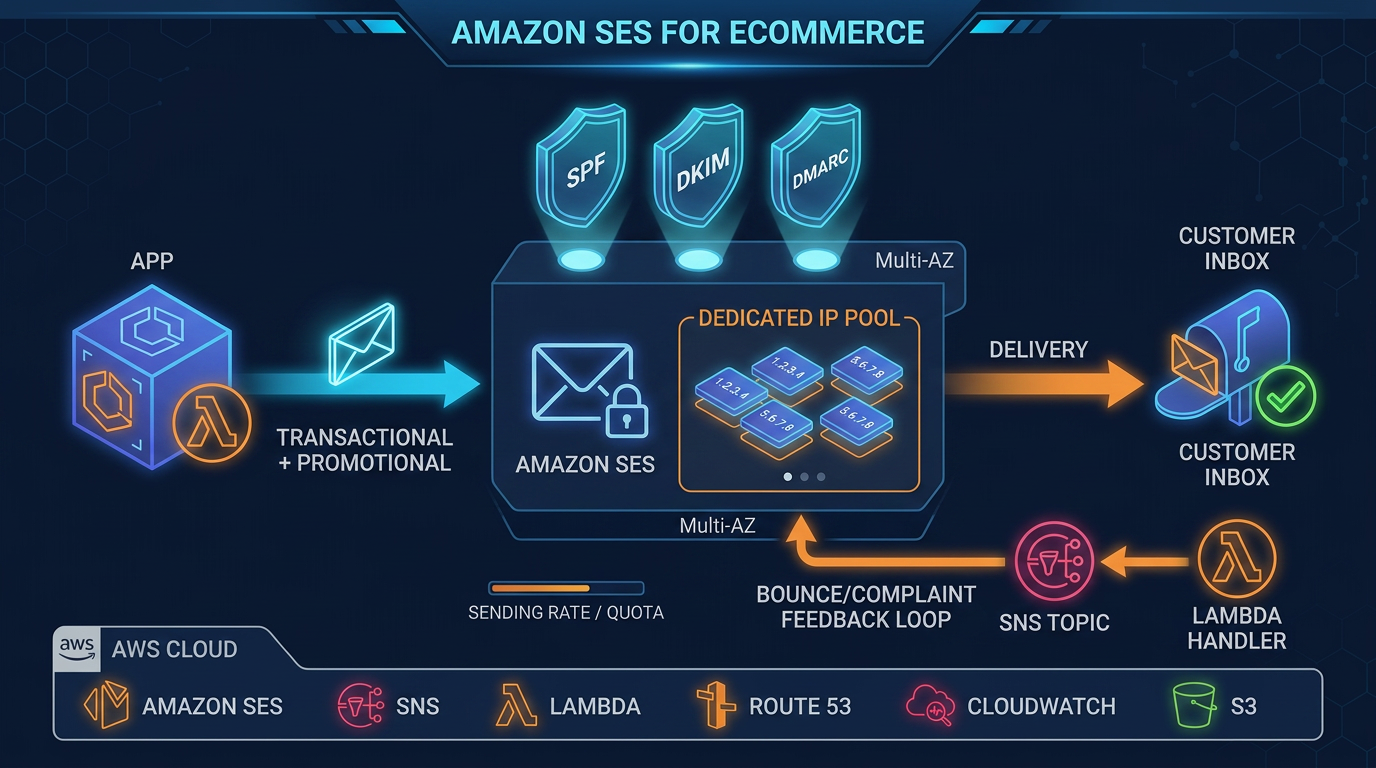
SES marketing automation on AWS means product events on EventBridge, journey orchestration in Step Functions, contact state in DynamoDB/RDS, and sends through SES configuration sets — with RFC 8058 unsubscribe and mailbox-provider bulk-sender rules treated as production requirements, not backlog polish.
Build vs Buy vs Hybrid (Opinionated)
We recommend hybrid for most product-led companies: marketer journeys on a purpose-built automation tool, SES for transactional and any promo volume where ESP unit economics break. Pure build wins when engineering already owns the contact model and marketers accept YAML/JSON journey changes (or you invest in an internal admin). Pure buy wins when weekly journey edits matter more than per-1k send cost.
| Path | Choose when | Avoid when |
|---|---|---|
| Build | Few stable journeys; eng owns contacts; AWS-native already | Marketers need weekly visual edits with no eng queue |
| Buy | Marketing velocity is the bottleneck | You already pay ESP rates that dwarf eng cost at your volume |
| Hybrid | Txn on SES; lifecycle on Customer.io/Loops | Split From domains without DMARC alignment plan |
Reproduce this — Use the journey architecture checklist to force an explicit build/buy/hybrid decision before writing the first state machine.
Reference Architecture
Product app / warehouse
        │  events (UserSignedUp, CartAbandoned, OrderPlaced)
        ▼
   EventBridge bus ──► rules ──► Step Functions (per journey family)
                                      │
                                      ├─ Wait / Choice / Parallel
                                      ├─ DynamoDB get/put (suppression, step state)
                                      ▼
                              SES SendEmail (config set: lifecycle|promo)
                                      │
                    bounce/complaint/open/click events
                                      ▼
                         SNS / EventBridge ──► suppression + journey flags
Quantified design constraint we use on checklists: treat one state machine per journey family (welcome, abandoned cart, win-back) — not one machine with 40 branches. Operational blast radius stays reviewable; a failed welcome definition does not block cart recovery deploys.
Why EventBridge + Step Functions (not cron + Lambda only)
- EventBridge gives durable, filterable ingestion and partner integrations without custom queue glue for every producer.
- Step Functions makes waits, retries, and human-readable execution history first-class — critical when a cart wait is 1–72 hours, not “sleep in Lambda.”
- SES stays a dumb, cheap, observable send primitive with configuration-set isolation.
Deliverability Requirements the Builder Must Own
Mailbox providers do not care that your journey is “serverless.”
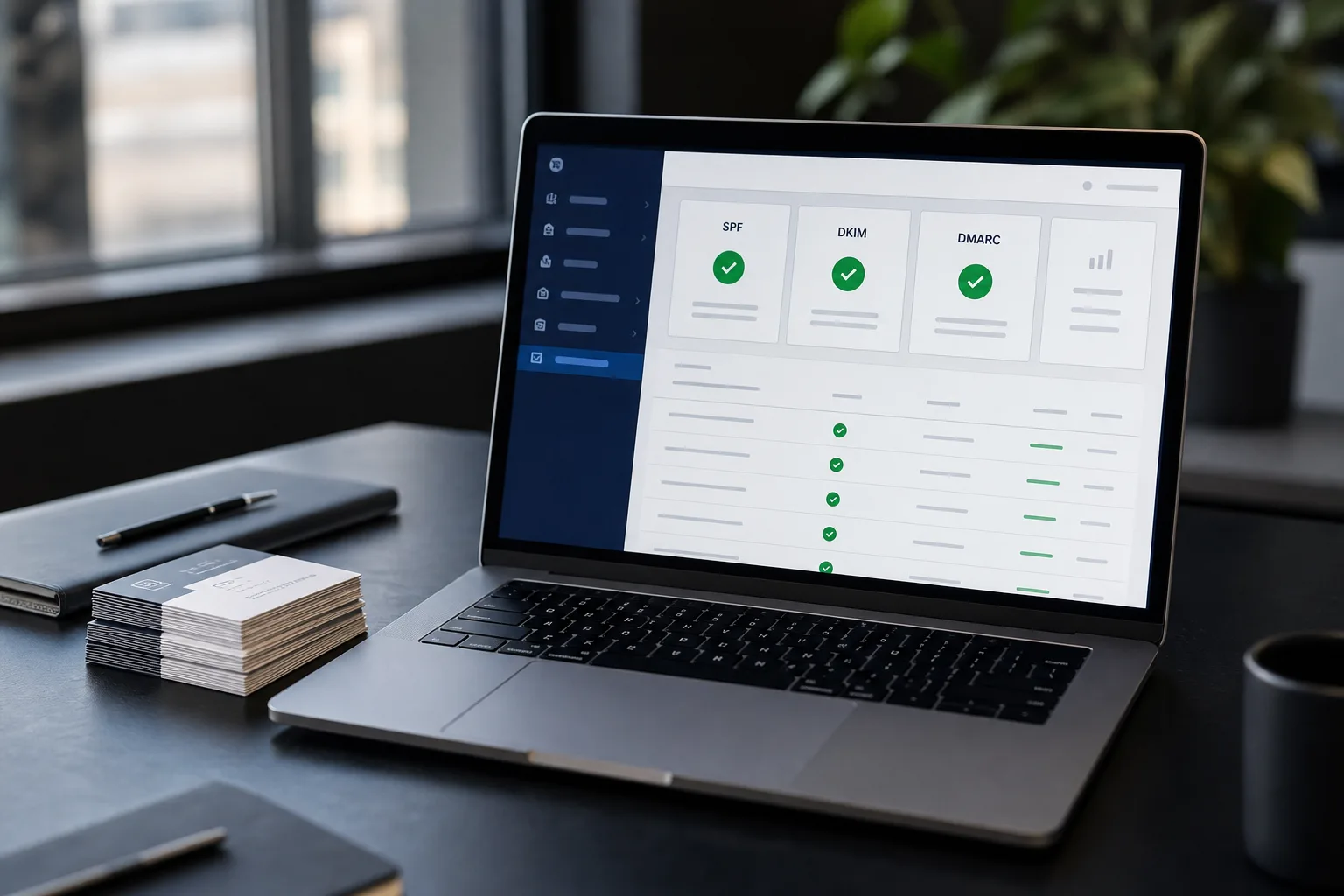
- SPF + DKIM + DMARC with alignment (Google/Yahoo Feb 2024; Microsoft May 5, 2025 for Outlook consumer bulk).
- RFC 8058
List-Unsubscribe+List-Unsubscribe-Poston marketing/lifecycle mail. - Stream isolation — transactional vs lifecycle vs promo configuration sets; dedicated/managed DIPs when promo volume can poison txn reputation.
- Suppression before send inside the state machine — never “send then clean.”
- Plan-aware IP economics — a-la-carte DIPs ~$24.95/IP or managed DIP fees; Pro may undercut a packed a-la-carte stack (pricing plans).
Label complaint ceilings correctly: SES ~0.1% complaint risk vs Gmail Postmaster spam <0.10% vs published bulk-sender <0.3% guidance.
What broke (common DIY failure) — Teams port ESP automations into a single Step Functions definition, forget idempotency keys on EventBridge retries, and double-send abandoned-cart mail. Complaint rate spikes; SES still “works.” Fix: idempotency on event IDs + suppression check as a required state before
SendEmail.
First-Party Artifact: Journey Checklist
The checklist encodes decision, identity/streams, event ingestion, orchestration, send path, feedback loop, and go-live — including a shadow-run gate that blocks SES until QA signs off. That is the reproducible outcome: a binary readiness gate you can attach to a PR, not a synthetic open-rate claim.
Monday Morning Path
- Complete the journey architecture checklist.
- If build: scaffold one abandoned-cart state machine with Wait + suppression + SES; shadow-run without send.
- If hybrid: move only transactional to SES this sprint; leave marketer journeys on the ESP until auth domains are aligned.
- If promo volume needs DIPs/VDM: run the plan vs a-la-carte worksheet.
- For retail promo vs txn isolation patterns, see SES for eCommerce.
What This Post Doesn’t Cover
- Pixel-perfect parity with Klaviyo/Braze visual builders
- Full CDK/Terraform modules for every journey (checklist first; IaC follows your account standards)
- Consent / GDPR legal determinations
- Cold outbound compliance (see SES B2B cold outreach)
Services: Amazon SES · SES migration.
Discuss your SES automation architecture →
Frequently asked questions
Can AWS SES replace Mailchimp or Customer.io for marketing automation?
When should I NOT build marketing automation on Step Functions?
How do EventBridge and Step Functions work with SES?
Do I need the SES Pro plan for marketing automation?
What could go wrong in a DIY SES journey?
Is hybrid ESP + SES a valid architecture?
Amazon SES & Email Deliverability
Writes the FactualMinds guides on Amazon SES and email deliverability: sending setup, authentication, IP warm-up, and migrating from other email providers.