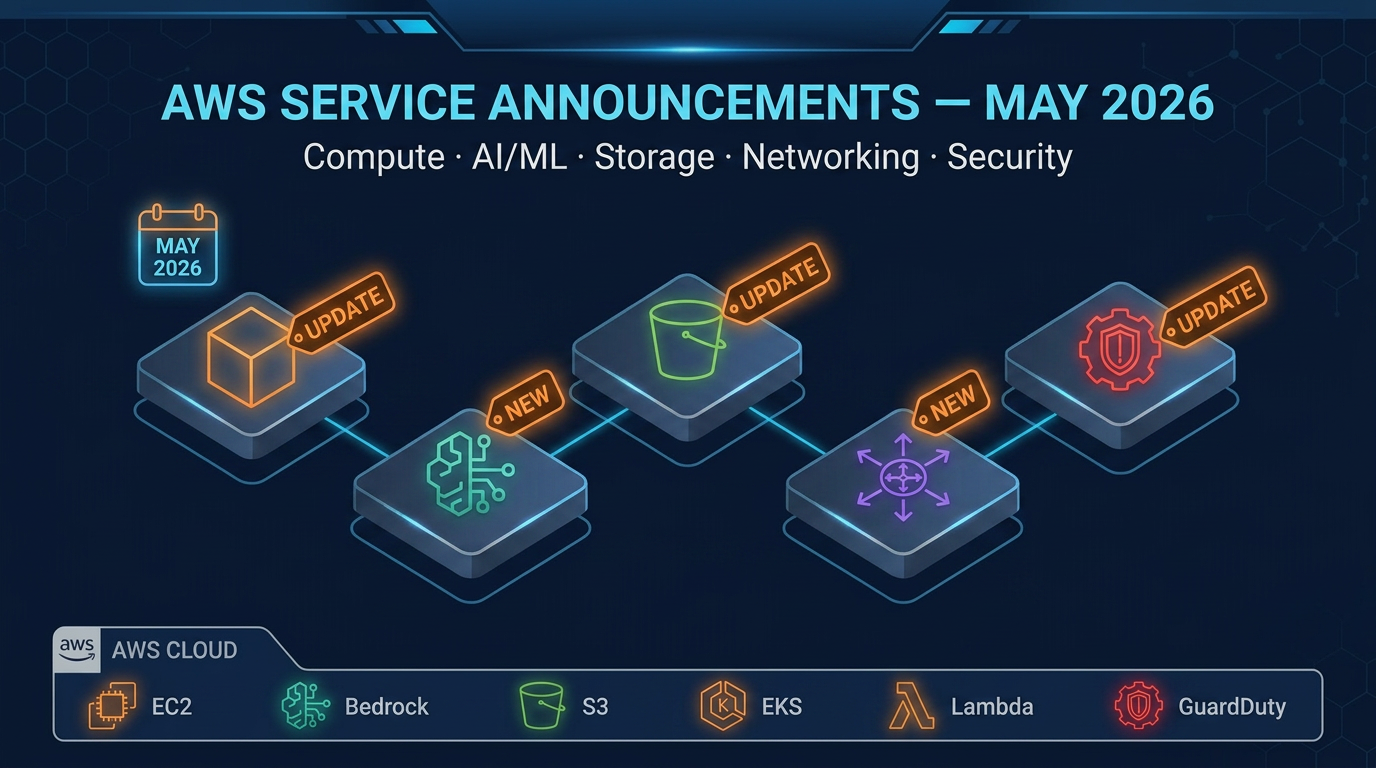
AWS Service Announcements Worth Knowing: March 2026 Edition
Quick summary: March 2026 roundup — Nova Forge, Durable Functions, Graviton5, Trainium3, Route 53 Global Resolver. July 2026 retrospective: what still matters four months later.
Key Takeaways
- March 2026 roundup — Nova Forge, Durable Functions, Graviton5, Trainium3, Route 53 Global Resolver
- July 2026 retrospective: what still matters four months later
- July 2026 note: This remains a historical March 2026 roundup
- For later months see May 2026 and June 2026
- March 2026 was dense: Re:Invent 2025 launches finishing rollout plus AI, compute, database, and tooling updates
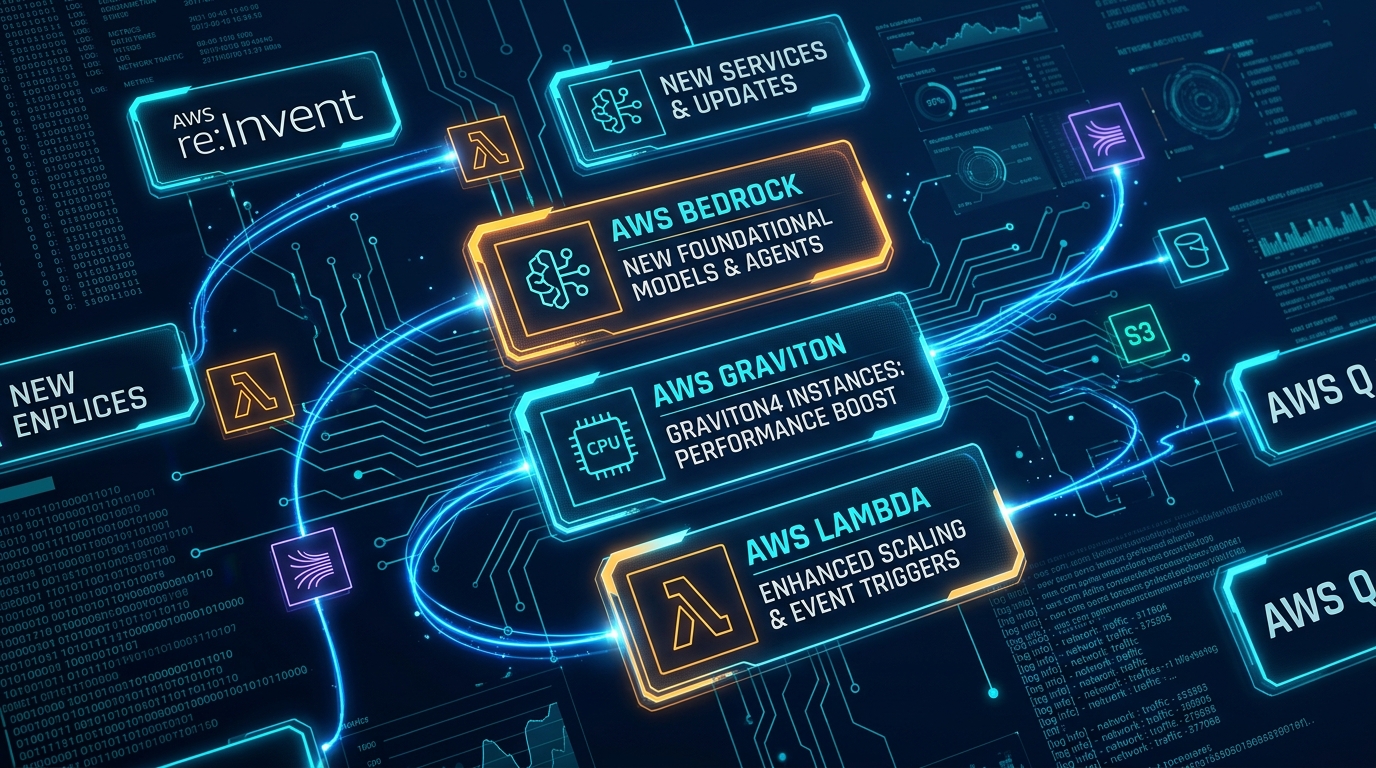
Table of Contents
July 2026 note: This remains a historical March 2026 roundup. We did not rewrite it as current news. Below each cluster, a short Still matters? callout marks what still drives decisions four months later. For later months see May 2026 and June 2026. AgentCore production path: production guide · pricing components.
March 2026 was dense: Re:Invent 2025 launches finishing rollout plus AI, compute, database, and tooling updates. Practitioner view of what changed then — and what still matters now.
AI & Machine Learning
Nova Forge SDK — Fine-Tune Your Own Nova Models
AWS released the Nova Forge SDK in March, giving enterprises a dedicated path to fine-tune and customize Amazon Nova foundation models on their own data. Unlike generic prompt engineering, Forge lets you adapt Nova’s reasoning and generation behavior to domain-specific vocabulary, tone, and task patterns — and deploy the result directly within Amazon Bedrock without managing separate infrastructure.
This is the piece that was missing from the Nova launch. Nova models are strong out of the box, but regulated industries (financial services, healthcare, legal) have always needed adaptation before production. Forge closes that gap.
NVIDIA Nemotron 3 Super Lands on Bedrock
The NVIDIA Nemotron 3 Super model is now available on Amazon Bedrock (announced March 23, 2026). It joins an increasingly crowded model roster that already includes Mistral, Google Gemini, OpenAI GPT models, MiniMax, Moonshot, and Qwen.
AWS is clearly positioning Bedrock as a model marketplace rather than a single-model platform. For teams evaluating models, this is good news: you can benchmark across providers without changing infrastructure, IAM policies, or billing setup.
Bedrock AgentCore + Nova Act: The Stateful Agent Stack
Two updates combine to form something meaningful:
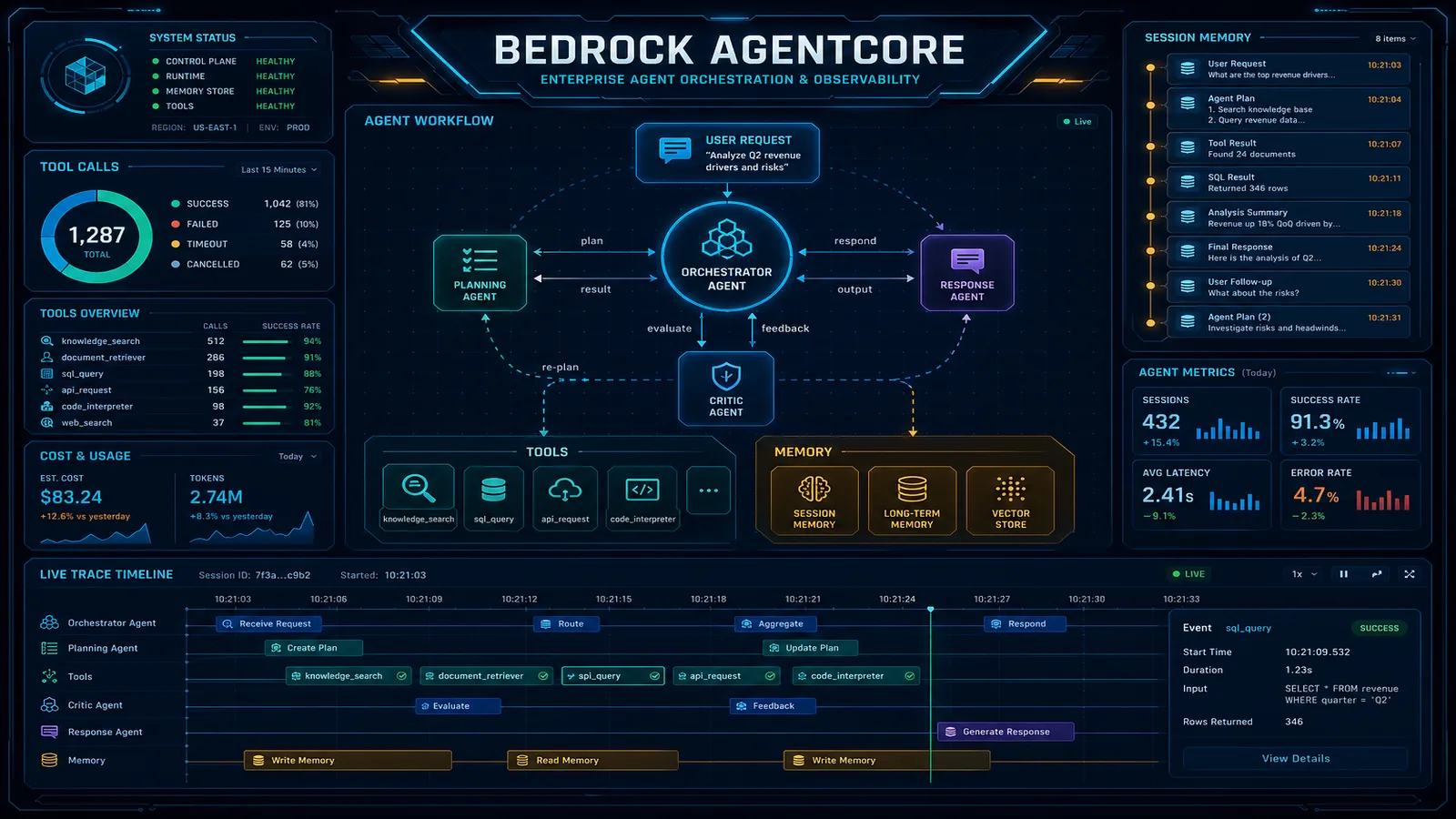
Bedrock AgentCore received stateful runtime improvements with memory streaming notifications, enabling agents to maintain long-term context across sessions rather than starting fresh each time. This is critical for any agent that handles multi-session workflows — onboarding, support escalations, iterative research tasks.
Nova Act hit general availability for browser-based agent automation. Treat reliability as a measured property of your UI suite — run soak tests before trusting autonomous browser workflows in production.
Together, these two updates define AWS’s answer to the autonomous agent question: stateful memory in Bedrock, reliable execution in the browser via Nova Act.
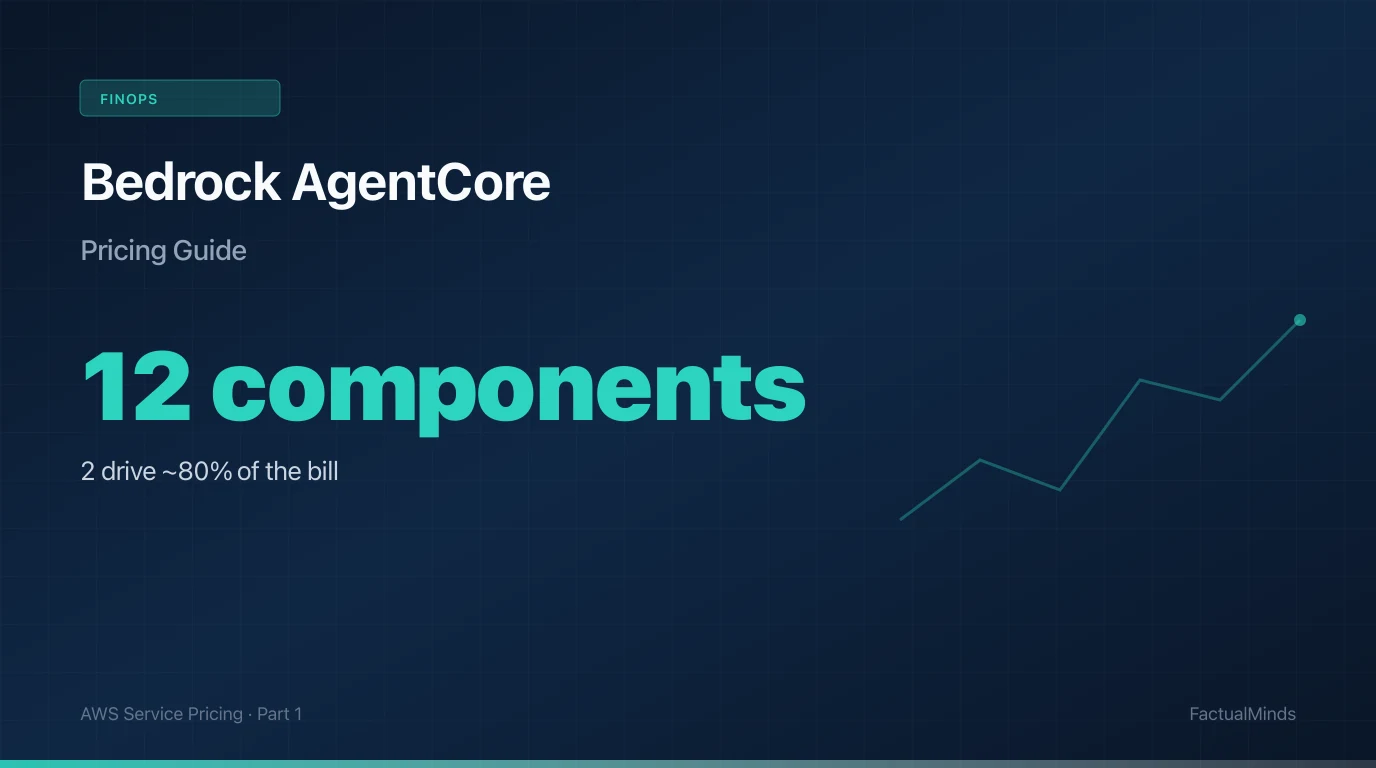
Still matters (July 2026)? Yes — AgentCore is now a first-class production surface (runtime, memory, gateway, observability). Treat March’s “stateful agent stack” note as the starting point; use the AgentCore production and 12-component pricing posts before budgeting browser/code tools.
Web Grounding for Nova Models
AWS added Web Grounding as a built-in tool for Nova models on Bedrock — a turnkey RAG option that lets Nova models pull in up-to-date information from the web without you building and maintaining your own retrieval pipeline. The model decides when to retrieve, retrieves relevant content, and incorporates it into the response.
For teams building assistants or Q&A tools over knowledge that changes frequently, this reduces significant infrastructure overhead.
Elastic Beanstalk Gets AI-Powered Troubleshooting
A smaller but telling announcement: Elastic Beanstalk can now feed degraded environment data (recent events, instance health, logs) directly to Amazon Bedrock and return step-by-step troubleshooting recommendations.
Beanstalk is not a new service. The fact that AWS is wiring Bedrock into it signals the broader strategy: AI-assisted operations is being pushed into every managed service, not just purpose-built AI products.
Compute & Serverless
Lambda Durable Functions: Workflows Up to 1 Year
Lambda Durable Functions (announced at re:Invent 2025, now rolling out) lets you build multi-step workflows that run reliably for up to one year — without paying for idle compute time between steps. The runtime handles checkpointing, retries, and state persistence.
This sits in interesting territory between Step Functions and traditional Lambda. If your workflow has long pauses between steps (waiting for human approval, polling an external API, processing large batches), Durable Functions eliminates the orchestration overhead while keeping costs tied to actual execution.
Still matters? Yes — Durable Functions remain the right question when you want Lambda semantics with year-scale pauses. Compare against Step Functions Express/Standard before standardizing.
Lambda Managed Instances Now Supports Rust
Lambda Managed Instances — the capability that lets you run Lambda functions on your own EC2 while retaining serverless operational simplicity — now supports Rust as a runtime. This matters for teams with performance-critical functions that need more control over the underlying compute, particularly ML inference or high-throughput data processing workloads.
Graviton5 CPU: 192 Cores, 33% Lower Latency
The Graviton5 chip is now in broader regional rollout. The headline numbers: 192 processor cores in a dense design that cuts inter-core communication latency by up to 33% compared to Graviton4, with higher memory bandwidth.
For compute-heavy workloads — big data processing, HPC, in-memory databases — this is a meaningful jump. Graviton5 instances are also AWS’s strongest argument for moving off x86 on price-performance grounds.
Still matters? Yes — evaluate m9g/c9g (and peers) on a real staging soak; see Graviton5 GA notes.
Trainium3 UltraServers Hit GA
Trainium3 UltraServers are now generally available for large-scale ML training. Powered by AWS’s own Trainium3 chips, UltraServers are designed for the scale of foundation model training — dense interconnects, high memory bandwidth, and deep integration with SageMaker.
For teams doing serious pre-training or fine-tuning at scale, this gives you an alternative to GPU clusters that’s tightly integrated with the AWS stack.
Databases & Networking
Database Savings Plans Expand to OpenSearch & Neptune Analytics
Database Savings Plans now extend coverage to Amazon OpenSearch Service and Amazon Neptune Analytics — adding to the existing RDS and Aurora coverage. A one-year commitment unlocks up to 35% off eligible serverless and provisioned instance usage.
If you’re running OpenSearch for search or log analytics, or Neptune for graph workloads, this is straightforward cost reduction with no architectural change required.
Route 53 Global Resolver: Now Generally Available
Amazon Route 53 Global Resolver hit general availability on March 16, 2026. It provides a globally distributed DNS resolution layer that reduces DNS latency for users across regions without requiring you to manage resolver infrastructure in each region manually.
For multi-region applications where DNS resolution latency is a real concern (real-time applications, globally distributed APIs), this removes meaningful operational complexity.
Amazon S3 Turns 20
Not an announcement exactly, but worth acknowledging: Amazon S3 turned 20 in March 2026. It launched in March 2006 and effectively created the cloud storage market. It remains the foundation of most AWS architectures and processes an almost incomprehensible volume of requests daily.
Developer Tools & Modernization
AWS Transform: AI-Powered Migration at Scale
AWS Transform is an AI-powered modernization service that learns your codebase’s patterns, automates transformations across repositories, and reportedly cuts execution time by up to 80% compared to manual migration.
The mainframe-specific variant is particularly notable: it transforms legacy COBOL and other mainframe applications into cloud-native architectures while automating the testing process — reducing timelines from years to months.
For AWS consulting partners, this is the product most likely to change how large-scale migration engagements are scoped. The 80% time reduction claim deserves skepticism on complex codebases, but even a 40% reduction in migration execution time has significant commercial impact.
Security & Pricing Changes
VPC Encryption Controls: Free Preview Is Over
Starting March 1, 2026, VPC Encryption Controls transitioned from free preview to a paid feature. This service lets you audit and enforce encryption-in-transit for all traffic flows within and across VPCs in a region — monitor mode detects unencrypted traffic, enforce mode blocks it.
If your team enabled this during the preview period and forgot about it, check your billing. It’s not an expensive feature, but it’s now on your bill.
What still matters (July 2026 retrospective)
Four months later, three March themes still drive architecture reviews:
- Bedrock/AgentCore as ops infrastructure — not a demo API. Budget memory, gateway, and browser/code tools explicitly.
- Graviton5 / Trainium3 — silicon evaluation is no longer optional for price-performance reviews.
- Durable Functions + Managed Instances — Lambda’s edges (long workflows, bring-your-own EC2) remain the right fork vs Step Functions / ECS.
When this roundup is the wrong doc
- You need current-month news — read May / June instead.
- You need a production AgentCore SOW — start with the production + pricing posts linked above, not this archive.
- You only care about VPC Encryption Controls billing — check Cost Explorer for that line item; the rest of this post is noise for you.
What to do Monday morning
- Skim Cost Explorer for VPC Encryption Controls (preview → paid as of 2026-03-01).
- If you run agents: inventory AgentCore components against the 12-component pricing post.
- Pick one Graviton5 candidate workload for a 72-hour staging soak.
- Decide Durable Functions vs Step Functions for any approval-gated workflow still on cron+SQS.
- Archive this post as historical context; pin May/June for ongoing news.
Need a fit assessment for your estate? Contact us.
AWS Cloud Architect & AI Expert
AWS-certified cloud architect and AI expert with deep expertise in cloud migrations, cost optimization, and generative AI on AWS.