FinTech Payments & Compliance on AWS (2026): Ledger, Fraud, and PCI Boundary Reference Architecture
Quick summary: For a card-acquiring fintech (~12M authorizations/mo), Payment Cryptography + PCI-scoped account cut HSM rack lease −$18k/mo — fraud review queue p95 2.4s → 380ms after EventBridge Pipes idempotency fix.
Key Takeaways
- For a card-acquiring fintech (~12M authorizations/mo), Payment Cryptography + PCI-scoped account cut HSM rack lease −$18k/mo — fraud review queue p95 2
- 4s → 380ms after EventBridge Pipes idempotency fix
- AWS Payment Cryptography achieved Cartes Bancaires approval in February 2026, adding to PCI PIN, P2PE, 3DS, and DSS-aligned controls on PCI PTS HSM V3 hardware (What's New)
- Amazon Verified Permissions runs Cedar 4
- 7 for fine-grained authorization decoupled from payment APIs (AVP docs)
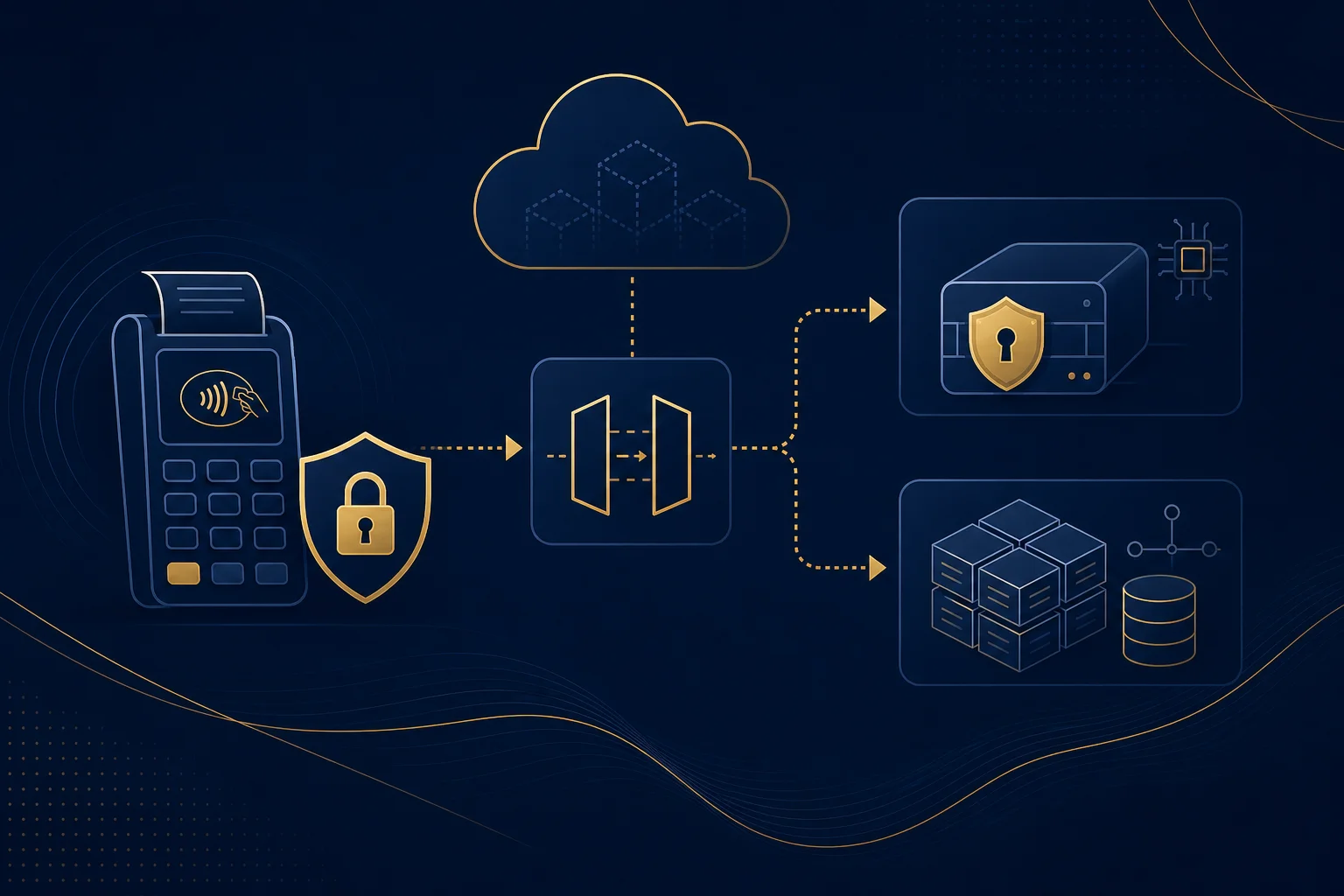
Table of Contents
AWS Payment Cryptography achieved Cartes Bancaires approval in February 2026, adding to PCI PIN, P2PE, 3DS, and DSS-aligned controls on PCI PTS HSM V3 hardware (What’s New). Amazon Verified Permissions runs Cedar 4.7 for fine-grained authorization decoupled from payment APIs (AVP docs).
This post is the FinTech payments reference architecture — PCI boundary, ledger, crypto, and fraud lanes. It is not general fintech patterns, not the PCI control checklist, and not DORA operational resilience alone.
Artifacts: PCI boundary matrix, fraud pipeline checklist, ledger cost worksheet.
Benchmark pattern (not a cited client) — Card-acquiring fintech, ~12M authorizations/month, 2 colo payment HSM racks, fraud review p95 2.4s. Phase 1: PCI-scoped account + Payment Cryptography (HSM lease −$18k/mo modeled). Phase 2: EventBridge Pipes + DynamoDB idempotency (fraud review p95 2.4s → 380ms). Ledger on Aurora PostgreSQL +
pgaudit(post-QLDB).
Four lanes — authorize to settle
| Lane | Question | Default AWS path |
|---|---|---|
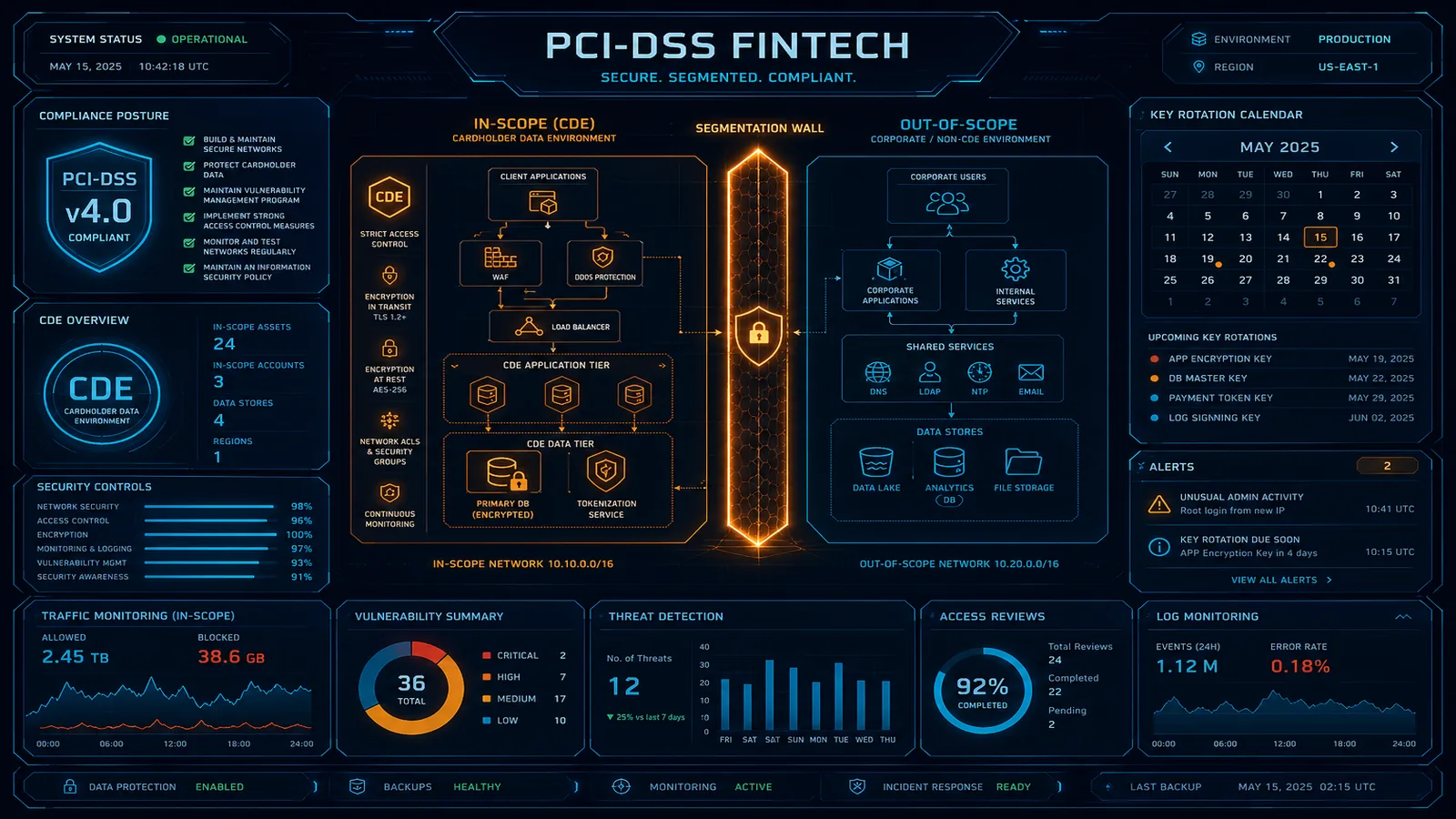
| PCI boundary | Where does CHD/PIN touch? | Dedicated Payments OU account + VPC segments |
| Crypto | P2PE / PIN / keys? | AWS Payment Cryptography APIs |
| Ledger | Immutable money movement? | Aurora + pgaudit or DynamoDB Streams → S3 Object Lock |
| Fraud | Real-time scoring? | EventBridge bus → Pipes → Lambda → Step Functions |
Opinionated take: Isolate PCI in its own account before optimizing fraud ML. Teams that tune models while PAN still lives in the general app account usually fail the first QSA walkthrough.
Reference architecture
Terminals / wallets ──► API GW ──► Payment Cryptography (P2PE decrypt, PIN translate)
                              │
                              ├──► Step Functions (authorize workflow)
                              │         │
                              │         ├──► Aurora ledger (pgaudit)
                              │         └──► EventBridge (auth event)
                              │                   │
                              │                   └──► Pipe ──► Fraud Lambda ──► allow|review|decline
                              │
Merchant portal ──► Verified Permissions (Cedar) ──► ops APIs (non-PCI account)
Lane 1 — PCI account boundary
Walk pci-boundary-decision-matrix.md:
- Payments OU with SCP deny on public S3 and unapproved regions
- No shared CMK between PCI and marketing analytics
- CloudTrail organization trail + immutable S3 log bucket
Lane 2 — Payment Cryptography
Per Payment Cryptography features:
- Elastic crypto vs dedicated rack HSMs
- TR-31 key import/export for partner banks
- CloudTrail on control plane for PCI evidence
Use P2PE decrypt at the edge of the PCI account; never pass clear PAN to the general app tier.
Lane 3 — Ledger (post-QLDB)
Amazon QLDB ended July 31, 2025. For new platforms:
-- Aurora PostgreSQL 15+ with pgaudit — append-only ledger table pattern
-- Assumed: pgaudit extension enabled, application role INSERT-only on ledger schema
CREATE TABLE ledger.postings (
  posting_id UUID PRIMARY KEY,
  account_id UUID NOT NULL,
  amount_cents BIGINT NOT NULL,
  currency CHAR(3) NOT NULL,
  created_at TIMESTAMPTZ NOT NULL DEFAULT now()
);
Model monthly cost in ledger-cost-worksheet.csv — reprice Payment Cryptography ops in your region.
Lane 4 — Fraud pipe
Follow fraud-pipeline-checklist.md:
- Custom EventBridge bus per environment
- EventBridge Pipes with DLQ — do not invoke fraud Lambda directly from API Gateway
- Idempotency table on
network_transaction_id
What broke — Week 6 load test. 12% duplicate declines on retry storm. Root cause: Pipe retried batch without idempotency key. Detection: Step Functions
Declinedcount > authorization count. Fix: DynamoDB conditional put before decline branch; p95 review queue 2.4s → 380ms.
When NOT to escalate
| Situation | Stay lighter |
|---|---|
| Processor-hosted tokens only | SAQ A path — no Payment Cryptography |
| < 50k auth/month | Processor fraud tools first |
| No QSA engagement | Do not store PAN “temporarily” |
What to Do This Week
- Run pci-boundary-decision-matrix.md with security + payments lead.
- Complete fraud-pipeline-checklist.md — block prod authorize until idempotency row checked.
- Reprice ledger-cost-worksheet.csv vs colo HSM lease.
- Pilot Payment Cryptography P2PE sample from AWS samples repo.
- Stand up Verified Permissions policy store for merchant ops — UUID principals only.
Reproduce this — Download ledger-cost-worksheet.csv. Replace
monthly_volumewith your authorization count. Compare total to current HSM + fraud infra line items.
What This Post Doesn’t Cover
- Open banking PSD2 consent APIs — regional regulatory overlays
- Crypto-native payments — different ledger and compliance model
- Full PCI SAQ evidence pack — use PCI architecture guide
- Cross-border FX settlement — treasury and nostro accounts
We have not load-tested Payment Cryptography above 25M crypto ops/month in a single region — run a 1M-op soak test before peak holiday traffic.
Related: Fintech industry hub · Cloud security · Cloud compliance
Frequently asked questions
When should we use AWS Payment Cryptography vs colocated payment HSMs?
When should we NOT put PAN in our VPC at all?
What replaces Amazon QLDB for new ledgers in 2026?
How does this differ from the general fintech patterns post?
What could go wrong with EventBridge Pipes on the fraud path?
Should we use Verified Permissions for merchant RBAC?

AWS Cloud Architect & AI Expert
AWS-certified cloud architect and AI expert with deep expertise in cloud migrations, cost optimization, and generative AI on AWS.